
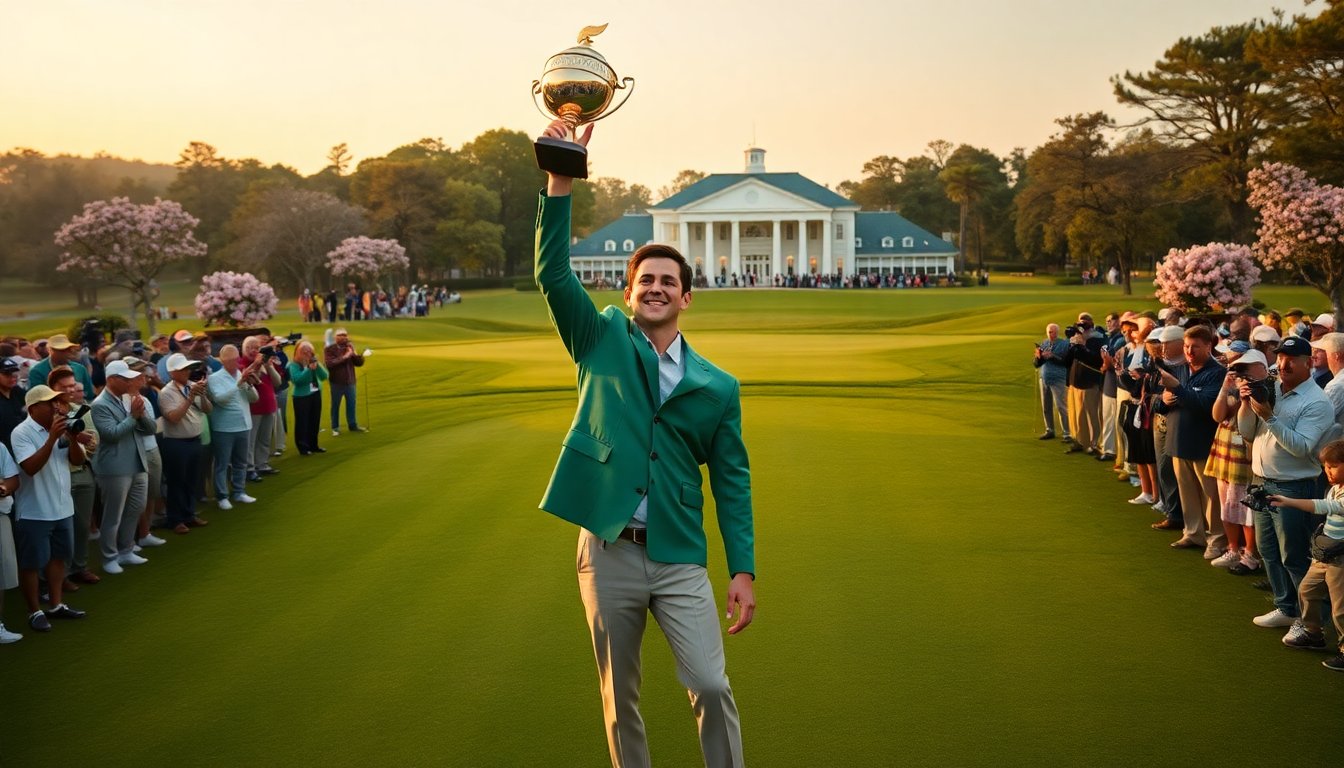
The week at Augusta National produced high drama and a familiar champion when Rory McIlroy closed out the 90th Masters Tournament on April 12, 2026. The Northern Irishman, age 36, opened with two low rounds to build a historic advantage, endured a turbulent third day and then steadied himself on Sunday to finish at 12-under-par 276. After a final-round 71 he celebrated his second straight green jacket, securing a one-shot margin over Scottie Scheffler and collecting the winner’s prize.
McIlroy’s week mixed physical management and course reconnaissance after dealing with back spasms in March that led to a late withdrawal from the Arnold Palmer Invitational; he limited his pre-Masters schedule and made several fly-in scouting visits to prepare. That approach paid off early: his opening rounds of 67 and 65 produced a six-shot lead at the halfway mark, the largest ever at that point in the tournament. But the tournament is known for reversals, and McIlroy experienced that familiar roller coaster before ultimately prevailing, adding a sixth major to his career total and becoming the fourth player in history to successfully defend the green jacket.
How the leaderboard shifted across four rounds
The scoring swung dramatically from front nine momentum to back nine resilience as several contenders pushed and faltered. McIlroy’s third-round 73 erased much of the cushion he had built, allowing challengers such as Cameron Young and Justin Rose to move into contention. On the final day McIlroy fell early with a double bogey and a bogey but responded with birdies at Nos. 7 and 8 and then decisive shots at Nos. 12 and 13 that put him back in front. The week ended with McIlroy at 12 under, Scheffler alone at 11 under after a bogey-free weekend, and a group of players—including Young, Rose, Tyrrell Hatton and Russell Henley—tied at 10 under.
Key moments that decided the title
Several holes swung the outcome: McIlroy’s tee shots on the 12th and 13th gave him the latitude to attack and convert birdies, while his escape from trouble on the closing holes preserved the margin. The 18th presented a tense finale when a tee shot found trees and a subsequent approach ended up in a greenside bunker; from there he blasted to the front edge and two-putted for the bogey that still sealed victory. Scheffler applied late pressure with birdies at 15 and 16 and produced a steady, bogey-free final 36 holes, but his birdie attempt at 17 that might have swung momentum rolled just past the cup, leaving him one behind.
Context: preparation, equipment issues and resilience
McIlroy’s week was shaped by both physical caution and equipment frustrations. After withdrawing from an event in March due to back spasms, he chose to limit tournament play and focused on targeted visits to practice at Augusta National, a strategy he said helped him manage his body and sharpen course knowledge. Across the week he battled a balky driver that produced errant tee shots, yet his short game and approach play repeatedly rescued him from difficult lies—often among the pine straw—and allowed him to convert key up-and-downs. That mixture of tactical preparation and recovery shots under pressure underscored the resilience necessary to contend at the Masters.
Who challenged and who surged late
Scottie Scheffler emerged as the primary challenger, producing rounds of 65 and 68 over the weekend and becoming the first player since 1942 to play the third and final rounds without a bogey, a remarkable feat that fell just short. Justin Rose started fast on Sunday but was undone by a rough stretch through Amen Corner, while Cameron Young briefly led before late bogeys halted his charge. Tyrrell Hatton posted the tournament’s low single-round score with a 66, and Russell Henley’s 68 gave the Georgia native his best Masters finish. Their performances illustrated how quickly fortunes change at Augusta when pressure and slope dictate outcomes.
Legacy and the green jacket moment
By earning consecutive Masters titles, McIlroy joined an exclusive group that includes Jack Nicklaus, Nick Faldo and Tiger Woods as the only men to defend their championship at Augusta. The victory represented his sixth major and reinforced his standing among the game’s modern greats. At the presentation he slipped once again into the green jacket, noting with relief and pride that it still fit and that the persistence he’d shown over 17 years of major attempts had paid off. Masters officials and past champions acknowledged the performance as the mark of a player who now carries both confidence and increased expectations heading into future majors.
In the end, the 90th Masters exemplified the tournament’s capacity for late drama and small margins: meticulous preparation, clutch short-game recovery and timely birdies combined to allow Rory McIlroy to defend his title on April 12, 2026, and leave Augusta National with another green jacket and another chapter in an already distinguished career.


