
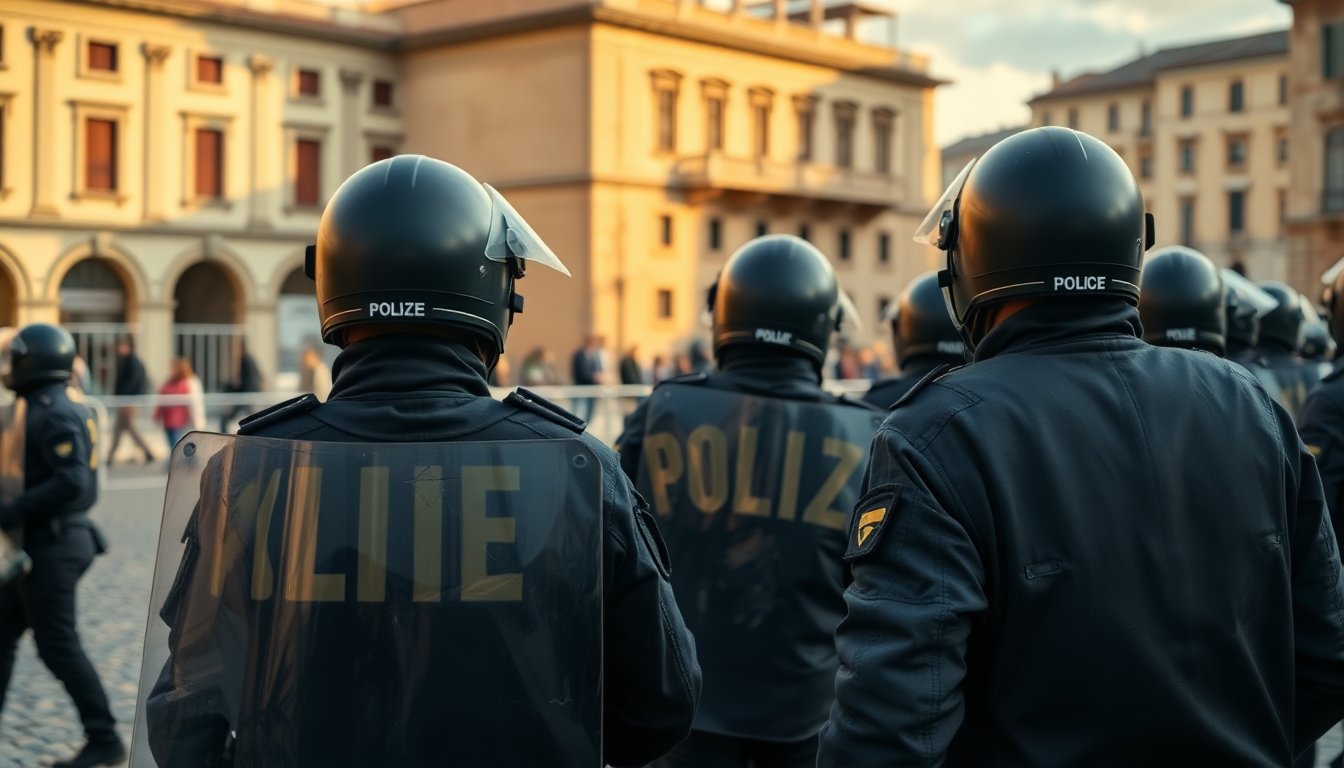
Giorgia Meloni has pushed security to the centre of Italy’s public debate. Since taking office, the prime minister and her cabinet have steadily highlighted crime, migration control and tougher policing in speeches, briefings and media interviews. For supporters, that focus signals decisive leadership confronting disorder; for critics, it risks normalizing a climate of fear that sidelines dissent and chips away at civil liberties.
What the government is doing — and how it says it
The message coming from ministers is blunt and consistent: security comes first. Policy proposals emphasize law‑and‑order solutions, tighter border controls and a more visible police presence. On paper, many of these measures resemble mainstream conservative approaches. But analysts stress that tone matters. When officials borrow alarmist language — talking about society being “under siege,” migrants as a looming threat, or public life sliding into “chaos” — the debate shifts from specific policy trade‑offs to an overarching narrative of crisis. That framing makes aggressive measures easier to justify and harder to challenge on ordinary political terms.
A recent profile by Amedeo Varriale for the European Consortium for Political Research illustrates this dynamic. He portrays Fratelli d’Italia as a broadly conservative party that occasionally borrows populist rhetoric. Those tactical populist flourishes, Varriale suggests, allow the party to harden its policies without openly adopting extremist doctrines.
Politics, public perception and short‑term effects
Two questions dominate observers’ minds: Do tougher words actually reduce crime and make people safer? And do they alter how voters view political rivals and alternatives?
In the near term, a securitarian script can consolidate support among citizens for whom order and safety are priorities. It also guarantees sustained media attention, keeping the governing coalition at the centre of the news agenda. But this strategy carries costs: it can alienate moderates and civil‑liberties advocates, spark legal challenges, and provoke street protests. Whether the measures produce measurable gains — fewer offences, faster prosecutions, genuinely safer streets — is ultimately an empirical question that requires time and independent data to answer.
Collateral damage: civil liberties and the rule of law
Heightened security agendas often have spillover effects. Rights groups and scholars warn that expanded police powers, broader surveillance and an increase in administrative sanctions can erode everyday freedoms. Repeatedly framing social life as threatened lowers the political resistance to intrusive measures; protesters, minority communities and civil society organisations frequently feel the impact first.
Another worry is the speed at which new rules are imposed. Emergency decrees or fast‑tracked legislation can curtail judicial oversight and limit opportunities to challenge new policies. Normalising exceptional measures, even as temporary fixes, can slowly reset public expectations about what authorities may lawfully do.
Measuring impact: what to watch
Headlines tell only part of the story. Researchers call for systematic monitoring of arrest patterns, complaint rates, prosecutorial decisions and court rulings. Those indicators will be crucial to determine whether the government’s rhetoric produces concrete institutional change or simply reshapes political narratives.
Where scholars place Fratelli d’Italia
Academic literature typically locates Fratelli d’Italia somewhere between national‑conservative and right‑wing populist. Studies point to a mixture of nationalist themes, an emphasis on traditional social values, and a hard line on immigration and policing. Many scholars also trace continuities with post‑war right‑wing currents in Italy’s party system — a historical thread that still colors public perceptions today.
As Italy approaches more local and national elections, the interplay between tough‑on‑security messaging, voter behaviour and legal safeguards will be a key storyline to watch. Whether this emphasis brings tangible improvements in public safety, or instead reshapes democratic norms, is a contest that will play out in courtrooms, police records and the ballot box.