
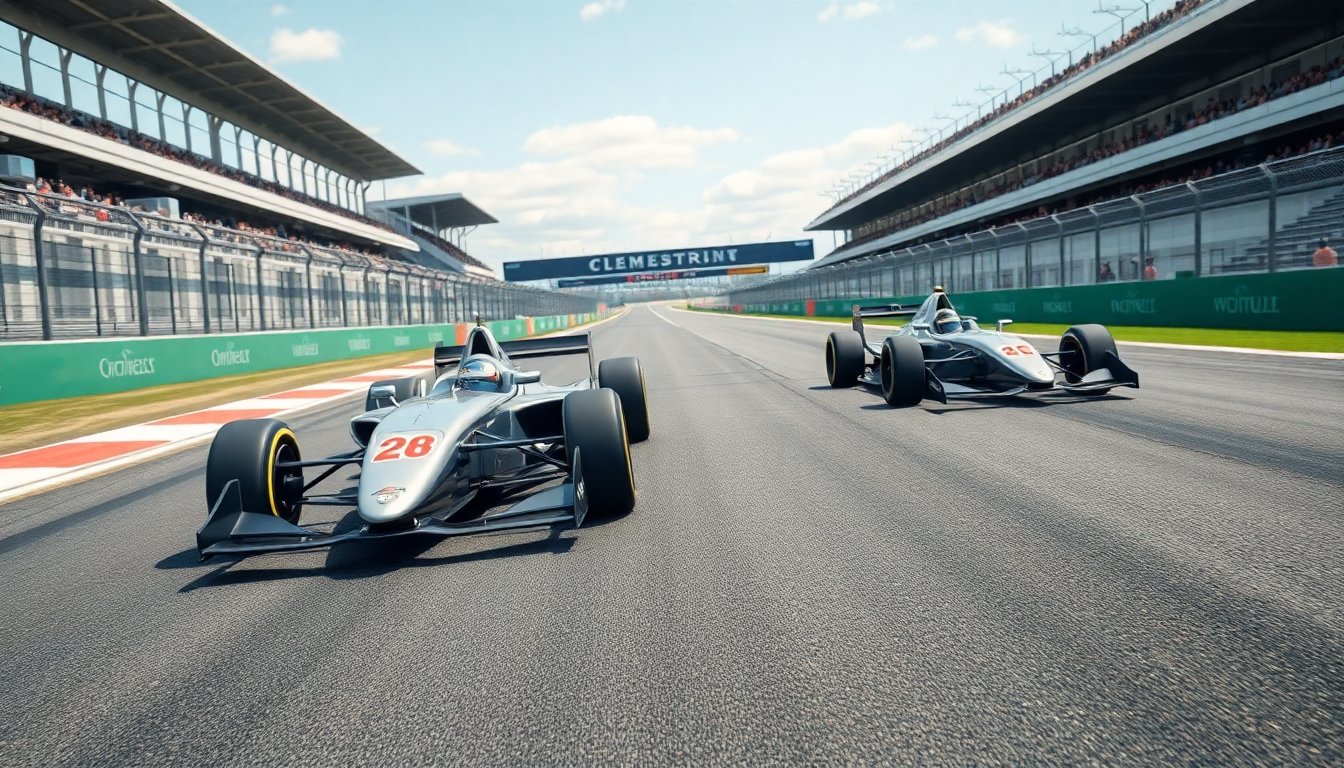
Mercedes set the tone for the season in Melbourne, turning the rulebook shake-up into immediate advantage with a composed one-two at the Australian Grand Prix. George Russell took the win and young programme graduate Kimi Antonelli completed the podium, giving the team an early benchmark as the championship resets under new technical regulations.
Trouble at the lights — and a well-timed team response
Both Mercedes cars left the grid with unusually low battery states, which cost them places in the scramble away from the start. Russell slipped to second while Antonelli dropped further back, only to carve his way forward with a mix of audacious moves and careful tyre conservation. Russell spent much of the opening phase trading paint with Charles Leclerc, a tense exchange that saw the lead swap a few times before strategy and tyre life began to tell.
The virtual safety car on lap 12, deployed to recover a stranded Red Bull, proved decisive. Teams pounced on the neutralised window: some pitted to attempt undercuts, others stretched their stints hoping to overcut. Mercedes opted for hard tyres during that sequence, then reassessed as tyre degradation turned out to be lower than many forecast. Engineers switched course from an aggressive two-stop blueprint to a controlled single-stop approach, and the combination of clean pit work, precise battery use and consistent long-run pace carried them to the flag. Russell even added the fastest lap, a 1:22.670, underlining the balance between outright speed and smart energy deployment.
Antonelli’s climb felt like the best of both worlds — fearless overtakes when the moment demanded it, conservative spell-saving when tyre life mattered. That blend allowed him to regain ground without an extra visit to the pits and hold off late pressure. For Mercedes, the weekend was validation that pre-season promise translated to race execution: rapid problem-solving, tidy stops and measured risk-taking.
Stewarding, penalties and the finer points that matter
Off the track, the stewards’ system continued to influence team behaviour. Investigations into various incidents — contacts, track-limit breaches and procedural issues — could result in penalty points or grid drops. Those sanctions are more than paperwork: points on a driver’s Super Licence remain for 12 months, and hit 12 points means a one-race ban. Teams are increasingly factoring these arithmetic risks into instructions and setups; a momentary gain on track can turn costly if it pushes a driver closer to suspension.
Several drivers arrived in Melbourne carrying existing points. Notable totals reported to race control included Ollie Bearman on 10 points, while Liam Lawson and Lance Stroll each sat on six. Other names, such as Oscar Piastri, Carlos Sainz and Max Verstappen, also carried points from past incidents. Those tallies shape in-race directives — more caution for drivers near the threshold, more latitude for those with clean records.
Valtteri Bottas’s situation illustrated how timing and wording in the regulations can change outcomes. A five-place grid penalty from the 2026 Abu Dhabi Grand Prix remained recorded in stewarding documents, but under article B2.5.4 a legacy penalty that falls outside a 12-month window and has not been served can be excluded when assigning a temporary grid position. In Melbourne that meant Bottas did not have to serve the historical five-place drop. It’s a reminder that procedural detail can be as consequential as on-track performance.
What this means going forward
Mercedes leave Melbourne with both a trophy haul and clear workstreams: refine battery management on the grid, sharpen responses to mid-race neutralisations, and keep pit execution ultra-reliable. Rivals will study the weekend closely — especially how the Silver Arrows balanced tyre life and energy strategy — and the next rounds should reveal whether Mercedes can sustain this advantage.
For everyone else, the message is plain: marginal gains and margin of error are both smaller under the new rules. Penalty points, pit timing and energy deployment all add up across a season. Teams that blend pace with procedural discipline will be the ones best placed to convert promising weekends into a championship campaign.