
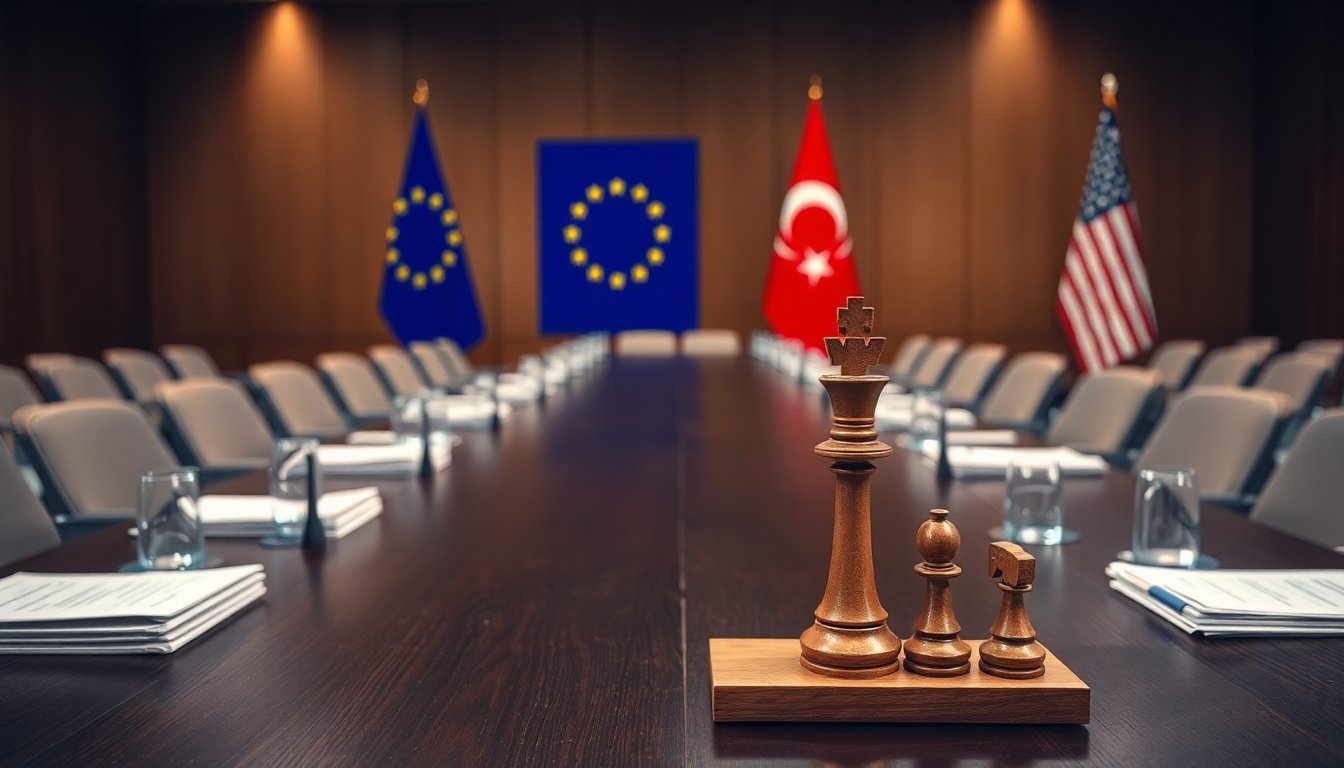
FLASH — At the Munich Security Conference on February 13, German chancellor Friedrich Merz argued bluntly that the post–Cold War order is effectively over. His address framed a decisive shift toward classic great‑power competition and called on Europe and North America to stop taking automatic alignment for granted.
What he said, in brief – Merz said the era of predictable rules and shared norms has been replaced by a world in which coercion and leverage matter more than consensus. – He urged a pragmatic, interest‑based transatlantic partnership built on credible deterrence, coordinated tools and concrete capabilities rather than assumed cultural or political uniformity. – He pressed Europe to invest more in defence, to diversify critical supply chains and to deepen intelligence and planning ties with trusted partners — while acknowledging the United States cannot manage these challenges alone.
Why it matters Merz framed this not as temporary turbulence but as a structural change. He pointed to Russia’s full‑scale invasion of Ukraine as the clearest proof of the new reality and warned of systematic attempts by China to exploit strategic dependencies. For Merz, the response must be practical: pooled capabilities, tighter defence planning, and economic resilience to blunt coercive tactics.
Highlights from the speech – Rebuild transatlantic trust: Merz called for honest, business‑like cooperation across the Atlantic — less idealism, more operational clarity. – Speak the language of power politics: Europe should be ready to shoulder heavier military roles and consider nuclear‑deterrence cooperation with carefully chosen partners. – Policy over platitudes: He focused on specific tools — coordinated weapons supply, sanctions design, technology controls and supply‑chain diversification.
Reactions in Munich U.S. officials in Munich voiced cautious support. The U.S. delegation, led by Secretary of State Marco Rubio, described the moment as a chance to reengage with allies while protecting U.S. priorities. Diplomats reported civil but direct exchanges; several attendees called for immediate working groups on defence planning and supply‑chain resilience, while others sought clarity about what “coordinated responses to coercive tactics” would mean on the ground.
The conference atmosphere Delegates met against the backdrop of ongoing Russian attacks on Ukrainian infrastructure, which underscored the urgency of the discussions. Conversation ranged from immediate military aid and sanctions to longer‑term frameworks for deterrence. Preparatory steps for joint procurement, testing interoperable systems and auditing critical supply chains were signalled as near‑term priorities. No country proposed abrupt decoupling from partners; instead, speakers described a strategic rebalancing aimed at greater autonomy without severing established ties.
Next steps Merz pushed for tangible follow‑up: joint planning, pooled capabilities, closer consultations on weapons supply, and synchronized sanctions. Several capitals signalled readiness to explore concrete measures. The next diplomatic milestone is a set of Geneva talks on February 17–18, where trilateral discussions involving Russia, Ukraine and mediators are scheduled to take place. How quickly Merz’s rhetorical shift becomes policy will depend on those follow‑ups and the working groups that conference participants now promise to set up. The debate has moved from diagnosis to implementation — but expect incremental, politically cautious steps rather than a sudden realignment. Our reporters on the ground will continue to track developments and report on whether the renewed talk of transatlantic repair turns into concrete action.