
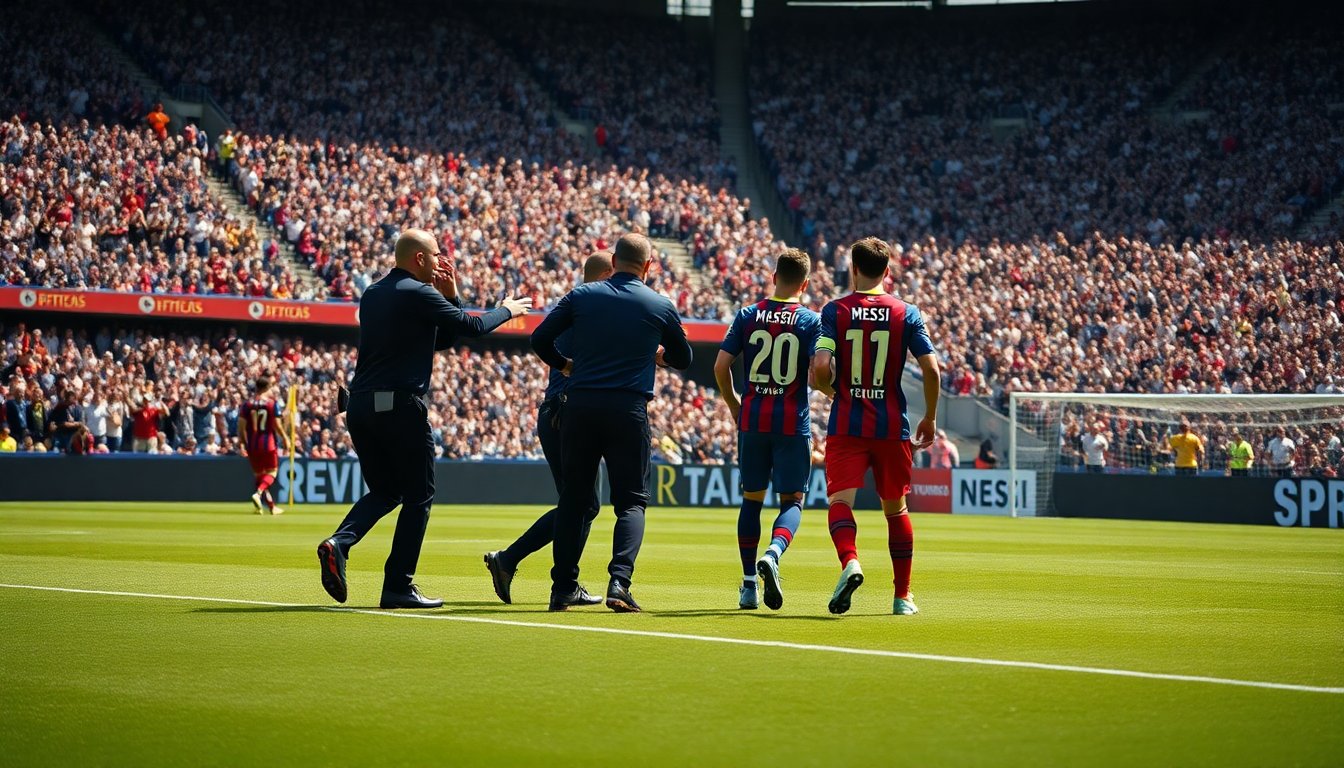
A sunny afternoon in San Juan turned unexpectedly chaotic when a pitch invader sprinted past advertising boards and reached Lionel Messi during Inter Miami’s preseason friendly with Independiente del Valle. The match—rescheduled from Feb. 13 after Messi had a hamstring scare—was sold out and had the relaxed tone typical of exhibition games until the breach jolted players, staff and thousands of fans in the stands.
What happened
In the second half, several spectators vaulted the barrier and ran onto the turf. Most seemed to be chasing a selfie or a quick embrace; one shirtless man made it all the way to Messi and grabbed him before stewards closed in. There was a brief scramble: the intruder and Messi went to the ground, stewards restrained the fan and dragged others off the field. An opposing player even stepped in to help shield Messi while security restored order. Thankfully, Messi stood up immediately, showed no visible injury and later converted a second-half penalty to seal a 2–1 win for Inter Miami.
Immediate response and aftermath
Stewards detained the intruders within moments and escorted them from the pitch. Medical staff checked players as a precaution; no serious injuries were reported and play resumed once the turf was cleared. Club and stadium officials described the response as prompt, and organizers have since said they will review footage and procedures. Social media erupted in the aftermath—some users reacted with alarm, others with dark humour—but many voiced frustration about how easily several fans reached the playing area.
Why this matters
Pitch invasions are more than an annoyance: they pose real safety risks. When matches feature globally recognized athletes, the stakes rise. A fast-moving crowd, a single determined person and a small gap in perimeter control can create dangerous moments for players, officials and fellow supporters. Such incidents expose weaknesses in screening, steward deployment and barrier design at venues that might not normally host events of this profile.
Security experts weigh in
Security consultants pointed to familiar failings: insufficient stewarding at critical zones, gaps in physical barriers and uneven coordination between venue teams and local authorities. Their recommendations are practical and often low-tech—more staff where crowds linger, clearer sightlines, rehearsal of contingency plans—but also include modern upgrades such as better CCTV coverage, body-worn cameras for stewards and predictive crowd-management tools that flag risky movement before it escalates.
Proposed changes
Clubs and venues are likely to adopt a layered approach: stronger perimeter fences where feasible, higher steward-to-spectator ratios near the pitch, rehearsed rapid-response teams and improved ingress screening for high-profile fixtures. Organizers may also increase pre-event communication to ticket holders about prohibited behaviour and the consequences of breaches. These measures aim to protect players while preserving the matchday atmosphere—something supporters and clubs both want to keep.
Balancing access and safety
Supporter groups have urged proportionate measures. Fans do not want football turned into an over-policed experience, but most agree that protecting players is non-negotiable. The debate is now about finding the balance: how to keep fans close enough to feel part of the occasion without creating avoidable risks. Many security specialists say that clearer steward visibility and better communication—announcements, signage and staff briefings—can defuse situations without eroding the live-match vibe.
Broader implications
Beyond the immediate aftermath, incidents like this carry legal and reputational risks for clubs and venues. A friendly match’s relaxed format can mask vulnerabilities that would be unacceptable at major tournaments. As a result, governing bodies, venue operators and clubs are expected to tighten guidance for exhibition matches featuring marquee players, standardizing best practices so smaller venues aren’t caught off guard.
What to expect next
Organizers have promised reviews and closer coordination with local authorities. Fans can likely expect more visible security at future friendlies—especially those involving big names—plus clearer messaging about entry rules and steward protocols. Any changes will be communicated through official club and venue channels before upcoming fixtures. Fortunately, quick intervention prevented physical harm and the match concluded without further incident. Still, the episode has reignited conversations about how to protect players and preserve the live experience fans cherish—conversations that clubs and venues will be carrying out long after the final whistle.