
Table of Contents
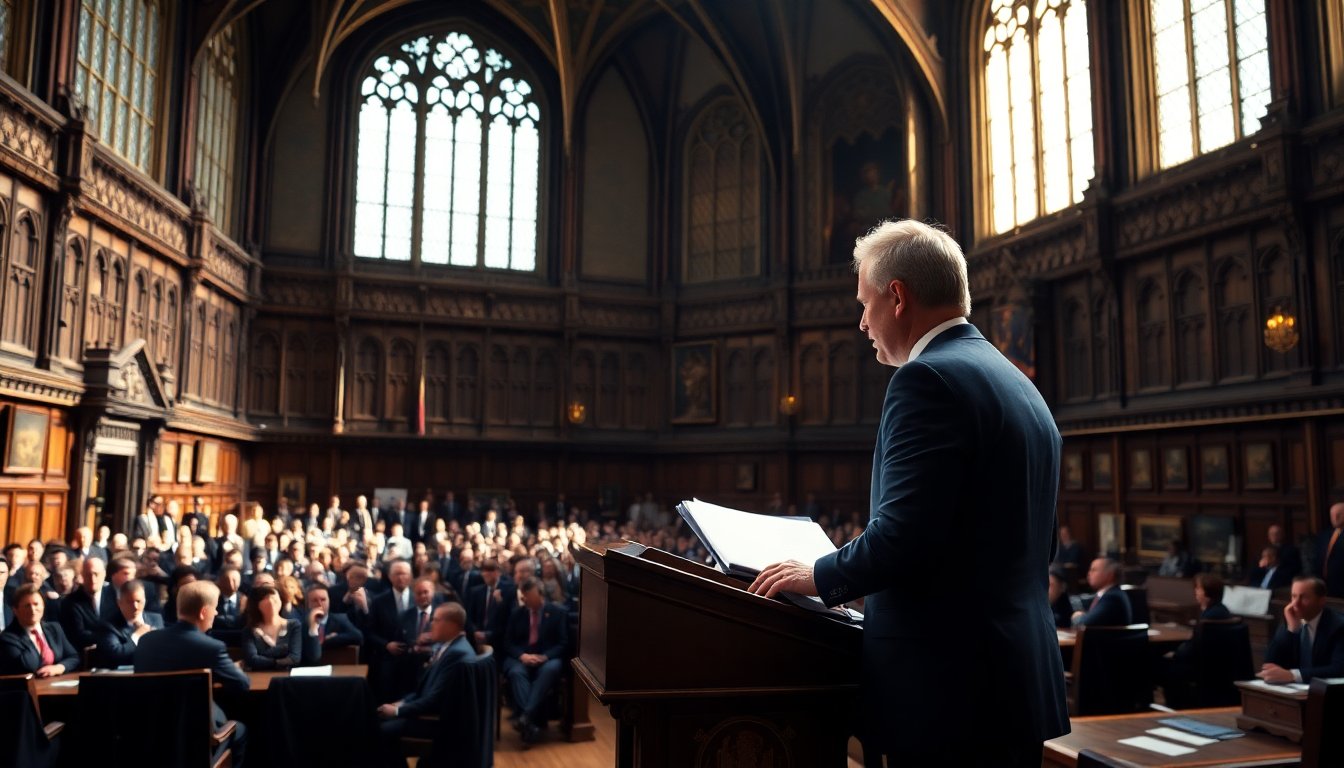
In a pivotal moment for transatlantic relations, U.S. House Speaker Mike Johnson addressed the British Parliament on Tuesday. His visit occurs amid heightened tensions between the United States and its European allies, particularly following President Donald Trump‘s controversial remarks about Greenland. Johnson underscored his commitment to fostering unity and stability as the U.S. approaches its 250th anniversary.
This address marks a historic first, as it is the first time a sitting House Speaker has spoken before the British Parliament. Given the recent diplomatic strains, including Trump’s criticism of U.K. Prime Minister Keir Starmer over the Chagos Islands, Johnson sought to reaffirm the enduring ties that connect the U.S. and U.K.
Reinforcing the alliance
In his speech, Johnson emphasized that, despite ongoing disagreements, the foundations of the U.S.-U.K. alliance remain robust. He stated, “We have always managed to navigate our differences amicably as friends, and we will continue to do so.” This assertion is particularly relevant in the current geopolitical landscape, where challenges from adversarial nations are more pronounced than ever.
Johnson shared insights from a recent conversation with President Trump, highlighting the urgency of his mission to enhance cooperation among allies. He characterized his role as one of stability, signaling determination to adversaries. The context of his address was not only a celebration of American independence but also a call for reflection and recommitment among Western nations facing external threats and internal discord.
Confronting global threats
Johnson addressed the escalating threats posed by nations such as China, Russia, and Iran. He expressed concern over these countries’ aggressive tactics and their attempts to undermine democratic institutions through sophisticated methods of subversion. Johnson warned, “As we observe these nations grow bolder, we must collectively confront the challenges they present to global stability and human rights.”
Notably, Johnson highlighted the significance of the Arctic region, where tensions have risen due to strategic interests. He pointed out that the Trump administration is actively addressing these modern threats, emphasizing the need for vigilance in safeguarding global security.
Collective action for security
Johnson advocated for a united front among allies in the face of such threats. He asserted that while individual nations can debate strategies, they must agree on the necessity of countering hostile actions. He commended allies, particularly the U.K., for their recent collaborative efforts, including enforcing sanctions against adversarial nations.
In a key point of his address, he clarified that Trump’s “America First” stance does not equate to isolationism. Instead, he emphasized that national interests can coexist with comprehensive security strategies through international alliances such as NATO and AUKUS. Johnson remarked, “Our partnerships demonstrate that nations can responsibly prioritize their interests while working together for collective security.”
Shared values and military strength
Johnson’s speech resonated with reflections on the historical bonds between the U.S. and U.K. He emphasized that military might and economic strength are meaningless without a shared commitment to core values. He stated, “While having robust militaries and thriving economies is important, they hold little weight if we forget the principles we stand for.” This sentiment underscores the necessity of a unified approach to defending democratic ideals in the face of rising global authoritarianism.
House Speaker Mike Johnson’s address to the British Parliament serves as a reminder of the enduring partnership between the U.S. and U.K. as they navigate complex geopolitical challenges. By fostering dialogue and reaffirming shared commitments, both nations can work towards a more stable and secure future.