
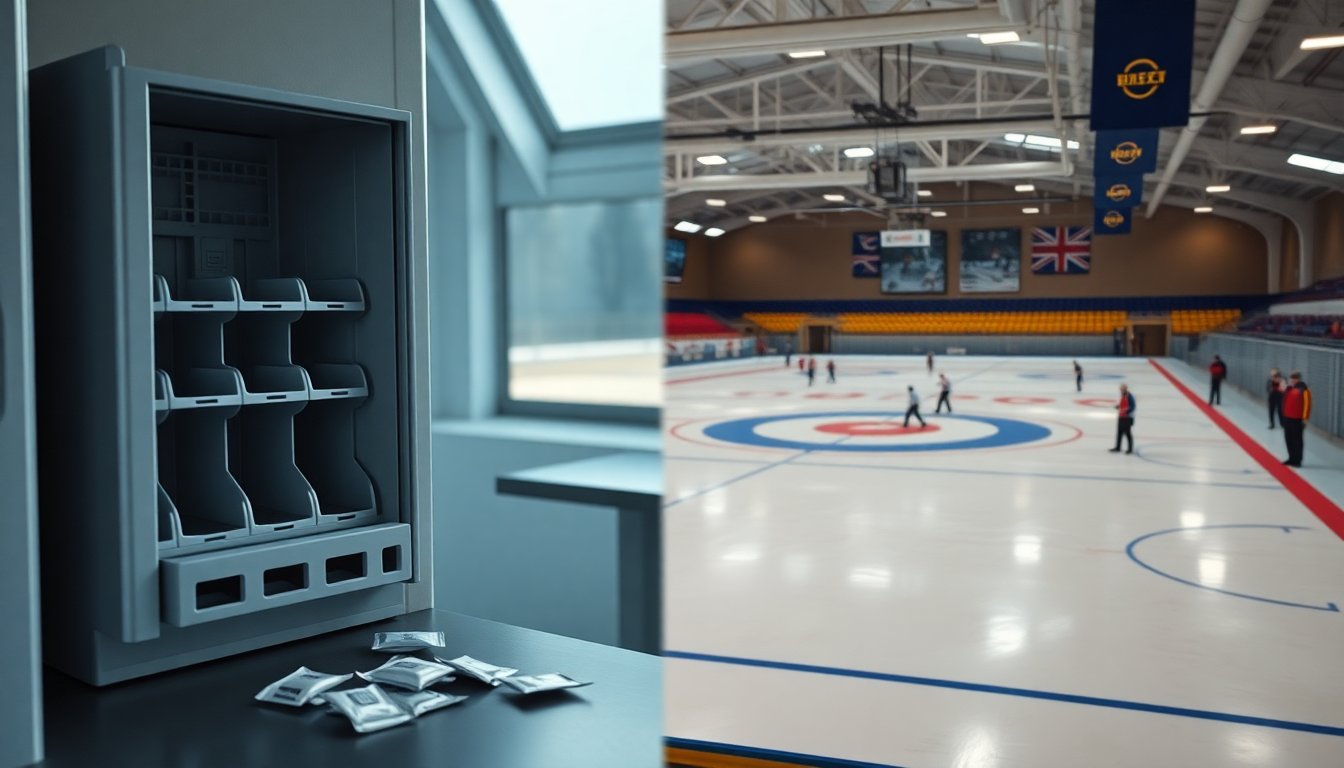
At the Milan–Cortina Winter Games two unrelated but headline-grabbing moments caught attention: a temporary run on free condoms in the athlete villages, and a heated exchange between teams during a Canada–Sweden curling match. Both prompted public responses from organisers and federations — but neither changed results or medal standings.
Condoms: demand outpaced supply Organisers acknowledged that dispensers in the Olympic Villages were emptied within a few days after distribution began. Local media reported fewer than 10,000 condoms were initially handed out for roughly 2,871 athletes — far below the hundreds of thousands that some summer Games have provided. Officials say the shortfall wasn’t a policy change but a supply issue: demand proved higher than expected and shipments are being replenished, with additional deliveries due between Sunday and Monday and ongoing restocking planned throughout the Games.
The packets, stamped with the Olympic and Paralympic logos, quickly showed up on social channels after athletes posted photos. Lombardy health authorities and the organising committee framed the distribution as routine public-health work — a preventive measure intended to reduce sexually transmitted infections among athletes and spectators. Police reported no legal concerns about the on-site distribution.
Curling: a disputed double-touch and a sharp exchange The other incident played out on the ice during a round-robin match on Feb. 13. Swedish players claimed a light push altered the path of a stone — an alleged “double-touch” — which sparked a tense exchange with the Canadian side. Canada denied any deliberate rule-breaking and went on to win 8–6.
World Curling reviewed the situation, clarified that video replay isn’t used to overturn such judgments, and said no formal rules breach was recorded. Rather than issuing sanctions, officials delivered a verbal warning focused on the language used by players, reminding teams that conduct remains under scrutiny.
What this means going forward Both stories exposed different operational pressures at a major multisport event: logistical planning and public-health provisioning on one hand, and the emotional intensity of competition on the other. Organisers have committed to continued monitoring and steady resupply of health materials; the sport’s governing body has signalled it will keep an eye on player behaviour and step in if tensions escalate.
In short: supplies are being restocked and officials say the curling exchange was handled with a warning — neither episode affected competition outcomes.