
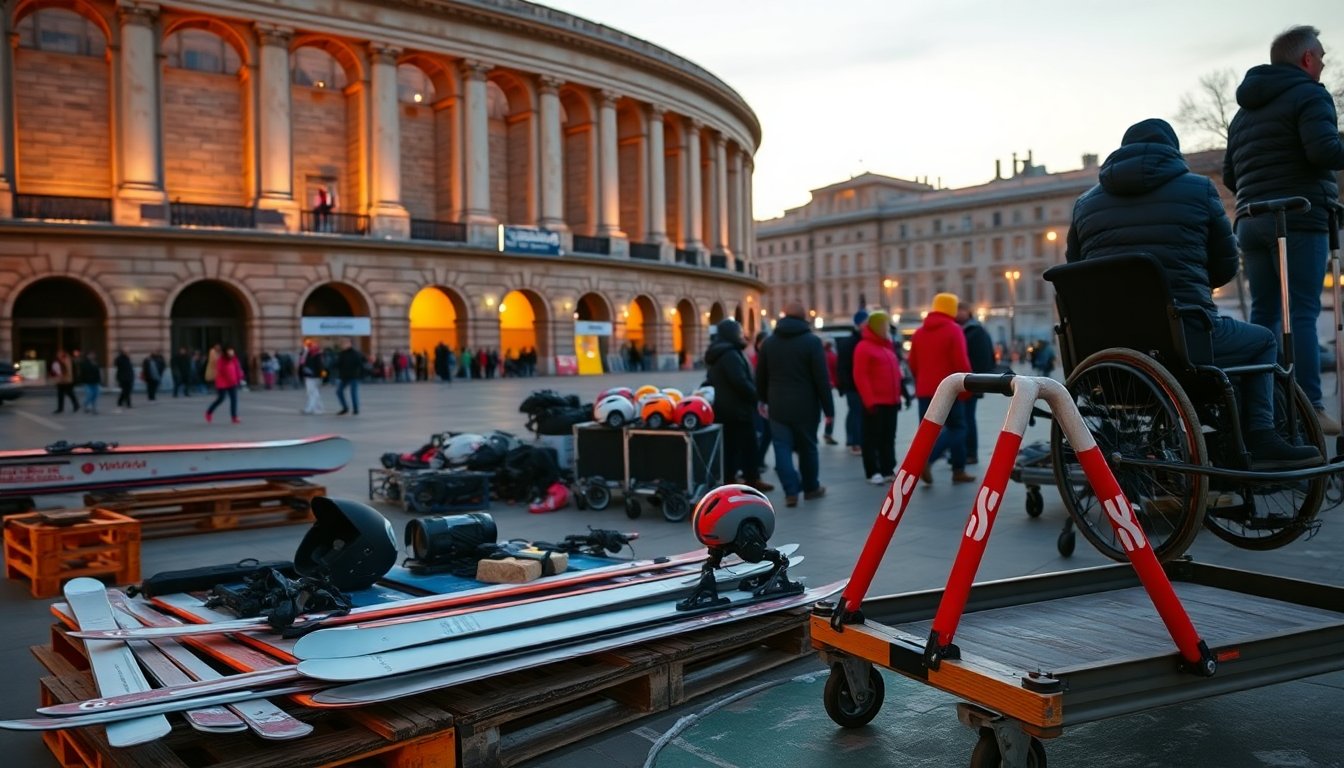
Verona opens the Winter Paralympics as Canada sends 50 athletes
Northern Italy plays host to the Winter Paralympics, and Canada’s team arrives with 50 athletes set to compete across six sports, officials say. The opening ceremony takes place at Verona Arena on Mar. 6; CBC will carry a pre-show at 1:30 p.m. ET and the live ceremony at 2 p.m. ET.
What to know
– Who: Canada’s 50-athlete delegation – What: the Winter Paralympic Games in northern Italy – When: Opening ceremony Mar. 6 (competition runs through mid‑March) – Where: Verona Arena (ceremony) and nearby regional venues for sport events – Why: Athletes will vie for medals across six sports while showcasing advances in adaptive sport
A compact, broadcast-friendly Games
This edition emphasizes a compact schedule and regional hosting to keep travel short and operations efficient. Organizers clustered events at existing facilities and prioritized accessible infrastructure, which helps athletes spend less time in transit and more time training and recovering. Scheduling also leans toward predictable, viewer‑friendly windows to suit broadcasters while trying to protect athlete recovery where possible.
Classification, equipment checks and anti‑doping controls follow International Paralympic Committee rules, with medical and technical staff on hand at each venue. Adaptive technology — from prosthetics and sit‑ski systems to on-site performance monitoring — continues to play a growing role in preparation and competition.
Venues and program highlights
Rather than concentrating everything in a single city, the Games spread events across a region to take advantage of established winter-sports towns and facilities. Cortina d’Ampezzo hosts alpine skiing, snowboarding and wheelchair curling; Nordic events (cross‑country and biathlon) are in Tesero; para hockey is staged in Milan at a venue adapted for sled hockey.
Only six sports are on the program, so each event carries extra weight. Of the medal events, most are in alpine and Nordic skiing disciplines, split by classifications for standing, sitting and visually impaired athletes. Snowboarding contributes a number of medal events, and team sports such as para hockey and wheelchair curling add head‑to‑head drama. Wheelchair curling also includes a mixed doubles event this time around; Canada did not qualify a team in that new format, but the traditional four‑player mixed event remains.
Canada’s team: experience and youth
Canada’s roster blends seasoned medallists with rising talent. Veterans such as Mark Arendz — one of the country’s most decorated winter para athletes — are on hand to anchor the squad. Wheelchair curler Ina Forrest continues her long Paralympic career, and para hockey veteran Greg Westlake is back for another Games. Team leaders named as flag‑bearers include Tyler McGregor and other senior athletes; some opted to accept the honour remotely to focus on events the following day.
The team mixes ages and backgrounds: young athletes racing early in their international careers alongside established performers trusted to handle high‑pressure moments. That blend gives Canada flexibility but also means coaches must manage recovery and tactical selection carefully under a condensed timetable.
Medal outlook
Given the program’s heavy emphasis on skiing, Canada’s best medal chances are in alpine and Nordic events where volume of contests and classification diversity create multiple podium opportunities. Team sports present tougher, more unpredictable pathways; para hockey and wheelchair curling face deep international fields and will test Canada’s tactical depth.
Politics and protests
These Games are taking place against a charged geopolitical backdrop. Decisions around the participation of some national delegations prompted protests and boycotts by certain countries; a small number of NOCs expressed opposition to how those decisions were handled. Organizers increased security and stressed impartial incident reporting, while some delegations chose not to attend the opening ceremony in protest. Such choices inevitably affect the optics of the event and which moments reach the biggest audiences.
What to know
– Who: Canada’s 50-athlete delegation – What: the Winter Paralympic Games in northern Italy – When: Opening ceremony Mar. 6 (competition runs through mid‑March) – Where: Verona Arena (ceremony) and nearby regional venues for sport events – Why: Athletes will vie for medals across six sports while showcasing advances in adaptive sport0
What to know
– Who: Canada’s 50-athlete delegation – What: the Winter Paralympic Games in northern Italy – When: Opening ceremony Mar. 6 (competition runs through mid‑March) – Where: Verona Arena (ceremony) and nearby regional venues for sport events – Why: Athletes will vie for medals across six sports while showcasing advances in adaptive sport1
What to know
– Who: Canada’s 50-athlete delegation – What: the Winter Paralympic Games in northern Italy – When: Opening ceremony Mar. 6 (competition runs through mid‑March) – Where: Verona Arena (ceremony) and nearby regional venues for sport events – Why: Athletes will vie for medals across six sports while showcasing advances in adaptive sport2
What to know
– Who: Canada’s 50-athlete delegation – What: the Winter Paralympic Games in northern Italy – When: Opening ceremony Mar. 6 (competition runs through mid‑March) – Where: Verona Arena (ceremony) and nearby regional venues for sport events – Why: Athletes will vie for medals across six sports while showcasing advances in adaptive sport3