
Day eight at the Milano‑Cortina Winter Games delivered a little of everything for Team Canada: flashes of brilliance, frustrating near-misses and a handful of off‑ice stories that kept the mood lively in the athletes’ village. The delegation added to its medal count but still chases that elusive first gold as skaters, sliders and skiers jockey for position in the coming days.
Short-track: speed, contact and fine margins
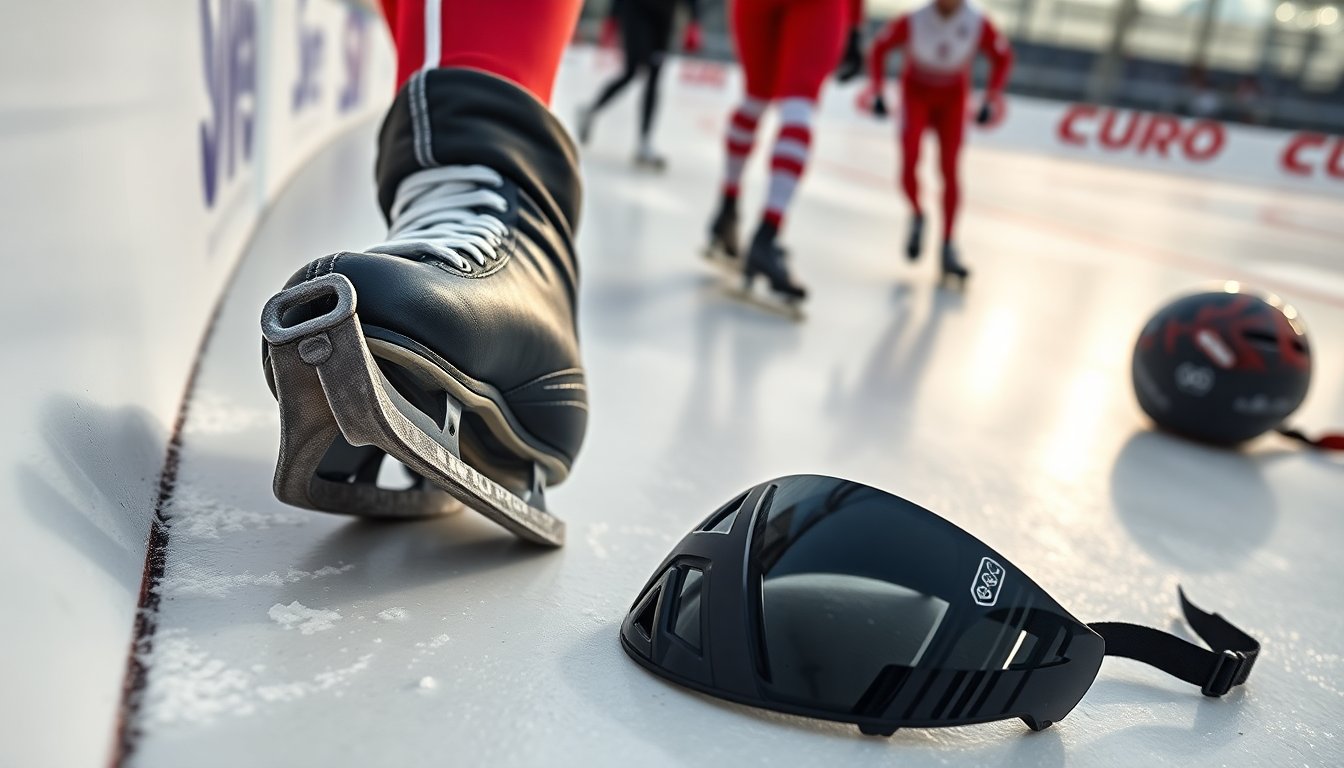
Canada arrived with high hopes on the short‑track oval, and the races were a reminder of how quickly fortunes can change in that sport. Skaters looked fast and tactically sharp, but collisions and penalties reshuffled results throughout the day. Split‑second positioning — and how officials interpret it — proved decisive more than once.
William Dandjinou was among the most visible examples. The favourite in the 1,500 m grabbed an early lead and looked comfortable until contact with other skaters with three laps to go knocked him off rhythm; he faded to fifth. Earlier, he finished fourth in the 1,000 m, leaving him with two agonizing near‑misses rather than the hardware many expected. Coaches stressed the razor‑thin margins of short‑track and the role race dynamics play in outcomes as the team refocuses on his upcoming events.
Steven Dubois also raced the 1,500 m: he crossed the line seventh but was upgraded after a rival was penalized. Felix Roussel’s bid ended in the semifinal after he received a yellow card for contact while attempting a pass on Latvia’s Roberts Kruzbergs. The podium in the 1,500 m went to the Netherlands’ Jens van ’t Wout (gold), South Korea’s Daeheon Hwang (silver) and Kruzbergs (bronze) — a small illustration of how a single call can flip final placings.
Relay resilience
The women’s 3,000 m relay offered brighter news. After early legs from Danae Blais, Florence Brunelle and Kim Boutin left Canada chasing, Courtney Sarault produced a powerful closing shift, moving the team into second on the back straight to seal a spot in the final. It was a textbook reminder that in relays, clean exchanges and perfectly timed attacks can outweigh raw speed.
Hockey and curling: milestones and frictions
On the ice, the women’s hockey team moved into the quarterfinals with a 5‑1 victory over Germany. Marie‑Philip Poulin scored, bringing her Olympic goal total level with retired icon Hayley Wickenheiser — a milestone celebrated by teammates and fans alike. The same team’s earlier heavy loss to the United States, however, underscored lingering consistency issues heading into knockout play.
In curling, Canada’s men stumbled again, losing 9‑5 to Switzerland and deepening their round‑robin troubles. The match featured a contentious exchange over a possible double touch — the second such dispute in as many days — and World Curling issued a verbal warning to vice‑skip Marc Kennedy after a heated on‑ice confrontation earlier in the tournament. Momentum and emotion can pivot quickly in tight games; coaches emphasized the need for discipline and mental reset as the schedule tightens.
Other moments
Denmark produced a dramatic, near‑centre‑ice goal in men’s preliminary hockey play — a rare long‑range finish that lit up the crowd and social feeds. Small bursts of individual brilliance and sudden errors continue to shape the tournament across sports.
Sliding and freestyle: farewells and forward motion
The sliding track brought mixed emotions. Austria’s Janine Flock won the women’s skeleton, while Canadian veterans such as Jane Channell and Hallie Clarke completed what they described as their final Olympic runs. Neither finished on the podium, but both framed their performances as meaningful conclusions and valuable experience — a reminder that Olympic stories include endings as well as medals.
Freestyle skiers offered reason for optimism. Megan Oldham topped the big‑air qualifiers with a combined 171.75 after two technically ambitious jumps, and Naomi Urness also advanced to the final. With standout names like Eileen Gu and Mathilde Gremaud among the top qualifiers, the big‑air final promises to be fiercely competitive.
Short-track: speed, contact and fine margins
Canada arrived with high hopes on the short‑track oval, and the races were a reminder of how quickly fortunes can change in that sport. Skaters looked fast and tactically sharp, but collisions and penalties reshuffled results throughout the day. Split‑second positioning — and how officials interpret it — proved decisive more than once.0
Short-track: speed, contact and fine margins
Canada arrived with high hopes on the short‑track oval, and the races were a reminder of how quickly fortunes can change in that sport. Skaters looked fast and tactically sharp, but collisions and penalties reshuffled results throughout the day. Split‑second positioning — and how officials interpret it — proved decisive more than once.1