
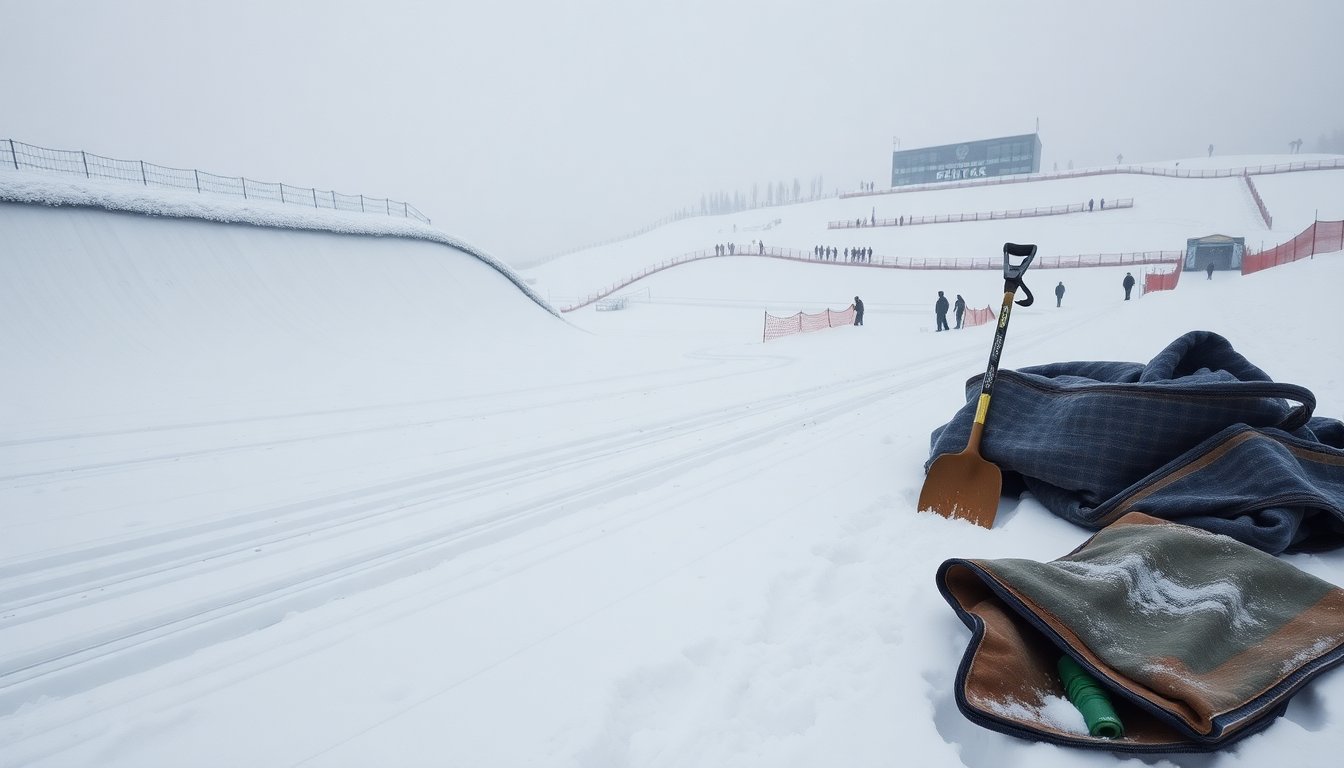
A sudden storm on February 17 slammed into the Milano–Cortina sites, turning a packed competition day into a firefight of schedule changes. Heavy snow and fierce gusts cut visibility across judged features, forcing officials to postpone several freeski and snowboard events. Men’s and women’s freeski aerials qualifications were scratched from the timetable, and the women’s snowboard slopestyle final was pushed back as crews battled shifting in‑run surfaces and fresh accumulation on takeoffs and landings. Athletes, coaches and fans were left waiting for updated start times while organisers tried to balance safety, fair judging and broadcast obligations.
What happened on the ground
Meteorological feeds and race‑control logs recorded repeated wind alerts and new snowfall that narrowed sightlines and left landing zones with fresh buildup between runs. Wind gusts rose above routine operational limits, so technical delegates consulted the event manual and enacted contingency plans. Officials briefed team leaders and circulated revised timetables, repeatedly stressing that athlete safety and judging consistency drove their calls.
Photos from the venues showed emptied grandstands and delayed warm‑ups as course crews ran multiple grooming cycles to clear snow and reprofile takeoffs. Timing and judging systems remained operational, but until visibility and wind improved, conditions were judged unsafe. The ripple effects reached deep into broadcast schedules, athlete recovery plans and team logistics as organisers and media partners compressed or reallocated programming blocks on the fly.
How teams adapted
Canadian athletes and support staff shifted gears quickly. Rather than pushing for extra high‑impact reps, competitors leaned into mental preparation: watching footage, rehearsing visualization techniques and honing tactical plans. Trainers reworked recovery windows, coaches scouted nearby arenas for alternative training times, and equipment managers circulated checklists for wind‑read protocols. Broadcasters adjusted production timelines to keep coverage continuous while striving not to disadvantage anyone.
The decision process
Inspections before the women’s aerials qualification first flagged deteriorating visibility and new snow on the course. Organisers briefly explored an early‑morning slot to salvage the day’s program, but further inspections and weather updates led them to pull the event. Men’s qualifiers were tentatively moved to the following day, while parallel wind alerts in the Livigno snow park forced the slopestyle delay. Throughout, race directors, federation technical delegates, meteorologists and course teams pooled observations and took staged actions: extra grooming, athlete briefings and jury consultations before issuing public notices.
Who drove the calls
The hard decisions came from race directors, technical delegates and local organising officials, with critical input from course crews, meteorologists and broadcast partners. Athlete liaisons, national coaches and medical leads kept competitors informed and ready to pivot. Sports psychologists and performance analysts also played a role, helping athletes manage the mental strain of a prolonged, uncertain wait.
Competitive and logistical fallout
Immediate impacts were practical and uneven: tighter recovery windows, altered warm‑ups and possible run‑order shifts. Those factors typically favour teams with deeper support networks and flexible training resources. For broadcasters, squeezed slots mean a tougher production puzzle and potential financial consequences. Expect organisers to refine faster, clearer procedures for rapid schedule changes to shrink uncertainty and protect competitive integrity next time.
A tense curling protest
On the ice, a different kind of drama unfolded during Canada–Sweden curling. Swedish players filed a protest alleging a Canadian curler contacted a released stone — a possible double touch. On‑ice officials completed protest forms and took statements while broadcasters rolled replays from several angles; none delivered a decisive frame showing sustained contact that altered the stone’s path. After roughly five minutes of review, play resumed with the stone left where it was. The episode has prompted federations to talk about clearer replay standards and whether more cameras or new tech could help resolve marginal calls.
Indoor competitions hold steady
While the outdoor events faltered, indoor arenas kept the show moving. Men’s elimination hockey matches continued as scheduled, with Germany and Switzerland grabbing early victories. A Czechia–Denmark preliminary — whose winner would face Sidney Crosby’s Team Canada the next day — influenced coaching choices and ice‑time decisions, underscoring how even separate matches can shape a team’s path. Those indoor contests helped broadcasters preserve a steady narrative as outdoor disciplines were disrupted.
Speed skating: a welcome constant
The oval proved a safe harbor from the storm. The women’s team pursuit lineup — Ivanie Blondin, Valérie Maltais and Isabelle Weidemann — skated under normal conditions as ice technicians certified surface quality and timing equipment. For broadcasters and fans, the event offered a reliable block of programming and kept Team Canada’s medal hopes in clear view amid the day’s turbulence.
What happened on the ground
Meteorological feeds and race‑control logs recorded repeated wind alerts and new snowfall that narrowed sightlines and left landing zones with fresh buildup between runs. Wind gusts rose above routine operational limits, so technical delegates consulted the event manual and enacted contingency plans. Officials briefed team leaders and circulated revised timetables, repeatedly stressing that athlete safety and judging consistency drove their calls.0