
Table of Contents
Fragments from intercepted missile land near Petach Tikva, emergency teams respond
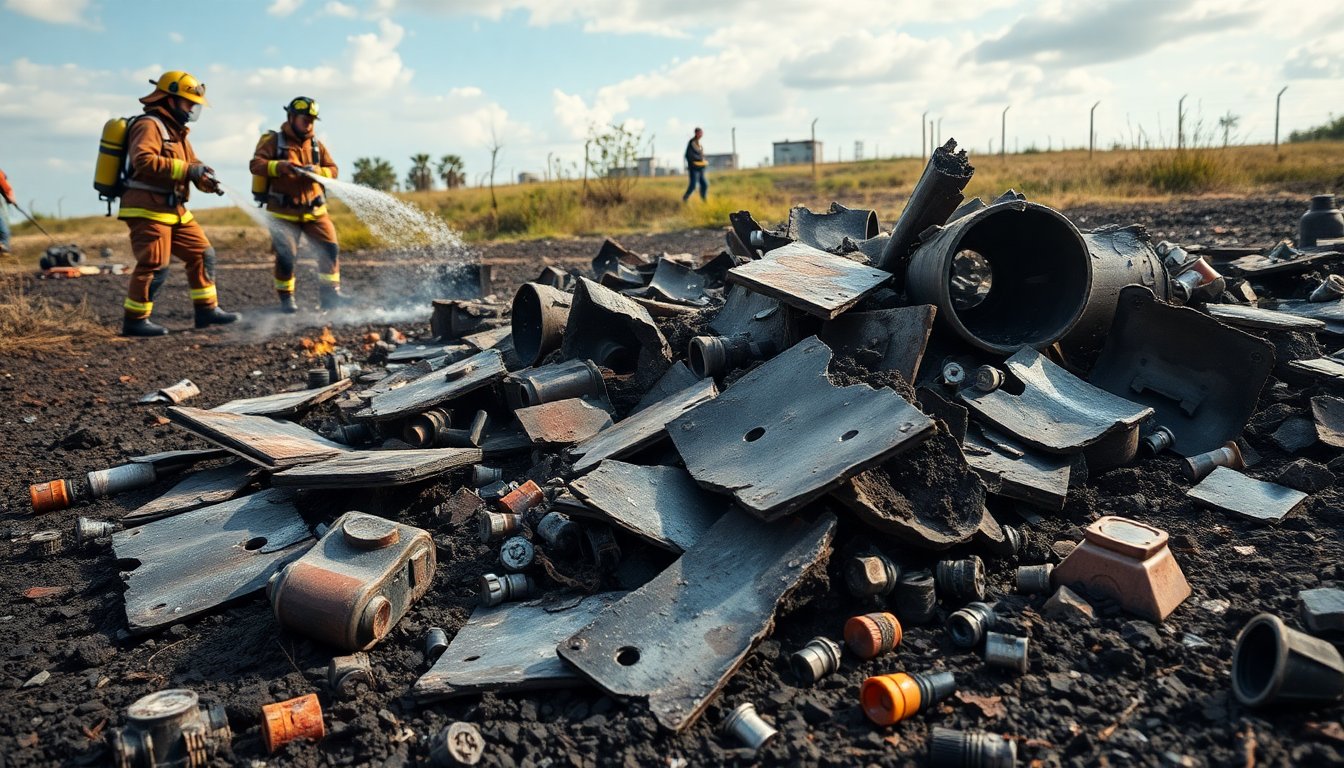
Emergency crews responded on 5 Mar 2026 after fragments from a missile landed near Petach Tikva in central Israel. Video footage released the same day shows firefighters extinguishing several small fires at impact sites.
Local authorities said the debris came from an intercepted projectile believed to have originated in Iran. Officials reported no major structural damage or confirmed civilian casualties at the scene.
The incident occurred amid a widening regional confrontation involving Israel, Iran and allied partners. Analysts say repeated aerial intercepts and falling debris have increased risks to populated areas and raised concerns about unintended escalation.
Police and military investigators are collecting evidence and reviewing the intercept details. Authorities said they will provide updates as inquiries proceed and as security assessments are completed.
What happened near Petach Tikva
Authorities said they will provide updates as inquiries proceed and as security assessments are completed.
Eyewitness video and preliminary reports show fragments of an intercepted missile falling into a residential or semi-urban area near Petach Tikva. The footage depicts small fires at multiple impact points.
Firefighters extinguished flames at the sites. Emergency crews cordoned off the area to recover debris and secure evidence. Police and forensic teams worked to document fragments for technical analysis.
Officials characterized the material as debris from a projectile that was targeted and intercepted before reaching its intended trajectory. Investigators are examining whether any damage to infrastructure or civilian property was caused by the falling fragments.
Local authorities advised residents to avoid cordoned zones and follow instructions from emergency services while the investigation continues.
Debris risks and civilian impact
Local responders reported that falling missile fragments created hazards beyond the original blast radius. They said fragments ignited fires, damaged infrastructure and caused injuries even when air defenses intercepted incoming ordnance.
Emergency teams prioritized extinguishing wildfires and securing perimeter zones to prevent secondary explosions and hazardous material exposure. Medical crews treated several civilians for shrapnel wounds and burn injuries, according to officials on scene.
The episode highlights how the kinetic byproducts of air defenses can impose risks on communities well away from frontline targets. Investigations and safety assessments are ongoing as authorities continue to manage the site and advise residents to avoid cordoned areas.
Context within the wider regional conflict
Following the ongoing site investigations, the incident unfolded amid intensified military activity across the Middle East. Regional and international forces have exchanged strikes in response to a reported killing of Iran’s supreme leader, prompting a cycle of reprisals by Tehran and its allies.
United States and Israeli strikes targeted Iranian assets, and Tehran responded with retaliatory launches. Officials have reported an increase in missile and drone launches across multiple fronts, creating wider security risks for civilian areas and infrastructure.
The escalation has produced operational disruptions to commercial and civilian services in several countries. Airspace restrictions, port delays and damage to energy facilities have been reported, complicating relief and emergency responses on the ground.
Analysts warn that the pattern of reciprocal strikes increases the risk of further spillover. Investigations and safety assessments at the local site are continuing while authorities maintain cordons and advise residents to avoid affected areas.
Strategic objectives and growing uncertainty
Authorities conducting local site investigations say operations aim to degrade command and control networks, reduce missile capabilities and disrupt perceived nuclear threats. Military officials describe the measures as intended to limit the capacity for future aggression.
Some lawmakers and legal experts have questioned the clarity of exit strategies and the legal basis for major campaigns carried out without explicit congressional authorization. Officials characterize the campaign as rapidly evolving, and say plans may be revised within hours as the situation changes.
Regional ripple effects and civilian concerns
Officials say the campaign remains fluid, and plans may change within hours. Beyond the immediate danger from falling debris, the conflict has disrupted everyday life across several countries.
Airports and commercial flight operations have reported near-misses and temporary closures. Some diplomatic facilities have been struck or forced to suspend services. Governments have organized evacuations to move nationals out of high-risk areas.
Communities already coping with displacement face heightened anxiety. Residents report fears of blockades, shortages and interrupted supply lines. Humanitarian organizations warn that restricted access could impede delivery of food, medicine and other critical aid to vulnerable populations.
Local authorities and relief agencies say contingency plans are being reviewed. They emphasize the need for secure corridors and coordinated logistics to prevent further displacement and to maintain essential services.
Military claims and independent verification
Military spokespeople from the main parties have reported strikes, interceptions and specific targets. They say operations have reduced enemy capabilities and that there is no intention to expand campaigns indefinitely. Independent verification from satellite imagery and third-party analysts has confirmed some attacks and documented damage. The fog of war and limited access, however, complicate efforts to establish a complete, immediate picture.
What to watch next
Incidents such as the debris strike in Petach Tikva are likely to recur while missile and drone activity continues across the region. Watch for changes in air-defence postures and new public statements from national leaders that clarify objectives or signal ceasefire moves. Humanitarian indicators will also be critical: evacuations, access for aid convoys and the capacity of local emergency services to respond to unpredictable debris impacts.
Analysts will monitor independent imagery and open-source reporting to corroborate official claims. Continued restrictions on ground access and the fluid security situation will limit verification speed. For communities near conflict zones, maintaining emergency response readiness and secure logistics corridors will remain an urgent, practical priority.
Investigators will examine recovered fragments to confirm their origin, propulsion type and warhead characteristics. Forensic teams will also assess whether additional safety measures are required for nearby civilian areas.
The incident near Petach Tikva underscores that successful air-defence interceptions can still leave debris that damages property and injures people. Emergency services and local authorities said maintaining readiness and secure logistics corridors remains an operational priority as forensic work continues, and officials will publish findings when they are available.