
Table of Contents
The scale of movement inside Lebanon has surged, with humanitarian groups estimating that over 800,000 people — roughly one in seven residents — were uprooted within ten days. Families told reporters they were forced to leave immediately after official mass evacuation order s and sudden bombardments. Many of those displaced arrived with little more than the clothes on their backs; some spent nights on sidewalks or in cars before finding space in improvised shelters. Local officials are scrambling to expand capacity, while charities describe a situation where needs outstrip supplies and existing safety nets are strained to breaking point.
Where people are sheltering and what they lack
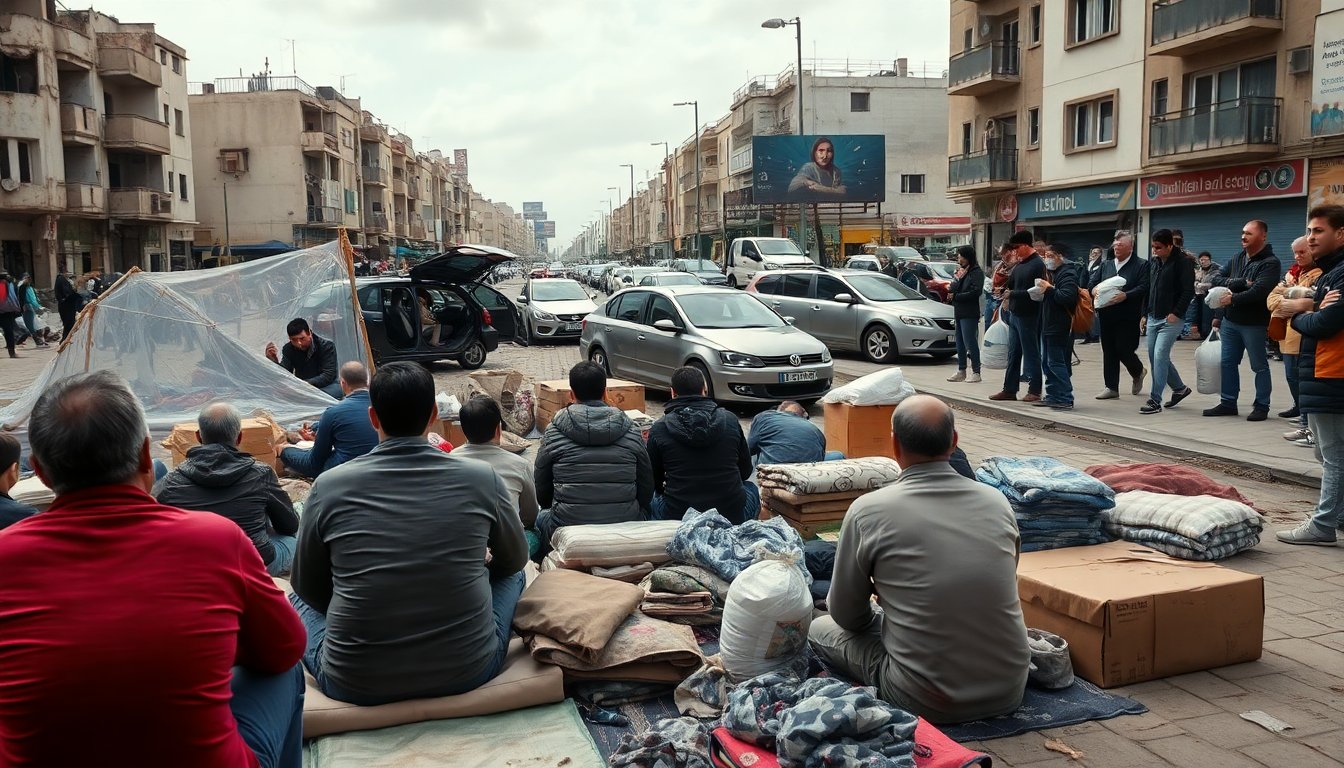
Public buildings converted to refuge points filled rapidly, pushing people into unconventional spaces such as sports facilities and seaside promenades. Lebanon’s largest stadium has been repurposed as a makeshift camp, with hundreds sleeping beneath the stands and in the parking area. The venue provides basic sanitation and intermittent electricity, but lacks adequate bathing facilities and private spaces for families. Those with limited mobility, including wheelchair users, face additional hardships when temporary arrangements do not meet accessibility needs. Aid deliveries of food and water have arrived, but many displaced families say parcels of canned food or a loaf of bread are insufficient for prolonged displacement.
Vulnerable groups and practical barriers
Elderly people, children and those with disabilities are disproportionately affected as shelters become overcrowded. Healthcare providers warn of increasing strain on medical services, while parents seek quieter corners for sleeping and breastfeeding. Landlords and hotels have changed practices amid security concerns, with some increasing rents or tightening guest checks, effectively pricing out families who might otherwise find temporary housing. Volunteers and NGOs continue to coordinate emergency tents and bedding, but logistical bottlenecks and shortages of cash make rapid scaling of assistance difficult.
Humanitarian response and rising warnings
International and local organizations have called the pace of displacement alarming, saying their capacity to respond is limited by years of underfunding. The head of a major migration agency described the situation as a race to keep up while needs escalate faster than resources. Official tallies indicate the government has been able to formally accommodate only about 120,000 people so far, leaving the majority dependent on ad hoc arrangements or staying with relatives. Health authorities reported more than 700 deaths, including over 100 children, underscoring the mortal toll even before longer-term consequences such as disease and disrupted schooling take hold.
Supply chains, checkpoints and crowded roads
Transport corridors became congested as residents moved northward from border areas, producing long delays and complicating relief efforts. Some towns reported gridlock on all main routes into the capital as families fled under cover of darkness. Humanitarian actors face hurdles in moving supplies because of security checks and the sheer volume of people in transit. In several neighborhoods where displaced populations congregated, the sense of temporary safety was shattered by new strikes that hit areas where people had pitched tents by the sea or slept on the boardwalk.
Security drivers and political tensions
The recent spike in displacement follows a rapid escalation of hostilities after militant exchanges across the border. Reports link the intensification of attacks to a sequence of events that included a high-profile killing, and subsequent rocket fire by militant groups into Israel, which prompted heavier strikes in Lebanon. Israel warned residents in multiple villages and suburbs to evacuate, and large troop deployments were reported near the Blue Line, raising fears of a potential ground operation and a prolonged confrontation. Within Lebanon, the crisis has amplified existing political and sectarian tensions, with residents expressing anger and uncertainty over whether they will be able to return home.
Local resilience and the uncertain road ahead
Despite adversity, community groups, churches and informal networks have opened doors to displaced people, hosting migrants and families alike. Yet many evacuees say they do not know when, or if, they will be able to go back. Some who initially stayed put left only after strikes hit places previously considered safe. The combination of an abrupt evacuation notice and widespread strikes has meant that, unlike earlier episodes, large swaths of the country have been affected at once, shortening the time people had to prepare.
Reporting timelines: an associated account of these developments was posted 3/14/2026, and another version was published 15/03/2026 13:54. Aid organizations continue to appeal for funds and access as they warn that without substantial scaling up of assistance, the humanitarian situation could deteriorate further.