
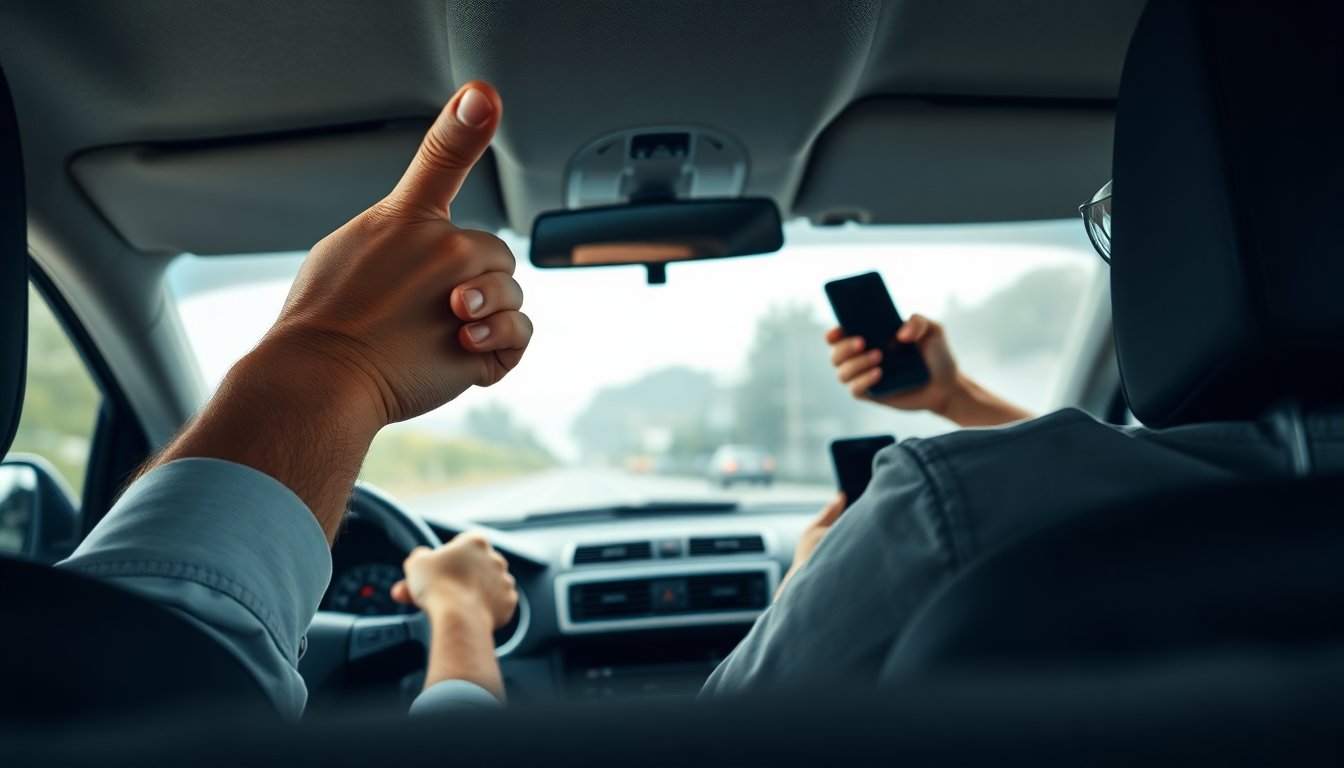
New survey results confirm what many drivers already suspect: certain passenger habits can ruin a ride faster than a pothole. Guessing Headlights commissioned Talker Research to run a nationally representative online poll of 2,000 U.S. adults between May 9 and May 15. Respondents ranked 30 common passenger behaviors by how irritating they find them, and they estimated how long they’d stay quiet before calling someone out. The headline: backseat driving tops the list, and most drivers won’t tolerate bothersome behavior for long—median patience clocks in at roughly 13 minutes.
What annoyed drivers most – Top five irritants: backseat driving (42%), leaving trash in the car (41%), criticizing the driver’s skills (38%), eating messy or smelly food (31%), and false-sounding warnings like “watch out!” (31%). – Other frequent complaints clustered around respect and control: putting feet on the dash (30%), changing music without asking (29%), slamming doors (28%), shouting “brake!” unnecessarily (26%), and loud phone conversations (26%).
How the study worked The poll used a forced-choice ranking format and a nationally stratified sample so the results mirror U.S. demographics. Respondents chose the behaviors that annoyed them most from a standard list and reported how long they would stay silent on short and long trips. Answers were weighted and cross-tabulated by age, gender and driving experience to allow fair comparisons between groups. The design reduces ambiguous responses and yields clear frequency rankings, though it remains self-report data rather than in-the-moment observation.
Generational patterns and silence rates Not everyone reacts the same way. Roughly one in four drivers said they would never call out a passenger’s annoying behavior. Silence increased with age: about 16% of Gen Z, 19% of millennials, 21% of Gen X and 30% of baby boomers reported they would stay quiet regardless of how long the trip lasted. Younger drivers tended to be quicker to object; older drivers preferred nonconfrontational strategies.
Strengths and caveats Strengths: – Large, weighted national sample and transparent methodology. – Forced-choice rankings produced clear, comparable effect sizes for the most common annoyances.
Limitations: – Self-reported tolerance and rankings may not perfectly reflect what happens during real-world trips. – The online-only mode could underrepresent groups with limited internet access. – The study measures perceived annoyance, not direct safety outcomes like crash risk.
Practical takeaways for drivers and platforms A few simple habits could make rides markedly more pleasant: – Ask before changing music and avoid strong-smelling foods in the cabin. – Offer to share fuel costs on shared trips. – Drivers can set expectations early—one calm sentence at the start of a trip goes a long way.
For ride-hailing companies and fleet operators, low-cost nudges are promising: brief pre-ride messages, in-app etiquette reminders, or temporary limits on passenger control of audio could reduce conflict without heavy enforcement. The data suggest modest interventions that protect respect and cleanliness deliver the biggest perceived gains to comfort.
Market and design implications These findings line up with other research showing passenger interference is a frequent source of driver stress. Automotive and mobility designers are already experimenting with human-centered features that clarify roles and reduce distraction. Expect more A/B tests of in-app messaging and small UX changes aimed at aligning passenger behavior with driver needs—especially among younger riders who favor looser norms.
Full list, methodology notes, and data access The study includes a full ranked list of 30 behaviors—from minor irritants like humming through teeth to major disruptions like bringing an unannounced pet—and methodological appendices with question wording, sampling quotas and weighting procedures. That documentation supports reproducibility and allows other researchers or operators to dig into subgroup results.
What annoyed drivers most – Top five irritants: backseat driving (42%), leaving trash in the car (41%), criticizing the driver’s skills (38%), eating messy or smelly food (31%), and false-sounding warnings like “watch out!” (31%). – Other frequent complaints clustered around respect and control: putting feet on the dash (30%), changing music without asking (29%), slamming doors (28%), shouting “brake!” unnecessarily (26%), and loud phone conversations (26%). 0