
Table of Contents
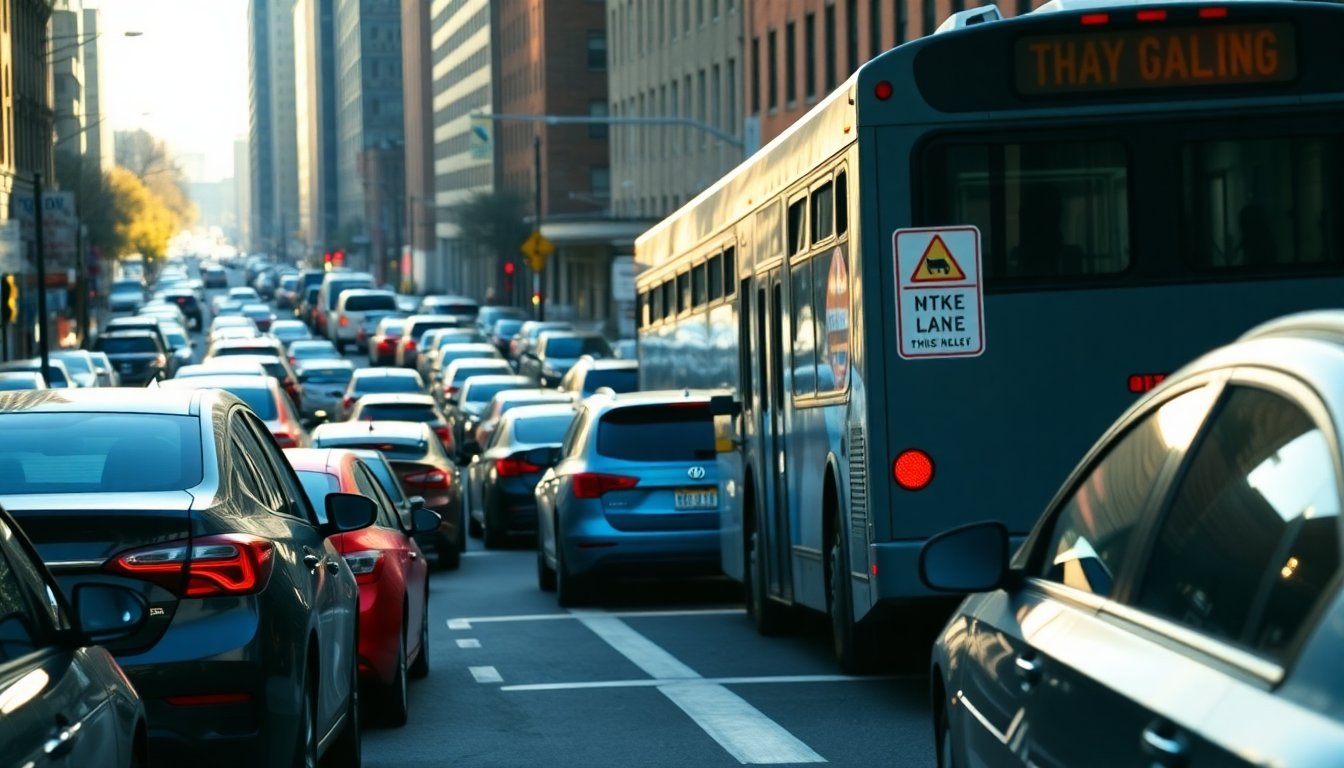
The Metropolitan Transportation Authority (MTA) has expanded its Automated Camera Enforcement (ACE) program to target drivers misusing bus lanes. This initiative, which will take effect on Friday, includes additional routes, increasing the chances of significant fines for violators of bus lane regulations.
Fines under this program can reach as high as $250, prompting frustration among city drivers. The ACE program aims to enhance bus speeds and ensure efficient public transport, but it raises concerns about the financial impact on drivers.
Understanding the implications of the new enforcement
Under the ACE program, cameras mounted on buses will capture images of vehicles violating bus lane rules, including double-parking and blocking bus stops. The MTA will forward recorded footage to the city’s Department of Finance, which will then issue tickets starting at $50. These fines will escalate by $50 with each subsequent infraction, ultimately capping at $250.
Drivers voice their frustrations
Many drivers have voiced their concerns regarding the new ticketing system. John Piedra, a local driver, expressed, “It feels like they are just taking money from us. Where does it all go?” His sentiment reflects a widespread concern among motorists who feel targeted by these measures.
Ray Malia, a dishwasher technician, emphasized the difficulties of parking during heavy snowfall. “With snow piled up, parking in bus lanes sometimes feels like the only option,” he stated, suggesting that the MTA should consider environmental factors exacerbating the parking situation.
New routes joining the enforcement program
The ACE initiative will soon include three new routes: the B68 in Brooklyn, covering Church Avenue to Coney Island Avenue; the M57 in Manhattan, traversing 57th Street; and the B60 in Brooklyn, extending along Rockaway Parkway to Wilson Avenue. This expansion demonstrates the MTA’s commitment to keeping bus lanes clear.
The financial implications for drivers
Many drivers are worried about how these penalties will affect their livelihoods. Ahmad, a cab driver with four decades of experience, shared that the increasing fines could hinder his income. “These fines can seriously impact your earnings. When hard-working individuals face such penalties, it forces them to rely on public assistance,” he explained.
Amara Ouattaro, another cab driver, echoed similar concerns, stating that his tickets often reach $250 due to unavoidable circumstances. “I had to stop in the bus lane to drop off a passenger. Now I face a massive fine for doing my job,” he lamented.
How the MTA’s cameras benefit public transport
While drivers express frustration over the increased enforcement, the MTA argues that automated cameras significantly enhance public transportation efficiency. According to the agency, bus routes with camera enforcement experience an average speed improvement of approximately 5%, with some corridors seeing a remarkable 30% increase in travel speed.
Furthermore, statistics indicate that for every driver ticketed by police, around 115 are caught by the bus lane cameras. This stark contrast highlights the effectiveness of the ACE program, which has seen revenue from violations rise from $22.5 million in 2026 to an estimated $108 million in 2026 as more cameras are deployed across the city.
Next steps for those affected by camera tickets
Fines under this program can reach as high as $250, prompting frustration among city drivers. The ACE program aims to enhance bus speeds and ensure efficient public transport, but it raises concerns about the financial impact on drivers.0
Fines under this program can reach as high as $250, prompting frustration among city drivers. The ACE program aims to enhance bus speeds and ensure efficient public transport, but it raises concerns about the financial impact on drivers.1
Fines under this program can reach as high as $250, prompting frustration among city drivers. The ACE program aims to enhance bus speeds and ensure efficient public transport, but it raises concerns about the financial impact on drivers.2