
Table of Contents
The city of Murmansk, situated above the Arctic Circle, is facing a critical power crisis. Following a severe winter storm on January 23, multiple transmission towers collapsed due to heavy icing and fierce winds, disrupting electricity and heating for thousands of residents in the region. This incident has prompted local authorities and utility companies to declare a state of emergency as they work urgently to restore essential services.
Impact of the winter storm on power infrastructure
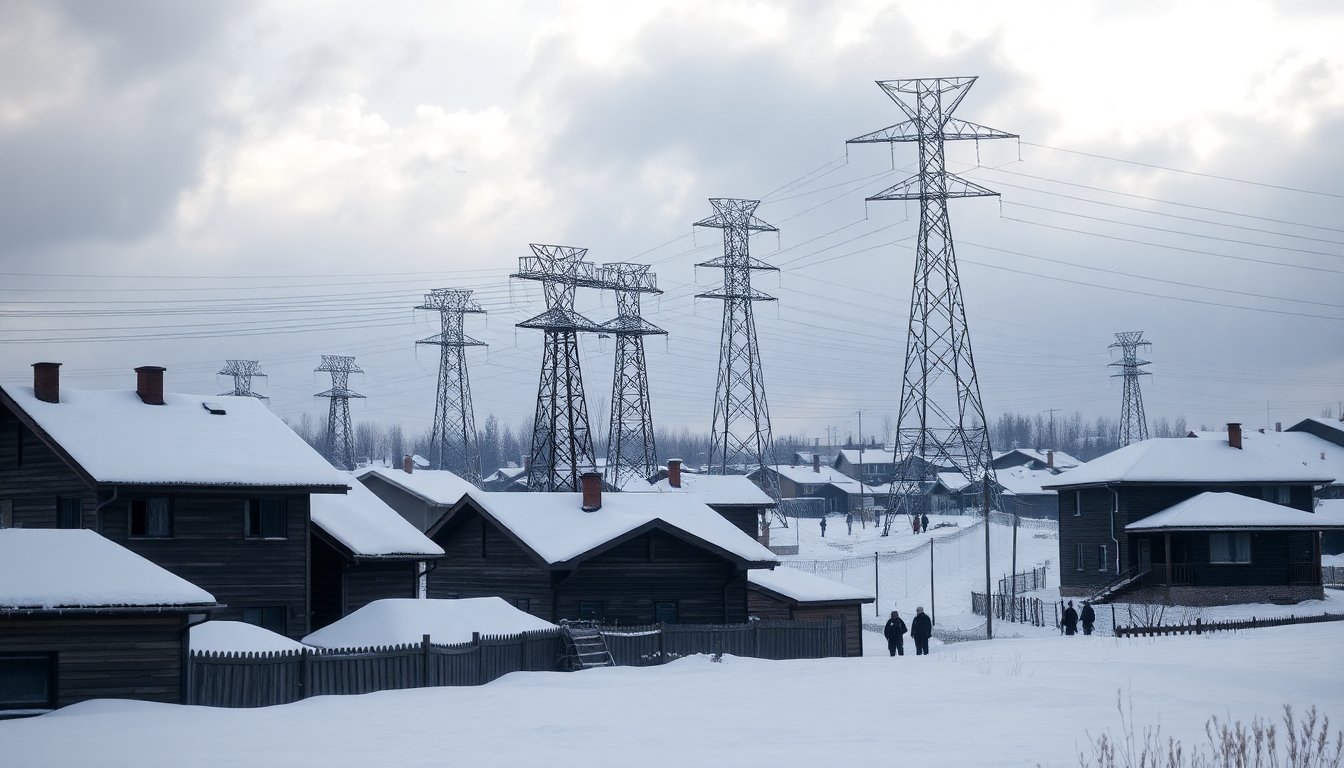
The winter storm caused extensive damage to the electrical infrastructure in Murmansk and the nearby city of Severomorsk. Reports indicate that five transmission towers, some constructed in the 1960s and 1980s, succumbed to the harsh weather conditions. According to the power company Rosseti, the failures were intensified by a mix of wet snow and relentless winds that compromised the structural integrity of the towers.
Negligence and aging infrastructure
The Federal Investigative Committee in Russia has initiated an investigation into potential negligence concerning the maintenance of aging power towers. These structures were scheduled for inspections every five years; however, questions have arisen regarding compliance with these protocols. Investigators are examining the inspection timeline to determine if the failures could have been avoided.
Regional Governor Andrey Chibis has raised alarms about the situation, reporting that as of January 24, rolling blackouts were implemented in several areas of Murmansk. The outages have left approximately 73,000 people without electricity, and the delay in restoring services has heightened concerns among local officials.
Community response and support initiatives
In light of the ongoing crisis, local businesses and community leaders have mobilized to assist those affected. Makeshift support centers have been established, providing residents with access to boiling water, charging stations for electronic devices, and facilities to heat food. Long queues have formed at these centers as residents seek relief from the cold.
Transportation and education disruptions
To address the crisis, authorities in Murmansk have suspended bus fares, allowing residents to navigate the city without incurring additional costs. Educational institutions have also faced challenges, with many transitioning to remote learning or temporarily halting operations to protect students amid persistent power outages.
Despite claims from Governor Chibis that power had been restored to 80 percent of homes by January 26, skepticism remains among residents. Daily reports contradict official statements, with many locals asserting that large areas of Severomorsk are still without electricity. Social media comments reflect widespread frustration and confusion regarding the ongoing situation.
Future outlook and ongoing challenges
As repair crews from Rosseti continue their efforts to restore power, they face significant challenges due to weather conditions. On January 26, two temporary wooden towers were erected to replace collapsed structures; however, the restoration process is slow and complicated by the harsh Arctic environment. Estimates suggest that full restoration may take up to a week, leaving many residents in a state of uncertainty.
The recent power outages have raised significant concerns regarding the reliability of the electrical grid in the Murmansk region, particularly for critical infrastructure. Reports indicate that the main naval base of Russia’s Northern Fleet, situated in Severomorsk, had to rely on autonomous energy supplies during these outages. This situation underscores the vulnerability of essential services amid extreme weather conditions.
Despite the ongoing challenges faced by the region, there is optimism that coordinated efforts from local authorities and the community will facilitate a prompt resolution. This incident serves as a crucial reminder of the necessity to maintain and enhance infrastructure capable of withstanding the harsh realities of one of the world’s most extreme climates.