
Table of Contents
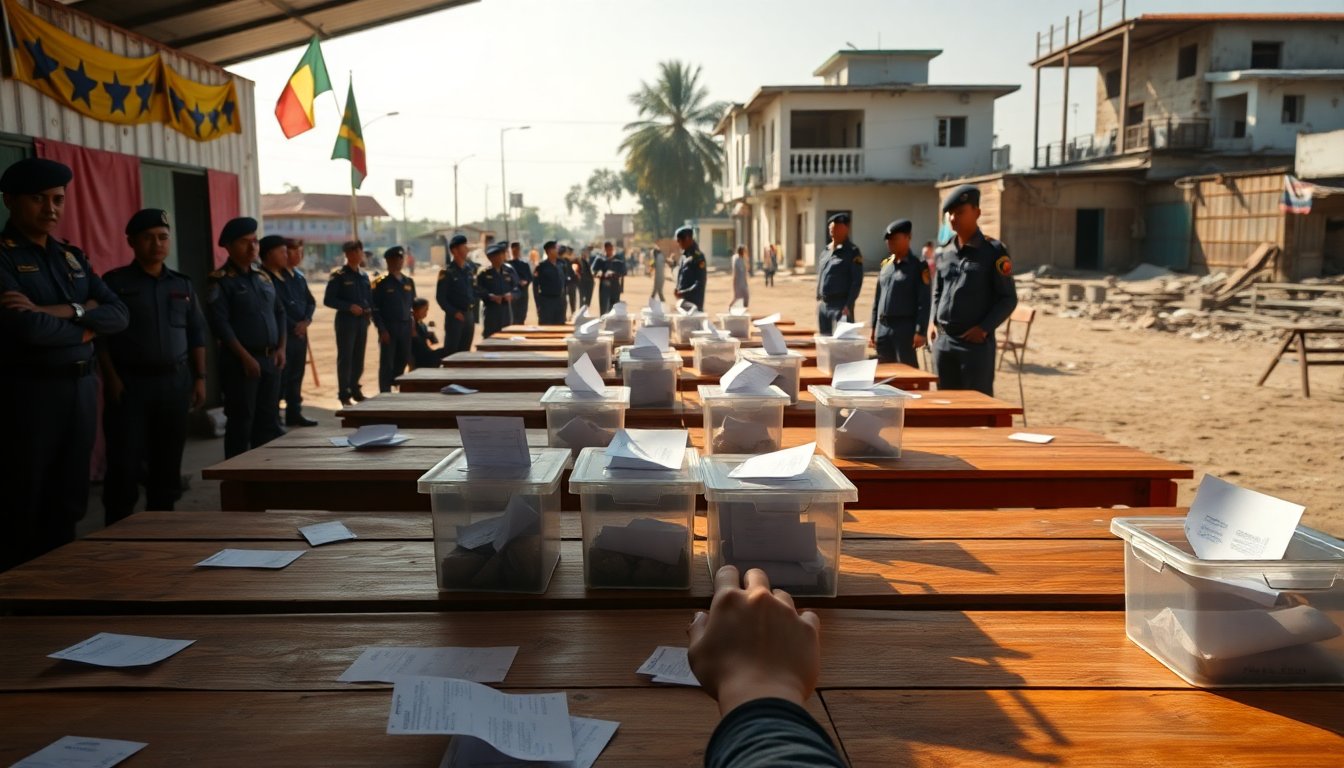
On Sunday, Myanmar conducted its first general election since a coup in that led to the ousting of the Nobel laureate Aung San Suu Kyi. This election, however, has been met with significant skepticism from various sectors, including human rights organizations and political opposition, who argue that the electoral process is neither democratic nor credible.
The election is taking place in a limited capacity across about one-third of Myanmar’s 330 townships, with numerous areas unable to participate due to ongoing civil war. The military junta has framed these elections as a turning point for the nation, aiming to project an image of stability and reconciliation despite the persistent violence.
Limited participation and concerns over legitimacy
The electoral process is marred by restrictions, with reports indicating that voting has been entirely canceled in 65 townships, effectively disenfranchising at least 20% of the population, as noted by Al Jazeera‘s correspondent, Tony Cheng. This raises critical questions about voter turnout, especially in urban centers like Yangon, where the demographic of those voting appears predominantly middle-aged, with fewer young people participating.
Critics dismiss the election as a sham
The election has been criticized by the United Nations and various Western nations, branding it as an undemocratic exercise designed to give a veneer of legitimacy to military rule. The National League for Democracy (NLD), once the ruling party, has been dissolved, and its leader remains in detention, leading many to question the integrity of the electoral process.
Military-backed parties, particularly the Union Solidarity and Development Party (USDP), are expected to dominate the results. Observers note that the military is attempting to project a narrative of hope and recovery, although conditions on the ground tell a different story. As the UN’s human rights chief, Volker Turk, stated, the environment is rife with violence and repression, undermining the fundamental rights essential for a legitimate electoral process.
The atmosphere of fear and intimidation
In the lead-up to the election, reports from various regions describe an atmosphere filled with fear. In towns like Mandalay, citizens express their reluctance to share their views on the elections, citing the presence of plain-clothed military personnel as a deterrent. Many voters feel compelled to participate, not out of genuine support, but out of fear of repercussions from the authorities.
Voices of dissent amid oppression
One anonymous woman voiced her frustrations about the elections, declaring, “This election is a lie. Everyone is afraid. Everyone has lost their humanity and their freedom.” Her sentiments echo the experiences of countless others who have suffered under the junta’s oppressive regime, with reports indicating that over 22,000 individuals are currently imprisoned for political reasons.
Despite the harsh realities, the military regime has attempted to project optimism. Senior General Min Aung Hlaing cast his vote shortly after polls opened, promoting the election as a new beginning for the nation. However, analysts caution that the military’s grasp on power is fraught with peril, and any semblance of legitimacy derived from this election is likely to be challenged both domestically and internationally.
Implications for Myanmar’s future
Looking ahead, the military’s electoral strategy appears to be a desperate measure to legitimize its rule amidst growing civil unrest. Observers predict that the USDP will win decisively, maintaining a facade of governance while the underlying issues of civil conflict and political discontent persist. The military’s actions, far from stabilizing the country, may exacerbate divisions and prolong the crisis.
The situation is further complicated by international dynamics, with countries like China providing diplomatic support to the military regime. As the junta seeks to consolidate power, the people of Myanmar continue to bear the brunt of the ongoing violence, with many still displaced and in desperate need of humanitarian assistance.
As the election results are anticipated, the world watches closely. The outcome may not only shape Myanmar’s immediate political landscape but also influence the broader regional stability in Southeast Asia.