
Table of Contents
Narges Mohammadi, who was awarded the Nobel Peace Prize in, has been apprehended by Iranian authorities while attending a memorial event in the city of Mashhad. The gathering was held to honor Khosrow Alikordi, a respected human rights lawyer whose recent death has raised questions among activists and legal professionals alike.
Supporters of Mohammadi reported that her arrest was executed with considerable force, as security personnel surrounded the venue, confiscating mobile phones and detaining several participants. Mohammadi, aged 53, is a prominent figure in the “Women, Life, Freedom” movement, advocating for civil rights and gender equality in Iran. Her husband, Taghi Rahmani, who resides in exile in Paris, confirmed her arrest through social media, indicating that her brother witnessed the incident.
The backdrop of rising tensions in Iran
The timing of Mohammadi’s arrest coincides with a broader crackdown on activists in Iran, where ongoing socio-political challenges are exacerbated by international sanctions and internal unrest. The Iranian government, under increasing pressure, has intensified its surveillance and suppression of dissent, particularly against those who advocate for human rights.
Details surrounding the memorial ceremony
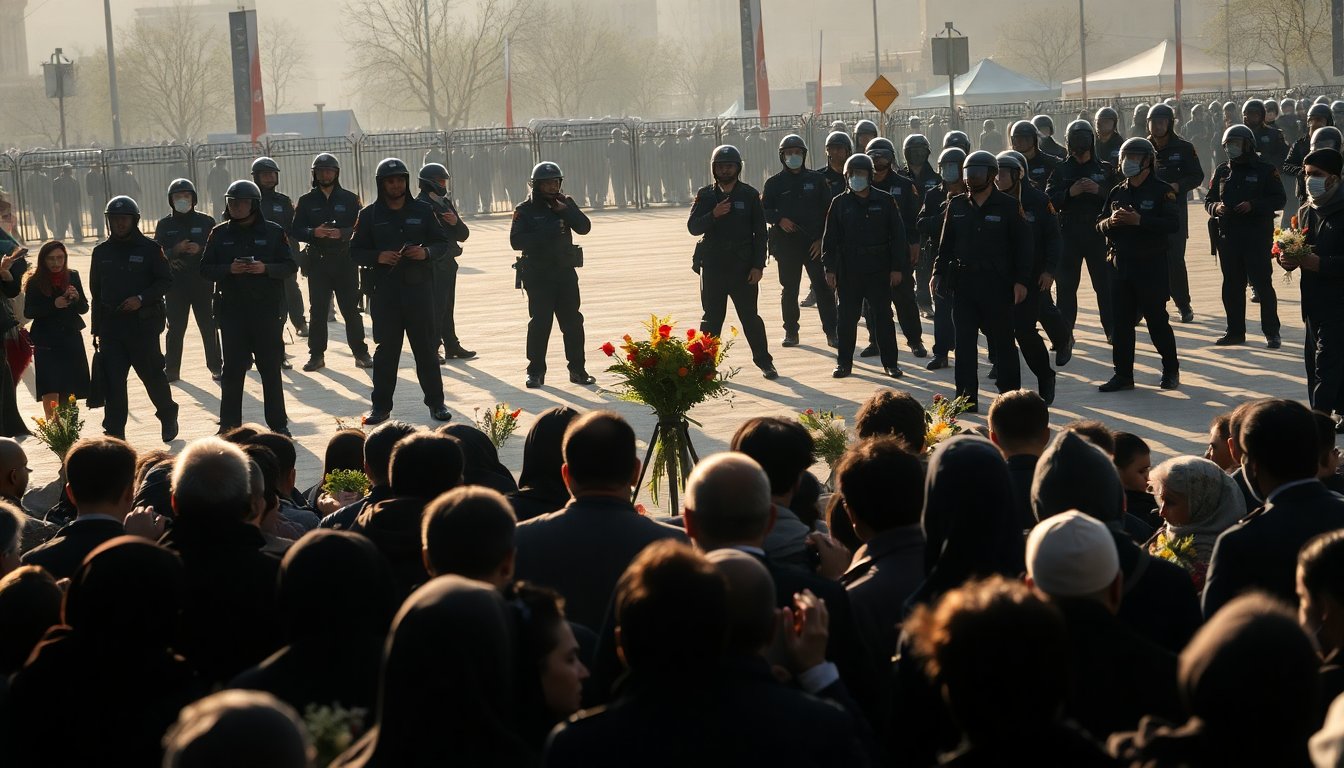
The memorial for Alikordi, who was found dead under suspicious circumstances, attracted a small group of notable activists. While local officials attributed his death to a heart attack, many are demanding a more thorough investigation. Over 80 lawyers have signed a petition calling for clarity on the situation, emphasizing the need for transparency in the wake of such tragic events.
During the memorial, Mohammadi was seen addressing the audience without a headscarf, a powerful symbol of defiance against the regime’s strict dress codes. She led chants commemorating Majidreza Rahnavard, a victim of public execution in, further illustrating her commitment to the cause.
Health concerns and legal battles
Mohammadi’s health has been a significant concern, especially given her previous imprisonment and medical conditions. She had been granted a temporary medical leave from prison just days before her arrest due to serious health issues, including complications that required surgery for a bone lesion and ongoing cardiac treatment.
Implications of her detention
The Free Narges Coalition has expressed alarm over the potential deterioration of her health should she be returned to prison. Medical professionals had advised her to remain on leave for further assessments and treatments, highlighting the risks associated with a return to the harsh conditions of incarceration.
Mohammadi has endured significant hardships throughout her activism, having been arrested 13 times and sentenced to over 30 years cumulatively for charges related to her efforts in promoting human rights and political freedoms. Her activism intensified after the tragic death of Mahsa Amini in, which sparked widespread protests against the Iranian regime.
The ongoing struggle for human rights
As a leading voice for women’s rights and civil liberties, Mohammadi’s commitment to justice and equality remains steadfast despite the threats she faces. Her work has included documenting the plight of women in prison, as highlighted in her book titled “White Torture: Interviews with Iranian Women Prisoners”, which sheds light on the psychological toll of incarceration.
The current situation illustrates the perilous environment for activists in Iran, where speaking out against the regime can lead to severe repercussions. Mohammadi’s arrest not only underscores the risks for dissenters but also serves as a reminder of the urgent need for global attention and support for human rights in Iran.
Ultimately, the international community’s response to Mohammadi’s plight could influence the ongoing dialogue surrounding human rights in Iran, as her case exemplifies the broader struggle against oppression and the fight for freedom. The Narges Foundation has called for the immediate release of all those detained during the memorial, framing their arrest as a violation of fundamental freedoms.