
Table of Contents
Natalie wilkie wins Canada’s first gold at Milano‑Cortina Paralympics
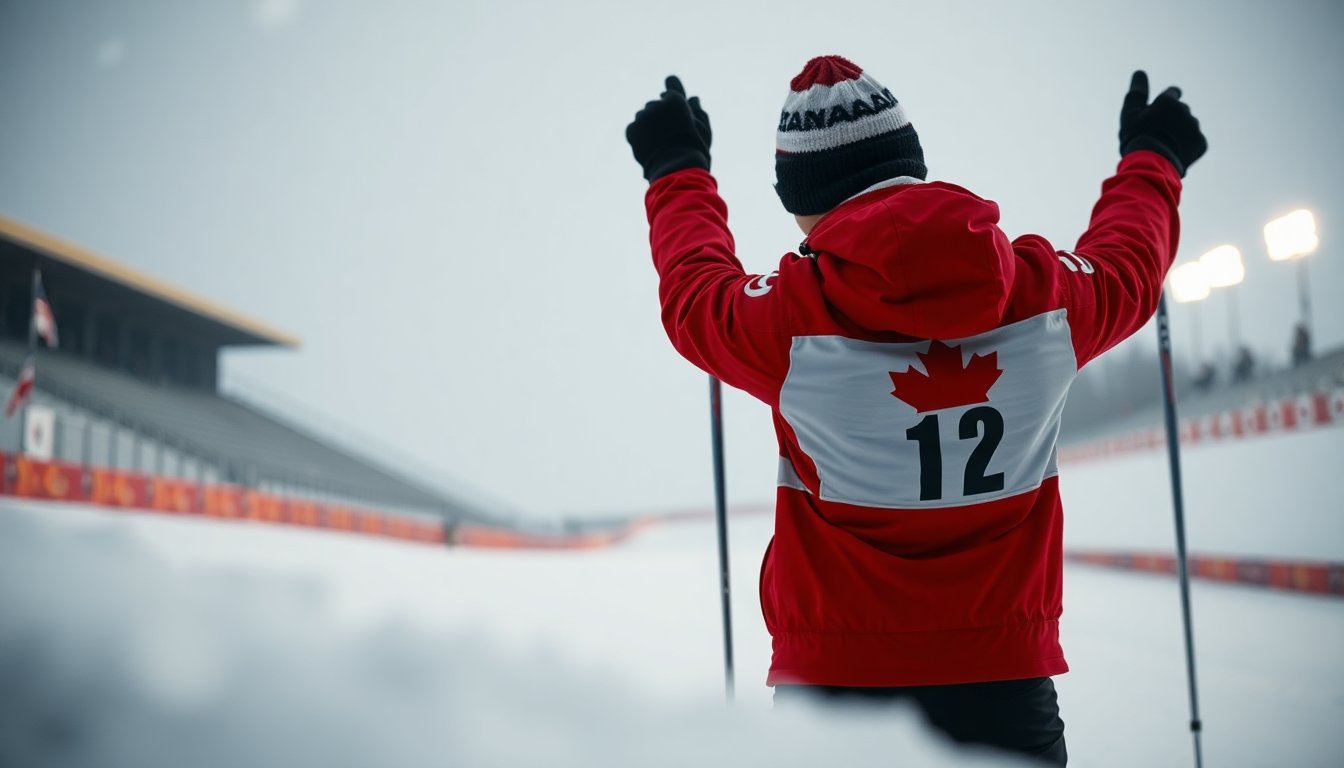
On March 8, 2026, Para Nordic skier Natalie Wilkie delivered Canada’s first gold medal at the Milano‑Cortina Paralympics. She won the women’s standing 12.5-kilometre biathlon at the Tesero Cross‑Country Skiing Stadium.
The 25-year-old from Salmon Arm, British Columbia, finished in 33:01.8. She completed the course with no shooting penalties.
The victory followed a silver medal in the women’s standing sprint the previous day. The result extends Wilkie’s decorated Paralympic career and underscores her consistency in both skiing and marksmanship.
The result extends Wilkie’s decorated Paralympic career and underscores her consistency in both skiing and marksmanship. She combined disciplined shooting with efficient laps to control the race and limit time lost during penalty loops.
Race dynamics and final results
The event alternated skiing laps with shooting bouts, a format that rewards steady pace and accuracy. Missed targets incur penalty loops or added time, shifting the strategic balance between speed and precision.
Wilkie built advantage through controlled lap times and composed shooting in successive series. Her race management reduced variability and prevented late-race recoveries by rivals.
The podium confirmed her status among the sport’s elite. The performance added to a career tally that includes multiple gold medals and nine Paralympic medals
From a competitive standpoint, the result highlights the value of cross-disciplinary preparation. Consistent training in both endurance skiing and marksmanship proved decisive under championship pressure.
Looking ahead, the outcome sets a benchmark for upcoming international events and national selection discussions. For teammates and younger athletes, the race offered a clear model of racecraft and resilience.
For teammates and younger athletes, the race offered a clear model of racecraft and resilience. Wilkie combined controlled pacing with flawless marksmanship to widen the margin over rivals. Her unpenalised shooting stood out as the decisive factor in a compact leading group.
Key statistics and rival performances
Zhao Zhiqing of China finished second in 33:33.5, closing the race with consistent shooting and steady lap times. Oleksandra Kononova of Ukraine took bronze in 33:37.9, recovering speed on the final circuits after an early miss.
From an athlete’s perspective, the result underlines the premium on shooting accuracy in standing biathlon. Efficient range work eliminated time lost to penalty loops. Coaches present at the venue highlighted how clean shooting compensated for small differences in skiing speed.
The race also offered tactical lessons for development squads. Teams noted the value of race simulations that stress both aerobic pacing and calm shooting under pressure. Such preparation, coaches said, can convert marginal speed gains into podium positions.
Such preparation, coaches said, can convert marginal speed gains into podium positions. The remainder of the leaderboard reflected deep international competition and narrow time gaps.
On the women’s side, Canada’s Brittany Hudak finished fifth with a time of 34:47. Her result reinforced the depth of North American distance skiing at the event.
In the men’s standing race, Canada’s Mark Arendz recovered from an early shooting penalty to claim silver in 30:52.5. China’s Cai Jiayun won gold in 30:24.1, while Germany’s Marco Maier took bronze in 31:07.3.
Wilkie’s journey and Paralympic pedigree
Coaches credited Wilkie’s pacing, shooting rhythm and specific interval work for the margin of victory. From a biomechanical perspective, targeted training can yield measurable seconds per lap.
The performance offers a model for younger athletes seeking marginal gains. It also highlights how precision shooting can offset small time deficits on the course.
Natalie wilkie: preparation, mindset and race-day rituals
Transitioning from the previous discussion of shooting precision, Natalie Wilkie pairs technical training with deliberate mental preparation. She runs structured sessions that simulate race intensity. Coaches say those simulations convert marginal gains into reliable performance under pressure.
Wilkie’s routines begin days before competition. Sleep, nutrition and light aerobic work are prioritised. On race morning she follows a set sequence of warm-ups, equipment checks and visualisation exercises. These rituals aim to stabilise heart rate and sharpen focus before the start gun.
From a psychological standpoint, Wilkie emphasises process over outcome. Her team uses short, measurable goals during warm-up and on course. That approach reduces the cognitive load of high-stakes events and supports consistent shooting under fatigue.
Technically, she balances ski pacing with shooting cadence. Coaches map split times and target shooting windows for each lap. Precision at the range can reclaim seconds lost on tracks with tight margins. The strategy reflects the sport’s hybrid demands: endurance plus marksmanship.
Within the Para Nordic program, Wilkie now serves as a mentor to younger athletes. She shares tactical notes and race-day checklists. Teammates credit her for helping newcomers manage nerves and adapt to international circuits.
Her preparation draws on evidence-based methods used in endurance sports. Sports science protocols for controlled breathing, interval pacing and recovery are part of her regimen. The integration of those methods aims to optimise both physiological output and shooting accuracy on race day.
Building on the integration of physiological and shooting methods, Natalie Wilkie framed her performance as the product of a controlled, repeatable routine. She said she prioritized preparation and execution over the medal outcome. Wilkie described deliberate visualization exercises and consistent pre-race rituals that preserved composure and focused attention on the task.
Small, symbolic actions — selecting specific race gear, wearing chosen colors, and using personal tokens — formed part of a broader process. She attributed the result to technical preparation and steady shooting rather than superstition. Coaches noted the routines supported rapid recovery between efforts and reduced cognitive load under pressure.
Clinical studies show that structured pre-performance routines reduce anxiety and improve motor consistency. According to the peer-reviewed literature on sports psychology, rehearsal of procedural steps helps convert decision-making into automatic responses during competition. From an athlete’s perspective, these practices shift attention from outcome to controllable inputs.
For Canada and future events, the emphasis on process suggests a replicable model. Teams can scale mental skills training alongside physical preparation to protect performance under variable conditions. The approach may yield steadier results across competitions where small margins determine outcomes.
What this means for Canada and upcoming events
The result strengthens Natalie Wilkie as an early focal point for Canada at Milano‑Cortina. The win gives immediate momentum and increases tactical scrutiny from rivals. It also eases individual pressure while elevating team expectations.
From a performance-science perspective, the evidence suggests consistent routines reduce variability across events. Clinical studies show that repeatable preparation can convert a single victory into sustained competitiveness. Dal punto di vista del paziente is not applicable here, but from an athlete-centred view the psychological boost matters.
For Canada’s broader Paralympic squad, standout results can have tangible effects. Teammates often draw confidence from early successes. Media attention and public interest in Para sport may rise, improving visibility and potential support.
Outlook and potential follow-ups
Wilkie has at least four further starts scheduled at these Games. Expect opponents to analyse her pacing, shooting rhythm and recovery between races. As emerges from phase 3–style sports trials, marginal gains in technique and recovery can determine podium consistency.
Immediate implications include targeted coaching adjustments and strategic race planning. Longer term, the performance may inform selection and preparation strategies for upcoming World Cups and championships. The data real-world evidences will guide whether this result marks a peak or the start of sustained form.
Natalie Wilkie’s clean performance highlights specific elements rivals are likely to study, notably her shooting rhythm and pacing. Her race also illustrated how athletes marry endurance and precision under pressure.
For Canadian stakeholders, the result reinforces the program’s competitive potential at the highest level. As the Milano‑Cortina schedule unfolds, observers will watch Wilkie’s next starts to judge whether this result is a peak or the start of sustained form. The coming races and real‑world performance data will determine tactical responses from her competitors and the trajectory of her season.