
Table of Contents
Natasha Kermani released The Dreadful, a compact psychological horror film, through Lionsgate on February 20. The film opened theatrically and on digital platforms the same day. It stars Sophie Turner and Kit Harington, reuniting two familiar faces from Game of Thrones, and features Marcia Gay Harden in a supporting role.
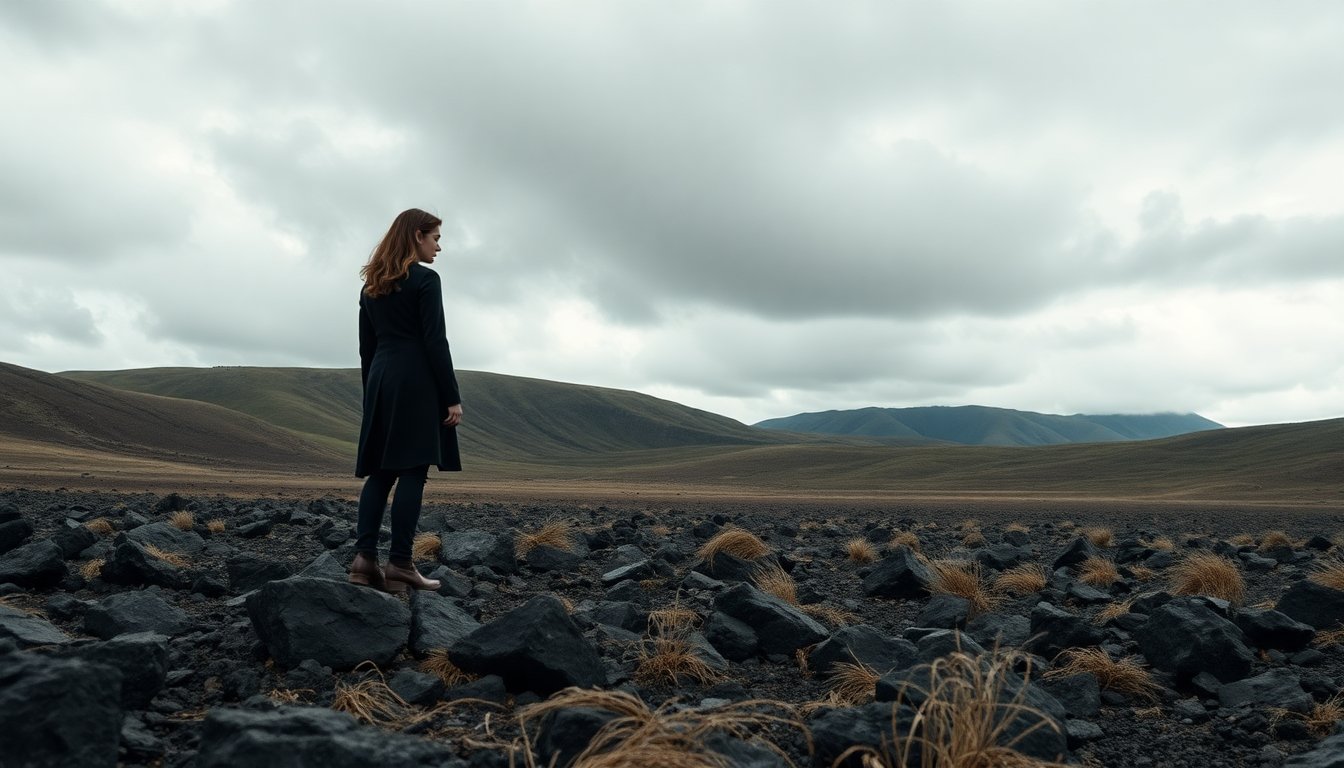
Kermani conceived the film from a single persistent image: two women surviving in a barren, almost primordial landscape. That image grew into a tightly wound drama where historical setting and psychological dread fuse. Rather than deploy shocks for their own sake, Kermani uses supernatural elements to illuminate inner conflicts.
The story remains intimate in scale. A younger woman, her domineering mother-in-law and a man returned from the past form the emotional core. Folklore and fantastical threats circle their relationships and escalate the stakes.
Origins and influences
Natasha Kermani reframed the film around a deliberately overlooked dynamic: the tension between a mother-in-law and a daughter-in-law rather than a mother and daughter. This choice recasts the story as a study of cohabitation and generational friction. The director cites a Buddhist folktale popularized by the 1964 film Onibaba as a visual and thematic catalyst. She did not attempt a scene-by-scene remake. Instead, she extracted a single, enduring image—two women bound together in a harsh setting—and redirected it toward new thematic terrain.
For Kermani, the central image functioned as a creative motif: two women whose interdependence begins to unravel. From that conceptual seed she layered period details, a mythic overlay and tightly drawn relationships. Every supernatural beat is staged to reinforce character development rather than spectacle alone. Emerging trends show genre filmmakers are treating folklore as a tool for intimate drama; the future arrives faster than expected: horror now foregrounds relational psychology.
Characters and performances
Characters and performances deepen relational horror
The future arrives faster than expected: Kermani frames the film’s suspense around domestic tension rather than spectacle.
At the centre is Anne, portrayed by Sophie Turner. She shares a constrained household with her mother‑in‑law, Morwen, played by Marcia Gay Harden. Her husband is absent, fighting in the war. A returning childhood friend, played by Kit Harington, brings news that shifts Anne’s private crisis into a communal threat.
Kermani stages threats as manifestations of inner conflict. External dangers act as mirrors for characters’ doubts, moral fractures and buried grief. Performances ground that translation from interior life to outward menace.
Turner conveys a restrained volatility that anchors the film. Harden supplies controlled menace and brittle affection. Harington introduces a destabilising note that accelerates the plot’s moral unraveling.
Emerging trends show contemporary horror increasingly mines relational psychology. Here, the genre amplifies small domestic ruptures into systemic peril. Directors who foreground character work ask audiences to witness private collapse as public danger.
How the actors negotiate subtle shifts in power and allegiance shapes the film’s emotional architecture. The result is intimate horror that reads as social commentary and as a study of personal survival.
Performers shaping the script
Emerging trends show actors increasingly reshape scripts through performance. The director says Turner supplied a spiritual ballast and an inner fortitude not explicit in the screenplay.
She delivered a consistent emotional through-line that recast Anne from a passive figure into one whose resilience is evident early. That tonal shift altered scene dynamics and raised the film’s moral stakes.
The prior on-screen familiarity between the leads added an extra layer of tension. Their established rapport allowed the production to explore the story’s romantic and uneasy subtext without extensive rewrites.
According to the director, these choices tightened the film’s focus on survival and domestic pressure. The result is a performance-driven horror that reads as social commentary and as a study of personal endurance.
Kermani designed characters as open frameworks to let actors add texture. She did not write Anne expressly for Turner. She left space for an actor’s instincts to reshape the role. Turner added a sense of faith and a steady moral core that reoriented how the character reads on screen. Harington and Turner also worked to separate their on-screen identities from earlier parts and to inhabit older, quieter personas.
Production realities and creative decisions
The project followed a long development arc that stretched back years. Kermani kept the film close while taking on other work. Period-piece financing and perceived market risk slowed progress until Turner’s attachment helped unlock resources. The shoot was compact and austere. Filming took place on location in Cornwall on a limited budget and a short schedule. Those constraints sharpened choices about design, performance and atmosphere.
Emerging trends show actors increasingly reshape scripts through performance. Directors now plan for that influence rather than resist it. According to MIT data, creative teams that embrace such collaboration often accelerate decision cycles and reduce reshoot costs. The future arrives faster than expected: performance-led development is becoming a practical tool for risk management in mid-budget period films.
These production conditions helped the film read both as social commentary and as a study of endurance. The creative trade-offs made scenes leaner and performances more central. Studios and filmmakers preparing similar projects should weigh whether tight shoots and actor-led character work can substitute for larger production budgets. The film’s approach points to a likely increase in collaborative, performance-first productions in the coming years.
Building on a move toward collaborative, performance-first productions, Kermani and her crew adapted to the English weather by staging much of the shoot outdoors. They erected a period-appropriate hut with one removable wall to allow camera placement and movement. Time and budget limits became deliberate constraints; the director treated scarcity as a refining tool. When resources tighten, decisions narrow and every prop, cut and performance must support the central relationship.
Genre with a purpose
Kermani positions genre elements as instruments, not spectacle. The film’s scares, rustic setting and mythic imagery operate to raise emotional stakes and to test the characters’ convictions. Supernatural detail and period accuracy complicate the core relationship between two women at different life stages rather than overshadow it. Emerging trends show filmmakers increasingly use genre frameworks to interrogate intimacy and identity. The future arrives faster than expected: expect more films in which form serves emotional truth and production limits sharpen storytelling choices.
How the dreadfull reframes an old tale
Emerging trends show filmmakers turn to compact, atmospheric work to probe modern anxieties. The Dreadful positions itself as a small-scale, emotionally dense film that uses gothic trappings to interrogate ownership, survival and spiritual disillusionment.
Kermani’s reworking of an ancient tale emphasizes how recurring narrative elements can be reinterpreted across eras. The film translates familiar motifs into questions of power, dependence and autonomy without grand exposition. Scenes compress folklore and performance into moments that test characters’ loyalties and limits.
Form as emotional amplifier
The future arrives faster than expected: in this film, formal constraints sharpen expressive choices. Limited locations and pared-back production underwrite intense close-ups and quiet exchanges. That economy of means turns atmosphere into action.
For viewers, the film offers both atmospheric horror and a study of evolving bonds. A director’s long-held image becomes a compact cinematic experiment where folklore and performance collide to show how fear can erode—and sometimes clarify—human connection.
Emerging trends show similar projects will increasingly treat form as narrative strategy. Expect more intimate films that use production limits to spotlight interpersonal dynamics and cultural unease.