
Table of Contents
A recent incident in Minneapolis, where a federal immigration officer shot a woman, has triggered widespread protests throughout the United States. Activists and community leaders are calling for peaceful demonstrations to voice their outrage over the event. The shooting claimed the life of 37-year-old Renee Good and has highlighted persistent concerns regarding immigration enforcement and community safety.
Protests in Minneapolis and beyond
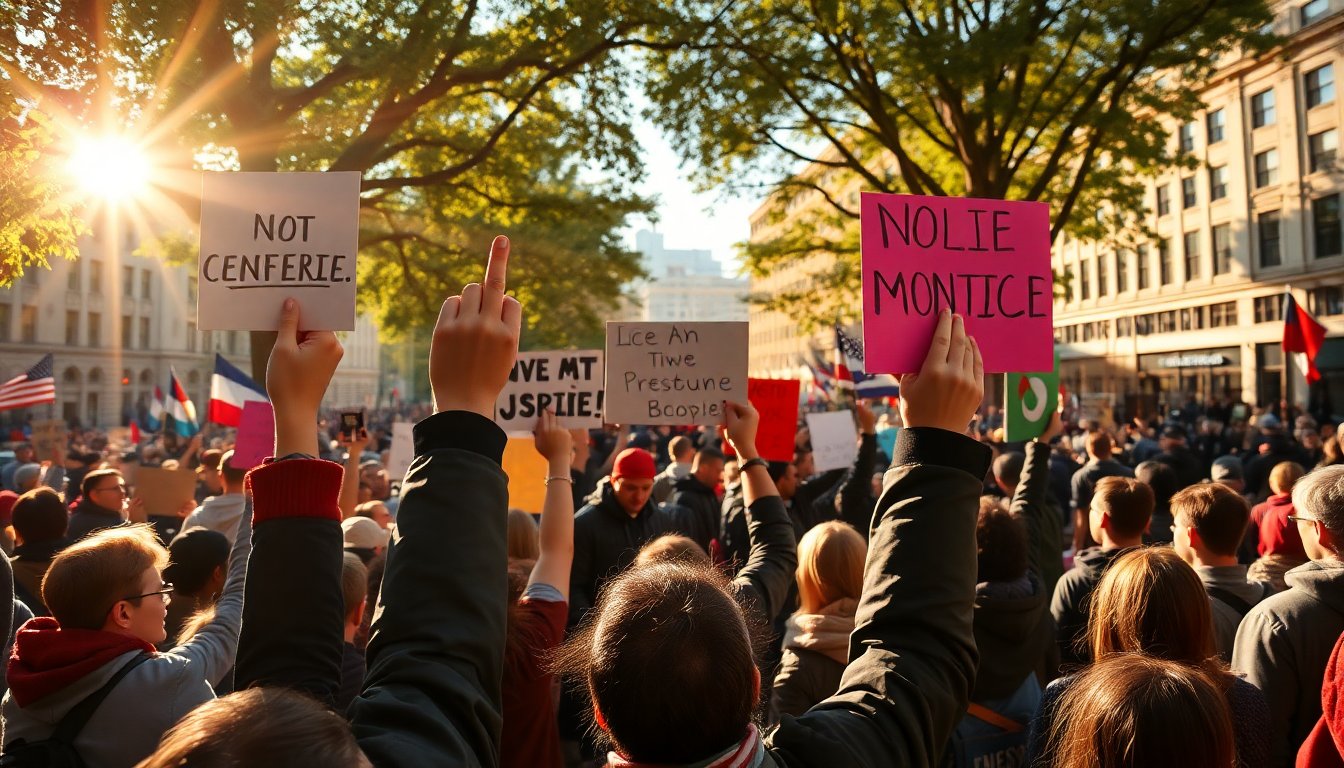
In response to a recent fatal incident, about 1,000 people gathered outside a hotel in Minneapolis to express their concerns. The protest turned violent as demonstrators clashed with law enforcement, resulting in minor injuries to some officers. Minneapolis Police Chief Brian O’Hara reported that projectiles were thrown at the police, leading to the citation of 29 individuals.
Mayor Jacob Frey highlighted the significance of peaceful protest, warning that those participating in destructive actions would be arrested. He condemned the actions of “agitators” aiming to incite unrest, stating, “This is what Donald Trump wants. He wants us to take the bait.”
Political leaders respond
In a display of solidarity, Minnesota Governor Tim Walz called for non-violent demonstrations while voicing his concerns regarding the federal approach to immigration issues. He stated on social media that actions taken by federal agents have resulted in tragic consequences and urged citizens to avoid chaos, which he believes would only divert attention from the seriousness of the matter.
Nationwide protests, organized by various groups, have conveyed a unified message: a demand for justice and an end to what they perceive as excessive immigration enforcement. The activist group Indivisible has been instrumental in garnering support, coordinating events under the banner “ICE Out for Good” across several states.
Federal enforcement actions under scrutiny
Amid rising tensions, Immigration and Customs Enforcement (ICE) has initiated its largest operation in the Twin Cities. Up to 2,000 federal agents are deployed as part of this effort. The operation aims to address allegations of fraud within the local immigrant community, particularly focusing on the Somali population, which is the largest in the United States.
Reports indicate a notable surge in ICE activity, with numerous arrests and enforcement actions occurring in St. Paul. Local officials and immigrant rights advocates have raised concerns over the increased presence of federal agents, which has instilled fear among residents.
Community concerns and government accountability
Recent accusations from state representatives allege that ICE is obstructing congressional oversight. Three Congresswomen from Minnesota were denied entry to an ICE facility shortly after initially being allowed in. These events underscore the ongoing struggle for transparency and accountability within federal immigration operations.
Critics contend that the methods employed by federal agents are not only aggressive but also questionable. The community expresses concern that such operations may heighten existing tensions and potentially lead to further violence, drawing parallels to the unrest that followed the death of George Floyd.
A call for action and reflection
Community leaders and activists are urging a reevaluation of immigration enforcement policies following recent events. They contend that the current methods jeopardize individual safety and erode trust within communities. The discourse surrounding immigration should pivot towards compassion and understanding, rather than fear and control.
The tragic shooting of Renee Good highlights the urgent need for reform. As protests persist, the message is clear: communities are demanding justice, accountability, and an end to the cycle of violence that has affected their neighborhoods.