
Table of Contents
Tensions Rise Between NATO and Russia Over Airspace Violations
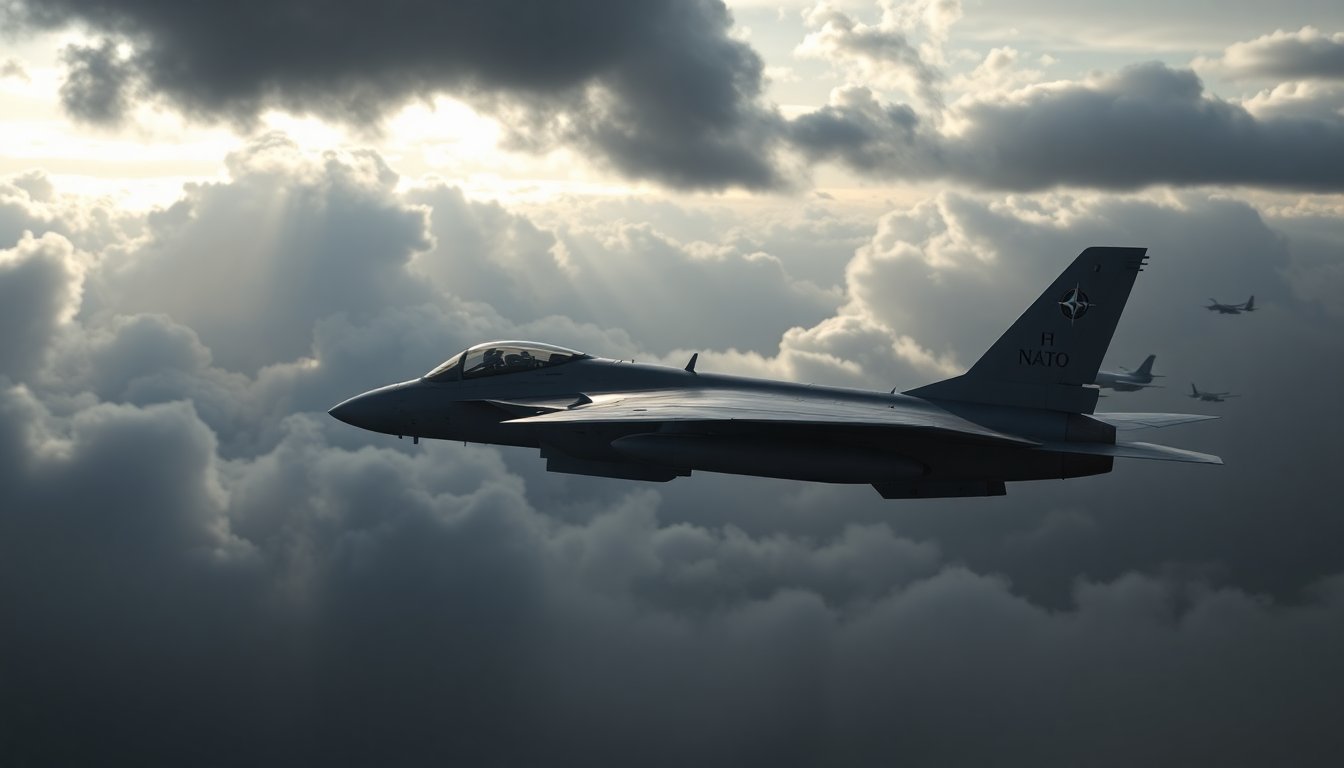
Recent statements from European leaders highlight the increasing tensions between NATO and Russia, particularly regarding airspace violations. Following a series of incidents where Russian aircraft entered NATO airspace, European Commission President Ursula von der Leyen has indicated that military action is now being considered. This development aligns with remarks made by U.S. President Donald Trump, who urged NATO member states to respond decisively to these incursions.
NATO’s Defensive Posture Amidst Russian Threats
In a recent interview with CNN, President von der Leyen made a strong declaration: “We must defend every square centimeter of our territory.” This statement underscores NATO’s commitment to protecting its member states against potential threats.
She clarified that any violation of airspace would trigger NATO’s established protocols. This includes issuing a clear warning, followed by a military response if the situation escalates. The ongoing heightened alert status in NATO countries, such as Poland, Romania, and Estonia, illustrates the gravity of these threats.
International Responses to Trump’s Remarks
Polish Foreign Affairs Minister Radosław Sikorski expressed support for former President Donald Trump’s comments during a session at the U.N. General Assembly. Sikorski remarked, “Roger that,” signaling Poland’s willingness to take necessary measures to safeguard its airspace. He further explained on British radio that while military engagement is the responsibility of armed forces, he prefers to intercept threats like drones and cruise missiles over Ukrainian territory before they become a risk to NATO countries.
Underlying Tensions and Hybrid Warfare
The rising number of Russian incursions extends beyond mere airspace violations. Russia has engaged in a variety of aggressive tactics against European nations, including espionage, cyberattacks, and efforts to influence elections. This comprehensive strategy has been characterized by Ursula von der Leyen as a hybrid war aimed at undermining democratic institutions throughout the European Union.
“Russia is testing us on all fronts,” von der Leyen stated. “This is a hybrid warfare strategy that has been ongoing for years, and we must confront it on all levels.” She emphasized that the territorial integrity of NATO countries is non-negotiable, asserting that any act of aggression will be met with a firm and united defense.
Poland’s Heightened State of Alert
Poland remains on high alert following a recent incident involving Russian drones that entered its airspace. This marked a significant escalation in tensions. In response, Polish leadership is reviewing security protocols to prioritize military readiness. Radosław Sikorski, a prominent Polish politician, expressed concerns over Russia’s inability to coexist peacefully with neighboring countries. He emphasized a troubling pattern of aggression that requires NATO allies to adopt a robust defensive posture.
The Broader Implications for Europe
The implications of these airspace violations extend beyond immediate military concerns. They have prompted a reevaluation of NATO’s capabilities and its readiness to respond to potential threats. European leaders are increasingly advocating for a unified response to Russian aggression, stressing the importance of solidarity among member states.
NATO’s Response to Ongoing International Conflicts
The situation is complicated by ongoing international conflicts, particularly the war in Gaza. This crisis has diverted attention from security challenges in Eastern Europe. However, the primary focus remains on NATO’s response to violations of airspace and the broader range of Russian tactics aimed at destabilizing the region.
As discussions unfold among NATO leaders, a strong consensus is emerging: a robust defense strategy is essential. The commitment to safeguarding NATO territory remains unwavering. Ursula von der Leyen emphasized this point clearly, stating, “You do not touch our territory.” In the coming weeks, NATO’s plans to implement these defensive strategies in response to escalating Russian provocations will likely come to light.