
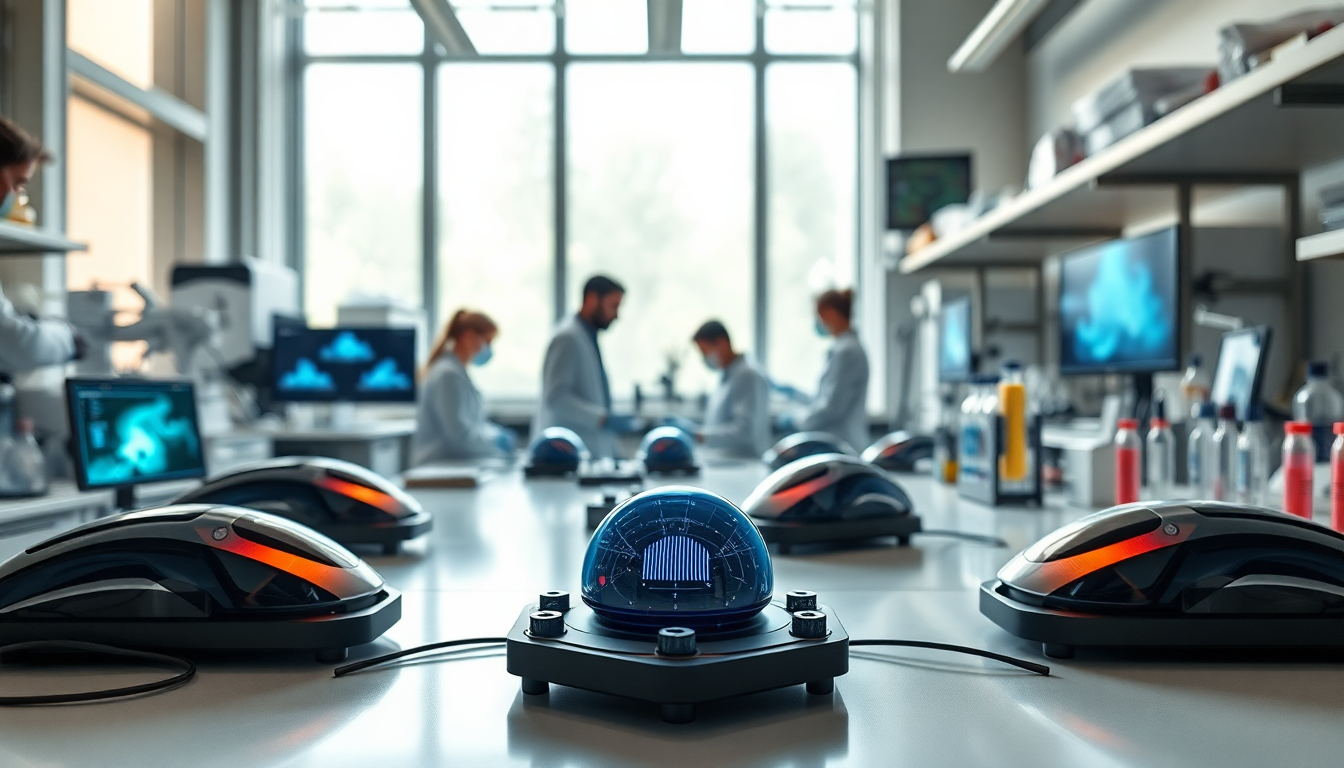
It’s pretty amazing how far detection technology has come in recent years. Have you ever thought about how much easier it would be if we could see through smoke, fog, or dust? Well, new sensors, inspired by the incredible fire beetle, are here to make that a reality. These innovative devices can detect infrared radiation at speeds an astonishing 20,000 times faster than traditional technology. This leap forward opens up exciting possibilities, especially in military and industrial settings where visibility can be a real challenge.
Why Infrared Sensing Technology Matters
So, what’s the big deal about infrared sensing technology? In many fields, especially where visibility is compromised, having the ability to detect objects clearly can make all the difference. Imagine being able to see through smoke from a fire or dust in a factory. These advanced sensors harness infrared radiation to cut through these obstacles, allowing for clear imaging and precise detection even in tough conditions.
In military operations, the capacity to spot threats or identify targets in low-visibility situations could mean the difference between success and failure. And in industrial contexts, these sensors play a crucial role in boosting safety by identifying potentially hazardous situations before they escalate. The significance of this technology is huge; it fundamentally changes how we tackle detection in complex environments.
Nature’s Genius: The Fire Beetle as Inspiration
What’s fascinating is that the design of these sensors takes a page right out of nature’s playbook. The fire beetle has some incredible adaptations that allow it to sense infrared radiation. It has a special pit organ on its thorax that can pick up faint heat signals from wildfires—even from hundreds of kilometers away! This unique sensitivity helps the beetle find the right conditions for laying its eggs, as the heat from forest fires creates a perfect environment for its larvae.
This natural ability serves as a blueprint for engineers and scientists who are working hard to replicate such efficiency in tech. By studying how the fire beetle operates, researchers are developing sensors that not only match but can actually exceed the sensitivity of existing commercial infrared detectors. Who knows? We might be on the verge of a new era in detection technology that could expand the capabilities of various applications across multiple sectors.
The Road Ahead: What’s Next for Detection Technology?
As these advanced sensors come into play, they signal a shift in how we’ll use detection technologies in the future. The potential extends far beyond military and industrial applications. Think about how they could enhance environmental monitoring, aid in search and rescue missions, or even improve everyday consumer tech. Imagine a world where these sensors can identify heat signatures in complicated situations, transforming industries by enhancing safety, efficiency, and response times.
As this technology continues to grow and evolve, we can expect more refinements that will boost its functionality and accessibility. Integrating these sensors into various systems could lead to smarter, more responsive applications, ultimately reshaping the future of detection technology as we know it. How cool is that?


