
Table of Contents
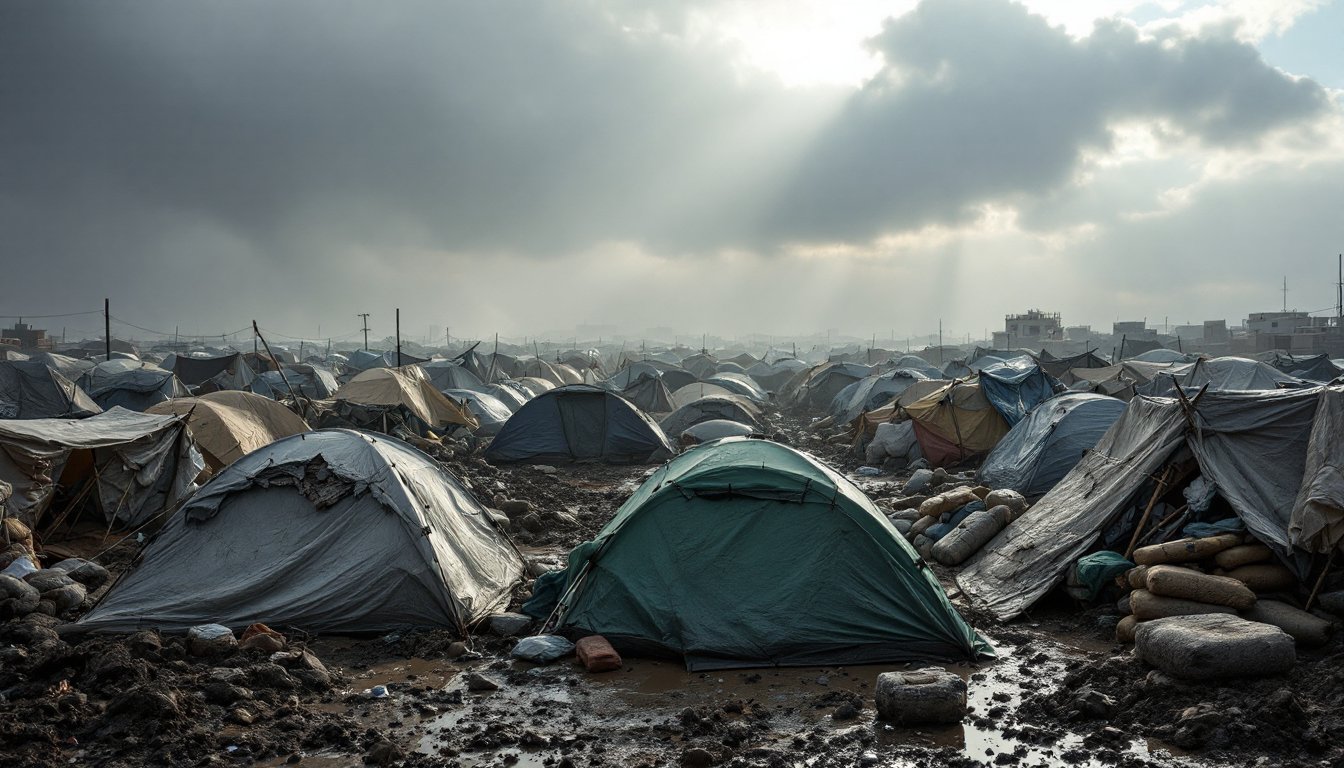
The situation in Gaza is increasingly dire as winter weather exacerbates the plight of nearly two million residents. Harsh conditions have forced many to seek shelter in makeshift tents, which struggle to withstand the elements. Although a ceasefire was implemented three months ago, violence and instability continue to plague the region.
Since the ceasefire, over 450 individuals have lost their lives due to ongoing Israeli airstrikes and clashes with Hamas militants. The relentless cycle of blame between both sides leaves civilians caught in a storm of conflict. Mustafa Abu Jabeh, a resident of Gaza, described the turmoil as a tsunami that has turned lives upside down.
Impact on children and families
UNICEF has reported a tragic toll on the most vulnerable — children. Since the ceasefire, at least 100 children have died from various forms of violence, including airstrikes and gunfire. James Elder, a spokesperson for UNICEF, highlighted that these fatalities may represent only a fraction of the total, as many cases remain unrecorded. The onset of winter has further complicated matters, with children suffering from severe cold; six have already succumbed to hypothermia in recent weeks.
Healthcare challenges
While the ceasefire has allowed for some advancements in primary healthcare, including the establishment of clinics and improved immunization services, significant barriers remain. The evacuation of critically ill children continues to face obstacles, leaving many families in limbo despite completing necessary processes. Elder mentioned heartbreaking cases, such as a nine-year-old with shrapnel in his eye and another girl whose health is rapidly deteriorating.
The political landscape and international response
Amid these challenges, the U.S. administration has proposed a second phase of a peace plan aimed at assisting Gaza’s transition from conflict to recovery. This initiative seeks to establish a new technocratic Palestinian government independent of Hamas after nearly two decades of its rule. However, the path forward is fraught with complications.
Prime Minister Mark Carney of Canada expressed cautious optimism about the proposed Board of Peace, which aims to unite world leaders in addressing global conflicts. Yet, concerns linger over the board’s focus, particularly regarding its implications for Gaza and the role of the United Nations. Carney emphasized the necessity of significant humanitarian aid as a prerequisite for any progress.
Disarmament and security concerns
A major component of the proposed plan involves disarming Hamas, a task approached with trepidation by both sides. Hamas representatives have voiced skepticism about disarmament, citing a lack of guarantees for their safety amid potential Israeli reprisals. The absence of clarity around which weapons must be surrendered only adds to the uncertainty. Israeli Prime Minister Benjamin Netanyahu has indicated that any move to advance hinges on the return of all hostages held by Hamas.
Furthermore, the establishment of an international peacekeeping force, envisioned as part of the second phase, has drawn criticism. Countries like China have raised concerns about the vague mandate of this force, questioning its operational control and effectiveness in addressing the complexities of the Gaza situation.
Reconstruction efforts and funding delays
Gaza’s reconstruction remains precarious, with an estimated $70 billion required for rebuilding efforts. Despite pledges from the United States, the European Union, and Gulf nations, financial commitments have stalled due to ongoing violence and political uncertainty. An anticipated conference to raise funds for reconstruction has been indefinitely postponed, leaving many without the resources needed to rebuild their lives.
As the conflict continues to unfold, the geopolitical landscape becomes increasingly complex. Israel’s firm stance against a Palestinian state complicates prospects for peace. Leaders in the region express the need for political clarity and commitment to an eventual resolution, but the realities on the ground tell a different story.
Since the ceasefire, over 450 individuals have lost their lives due to ongoing Israeli airstrikes and clashes with Hamas militants. The relentless cycle of blame between both sides leaves civilians caught in a storm of conflict. Mustafa Abu Jabeh, a resident of Gaza, described the turmoil as a tsunami that has turned lives upside down.0