
Table of Contents
The geopolitical climate in the Middle East is increasingly tense, especially between the United States and Iran. Military threats from U.S. President Donald Trump are escalating, prompting regional leaders to urgently seek diplomatic solutions. The stakes are high as both sides confront the possibility of conflict.
Turkey’s role in facilitating dialogue
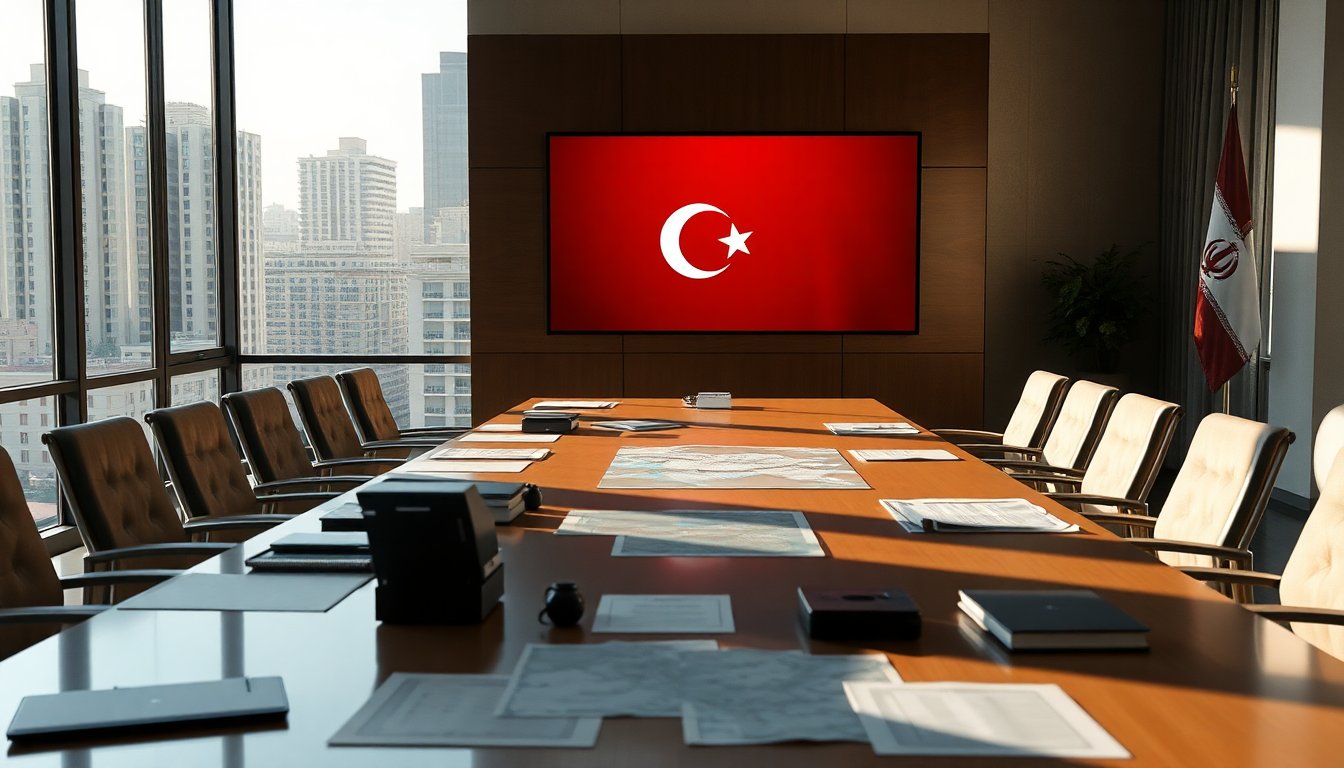
In a proactive effort, Turkish President Recep Tayyip Erdogan has offered to mediate a teleconference between the U.S. and Iranian leaders. This initiative follows Trump’s recent threats of military action against Tehran. During a recent phone call, Erdogan stressed the importance of prioritizing diplomatic discussions over military responses, urging Trump to consider a peaceful resolution.
Iran’s response remains uncertain
President Masoud Pezeshkian of Iran has yet to respond to a proposal from Turkish President Recep Tayyip Erdogan. While former President Donald Trump has expressed interest in the offer, Iranian officials are still evaluating their position. Turkish officials anticipate that Iranian Foreign Minister Abbas Araghchi, currently in Istanbul for discussions, may soon communicate Tehran’s stance. However, doubts persist regarding the likelihood of dialogue leading to a de-escalation of military actions.
Historical context of diplomatic efforts
Turkey’s mediation attempts are not new. In June, during a previous conflict, Ankara made a similar overture to Iran, which was declined. Turkish officials have consistently opposed foreign intervention in Iranian matters. As Foreign Minister Hakan Fidan pointed out, the U.S. and Iran need to resolve their issues incrementally, addressing matters “file by file.”
The relationship between the U.S. and Iran is increasingly influenced by Israel, especially under Prime Minister Benjamin Netanyahu. Netanyahu has consistently articulated concerns regarding Iran’s nuclear ambitions, urging a decisive U.S. response to Tehran. This ongoing tension highlights a broader power struggle in the region, with diverse interests complicating the situation.
A fragile balance
Despite the prevailing tensions, many regional leaders agree that military intervention is not a viable solution. Columnist Hande Firat has emphasized Turkey’s intention to de-escalate the crisis and promote diplomatic dialogue. This perspective is supported by various diplomatic sources, who stress the importance of engagement to avert a serious deterioration of the circumstances.
The facts
In recent developments, President Trump has intensified his rhetoric regarding Iran, warning of a “massive armada” approaching the region. He likened the situation to previous military operations in Venezuela, asserting that the U.S. stands ready to act swiftly and decisively. Trump’s statements on his social media platform reflect his conviction that military strength is a viable means to enforce U.S. interests.
The consequences
Trump’s warnings come with a strict timeline for Iran to engage in negotiations. He underscores the urgency of reaching an agreement to prevent further military escalation. The President has made it clear that the U.S. is poised to deliver a substantial military response should Iran fail to meet its demands.
What’s next
The situation is rapidly evolving, with diplomatic sources emphasizing the need for engagement to avoid a serious deterioration in relations. As tensions heighten, the international community is closely monitoring the developments surrounding U.S.-Iran interactions.
The consequences of military action
As the situation unfolds, experts express concerns about the implications of potential military action. Military analyst Adam Weinstein has highlighted the risks involved, warning that any escalation could endanger U.S. troops and compromise diplomatic leverage. Critics of the administration’s approach argue that such actions could lead to unintended consequences, further destabilizing the region.
U.S. lawmakers have also voiced their apprehensions regarding the constitutional implications of military strikes without Congressional approval. Several representatives have questioned the legality of the actions taken by President Trump, emphasizing the need for thorough deliberation before engaging in military conflict.
The facts
As tensions rise between the U.S. and Iran, the threat of military conflict remains a significant concern. However, diplomatic efforts led by Turkey and other regional players highlight a critical opportunity: dialogue may be the most effective means to de-escalate the situation.
The consequences
The ongoing interplay between military posturing and diplomatic negotiations will play a pivotal role in shaping the future of the Middle East. Experts agree that proactive communication is essential for achieving long-term stability and preventing further escalation.
What’s next
As the situation continues to evolve, maintaining open channels of communication will be vital. Regional actors must collaborate to address underlying issues and foster a climate conducive to peace. The international community must remain engaged and support these diplomatic initiatives to ensure a more stable future.