
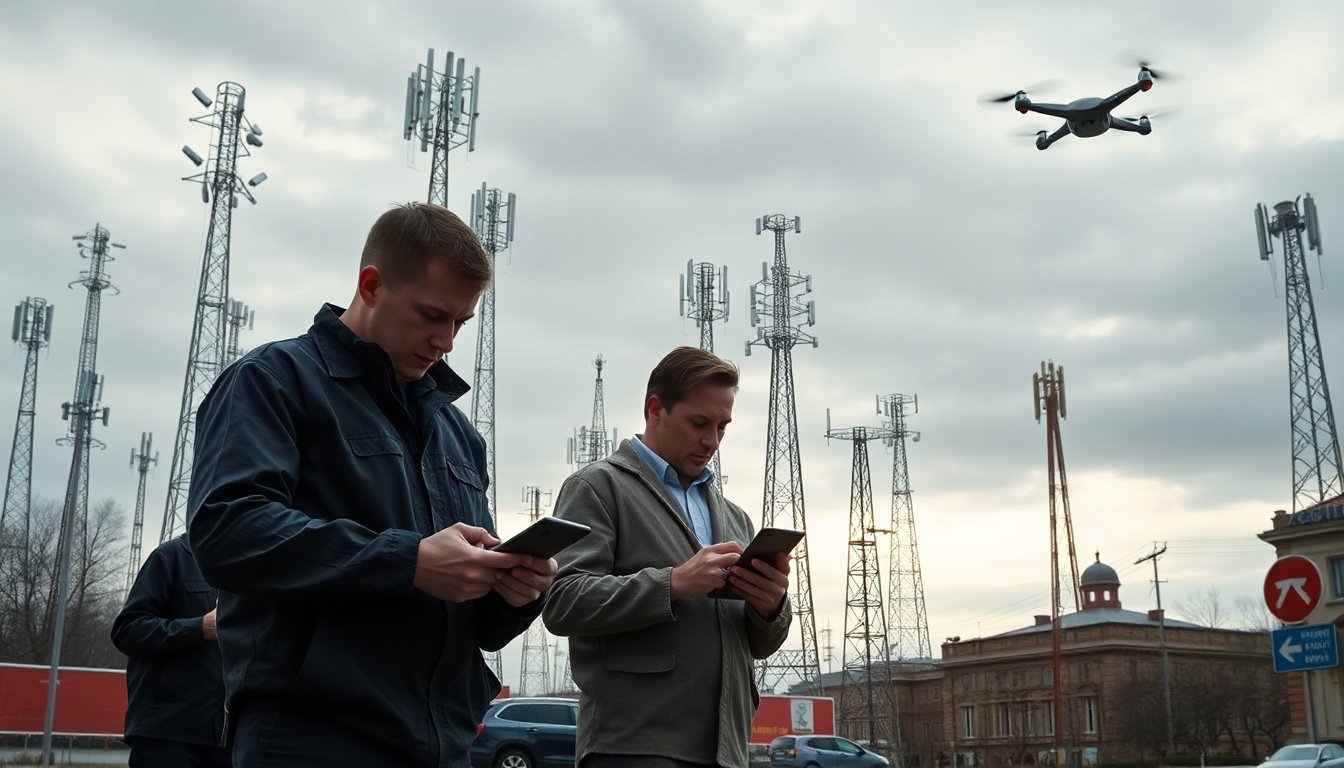
In a significant step to tackle ongoing security issues related to drone operations, the Russian government has launched a new policy imposing temporary mobile internet restrictions. This system, known as SIM card ‘cooling’, is designed to cut internet access for specific SIM cards under particular conditions. The primary goal of these measures is to disrupt communications between Ukrainian drones and their operators, thereby bolstering national security.
The mechanics of the ‘cooling’ strategy
On November 10, a new policy was launched aimed at managing SIM cards that connect to foreign networks while roaming or remain inactive for more than 72 hours. When entering Russia, foreign SIM cards are automatically disconnected from mobile networks for 24 hours. Users can regain access sooner by completing a CAPTCHA verification process. However, this system does not apply universally across all telecom operators, and some devices may not support the necessary interface for the CAPTCHA feature.
Operational implications for travelers and residents
Authorities assert that the temporary blackout is designed to protect Russian citizens; however, it presents notable challenges for travelers, local residents near borders, and foreign visitors. Many may experience disruptions in mobile access due to their SIM cards being impacted by the ‘cooling’ effect. Furthermore, the restrictions include bans on transferring SIM cards between users and prolonged internet shutdowns in certain areas.
Experts express skepticism regarding the effectiveness of these measures in mitigating drone operations. Most military drones involved in the ongoing conflict operate independently of mobile internet. They typically rely on direct radio communications or fiber-optic cables for control. While LTE-equipped drones are becoming more common, their success in operations does not primarily depend on mobile connectivity.
Challenges associated with mobile network reliance
Military drones primarily utilize a combination of inertial navigation systems and satellite guidance for precise positioning and control. These systems are generally resilient against electronic interference. However, they can accumulate errors over time, requiring periodic corrections through satellite navigation. Unfortunately, the satellite signals are susceptible to jamming, which can significantly impair the accuracy of drone operations.
To mitigate these vulnerabilities, many drones, like the Shahed/Geran, are designed with advanced navigation systems that feature multiple satellite signal receivers. This capability allows them to filter out erroneous data effectively. While the integration of mobile networks could theoretically enhance navigation accuracy, their effectiveness in combat scenarios is limited due to the potential for complete network shutdown.
The role of mobile modems in reconnaissance
Investigations have shown that some crashed drones are equipped with mobile communication modems. These modems primarily transmit telemetry data, which is essential for military planners. This data helps optimize future drone operations and avoid heavily defended areas. However, the effectiveness of mobile modems for real-time video streaming is still in question due to inherent signal delays.
Drones equipped with cameras, particularly those used by Russian forces, are often deployed for immediate surveillance and attack missions. For example, they have been utilized to target critical infrastructure, such as railway systems, relying on pre-established coordinates instead of real-time video feeds.
Future considerations and operational adjustments
The effectiveness of Russia’s ‘cooling’ measures remains in question as Ukrainian operatives have reportedly developed techniques to disable enemy drone SIM cards mid-flight. This capability could significantly diminish the impact of Russia’s current restrictions.
Moreover, the dynamic nature of modern warfare and rapid technological advancements suggest that both sides will likely adapt their strategies in response to these evolving challenges. While temporary mobile internet blackouts may disrupt some operations, they are not expected to completely halt ongoing drone strikes and surveillance activities.
Ultimately, Russia’s initiative to implement mobile internet blackouts seeks to address drone warfare threats, but its actual effectiveness is still uncertain. As drone technology and operational tactics continue to advance, the landscape of modern conflict remains fluid, presenting ongoing challenges to traditional defense strategies.


