
Table of Contents
In recent developments, President Donald Trump has praised his recent phone conversation with Chinese leader Xi Jinping, describing it as a very positive engagement. This interaction comes at a critical time as Beijing has issued warnings regarding U.S. arms sales to Taiwan, which China views as a provocative action.
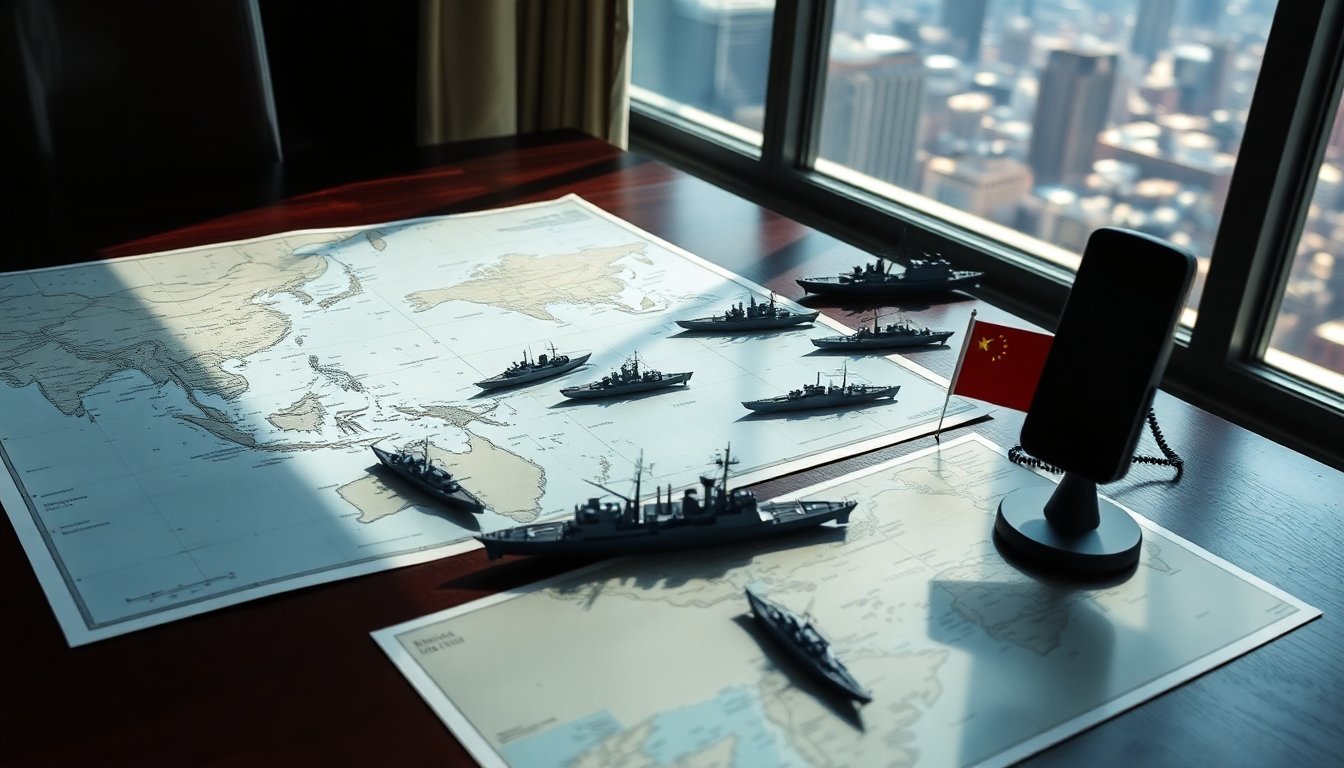
Amidst these diplomatic exchanges, concerns around Taiwan’s security have intensified, especially following a large-scale military exercise by China known as Justice Mission 2026. This operation, which took place in late, involved numerous Chinese ships and aircraft surrounding Taiwan, suggesting a rehearsal for a potential blockade.
Understanding the military exercises and their implications
The military exercises conducted by China included over 90 aircraft sorties that crossed the median line of the Taiwan Strait, marking a significant show of force. Furthermore, Chinese naval formations were detected near Taiwan’s territorial waters, with some missiles landing alarmingly close to the island.
Provocative actions and international reactions
The Taiwanese government labeled these drills as provocative, asserting that they threaten regional stability. In contrast, the People’s Liberation Army (PLA) regarded the exercises as a success in countering separatist movements in Taiwan and deterring foreign intervention.
Despite this display of military might, President Trump downplayed the situation during a press conference, emphasizing that such naval exercises have been a common occurrence for over two decades. This raises questions about his commitment to Taiwan’s defense in the event of an actual military confrontation.
Trump’s ambiguous stance on Taiwan’s defense
Trump’s approach toward Taiwan has been characterized by a policy of strategic ambiguity. Unlike his predecessors, who explicitly stated their willingness to utilize U.S. military power to defend Taiwan, Trump has refrained from making such commitments. Instead, he has opted for a more vague posture, suggesting that the U.S. response would depend on the circumstances at hand.
Past statements and current implications
In a past interview, Trump hinted at possible military support for Taiwan without providing specific details, stating, “You will find out if it happens.” This creates uncertainty regarding how the U.S. might respond to a Chinese invasion or blockade, leaving many in Taiwan and Washington apprehensive about the reliability of U.S. support.
While Trump’s tough rhetoric towards China has provided some reassurance to Taiwan, it contrasts sharply with his unpredictable diplomatic style. His previous engagements with Taiwan’s leadership have stirred controversy, notably his phone call with President Tsai Ing-wen shortly after his election, which was the first direct communication between a U.S. president and Taiwan’s leader in decades.
U.S. arms sales and Taiwan’s defense strategy
During his presidency, Trump has significantly increased arms sales to Taiwan, surpassing $18.7 billion in military equipment, which is notably higher than under previous administrations. These sales are part of a broader strategy to enhance Taiwan’s self-defense capabilities amidst the growing military threat from China.
However, this arms deal is not without its challenges. A backlog in arms sales has emerged, with Taiwan awaiting delivery of crucial military hardware. The U.S. commitment to support Taiwan’s defense is further complicated by ongoing trade negotiations with China, leading to concerns that military support could be compromised.
Future considerations for U.S.-Taiwan relations
As tensions between the U.S. and China continue to escalate, the future of U.S.-Taiwan relations hangs in the balance. Observers suggest that Trump’s unpredictable nature makes it difficult to assess his reliability regarding Taiwan’s defense. With Congress demonstrating bipartisan support for Taiwan, the need for a clear U.S. stance becomes increasingly urgent.
In conclusion, as Trump navigates the complexities of U.S.-China relations, Taiwan remains at the forefront of military and diplomatic considerations. The outcomes of these interactions will have lasting implications for the security and stability of the region.