
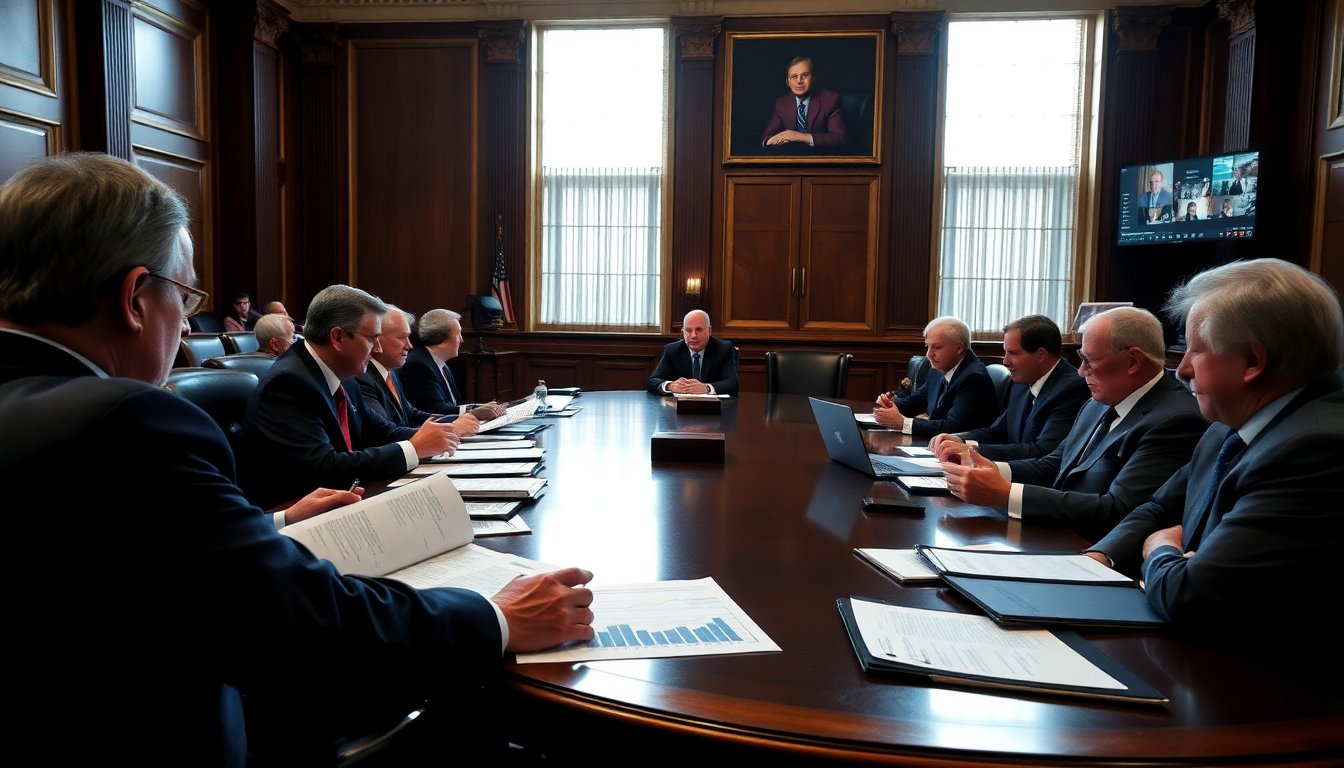
The ongoing conflict in Ukraine has prompted renewed discussions in Congress regarding the imposition of economic sanctions against Russia. Senator Lindsey Graham from South Carolina took to social media to express his enthusiasm for a bipartisan bill that aims to equip President Trump with enhanced tools to address the situation. Graham’s statement emphasizes a collective effort to respond to the humanitarian crisis unfolding in Ukraine.
The proposed legislation is a response to the perception that existing sanctions have not effectively deterred Russia’s actions. Graham’s commitment to providing President Trump with additional powers to end what he describes as a ‘bloodbath’ suggests a shift towards more aggressive economic measures. This article explores the implications of such sanctions and their potential impact on international relations.
The implications of Lindsey Graham’s sanctions bill
Senator Graham’s bill, if enacted, could introduce a series of drastic economic measures, including a staggering 500% tariff on nations that engage in trade with Russia. This legislation is positioned as a means to penalize countries that continue to support Moscow through trade, particularly in natural resources like oil and gas. However, experts warn that such an approach may lead to unintended consequences, potentially exacerbating tensions rather than resolving them.
Potential economic fallout
The proposed sanctions, labelled as the Sanctioning Russia Act, could precipitate an economic crisis of unprecedented proportions. By imposing exorbitant tariffs, the bill risks not only harming Russia but also adversely affecting America’s allies and the U.S. economy itself. The legislation specifies that the President must enact these tariffs on imports from any country that knowingly engages in significant trade with Russia.
As countries like Israel and Japan are identified as potential targets for these tariffs, the stakes are raised. For instance, in, Israel imported over $10 million in plastics from Russia, and Japan has also engaged in substantial trade with Russian entities. The implications of a 500% tariff could lead to strained relationships with key allies, undermining diplomatic efforts in a time of geopolitical uncertainty.
Challenges to effectiveness
Despite the intention to pressure Russia into negotiations, the effectiveness of such sanctions is questionable. Historical precedent suggests that punitive measures often fail to achieve their desired outcomes. The Kremlin’s determination to maintain its influence in Ukraine is rooted in national security interests, making it unlikely that additional sanctions will alter Russia’s strategic decisions.
Continued trade relationships
Even amidst sanctions, countries around the world continue to engage in trade with Russia. For instance, the United States imported approximately $624 million worth of enriched uranium from Russia in. This scenario raises critical questions: Is the U.S. government genuinely prepared to impose a 500% tariff on its own imports? Furthermore, as nations like Taiwan serve as significant consumers of Russian products, the ramifications of such tariffs could destabilize not only American interests but also broader regional security.
In Europe, the situation is equally complex. Despite vocal opposition to Russia’s actions, the European Union’s imports of Russian liquefied natural gas rose significantly in, highlighting the intricate web of trade dependencies that exist even among allies. As sanctions are considered, the potential backlash against U.S. interests must be carefully weighed.
The need for a strategic approach
As Congress moves toward a vote on the sanctions bill, it is imperative to consider the broader implications of such measures. The focus should shift from punitive actions to diplomatic solutions that prioritize American interests and foster cooperation with allies. Rather than exacerbating tensions through aggressive economic policies, lawmakers should explore avenues for meaningful dialogue and negotiation with Russia.
The complexity of international relations demands a nuanced approach. As the U.S. grapples with its national priorities, including managing a substantial national debt, it is critical to avoid alienating key partners through unilateral actions. A shift towards constructive engagement, rather than isolationist policies, could pave the way for a more stable geopolitical landscape.


