
Table of Contents
Niger’s military government has accused France, Benin, and Ivory Coast of orchestrating a recent attack on a military base near Niamey’s international airport. General Abdourahamane Tiani, the military ruler since the coup in 2026, made these statements during a televised address. This accusation marks a significant shift in Niger’s international relations, particularly with France, its former colonial power.
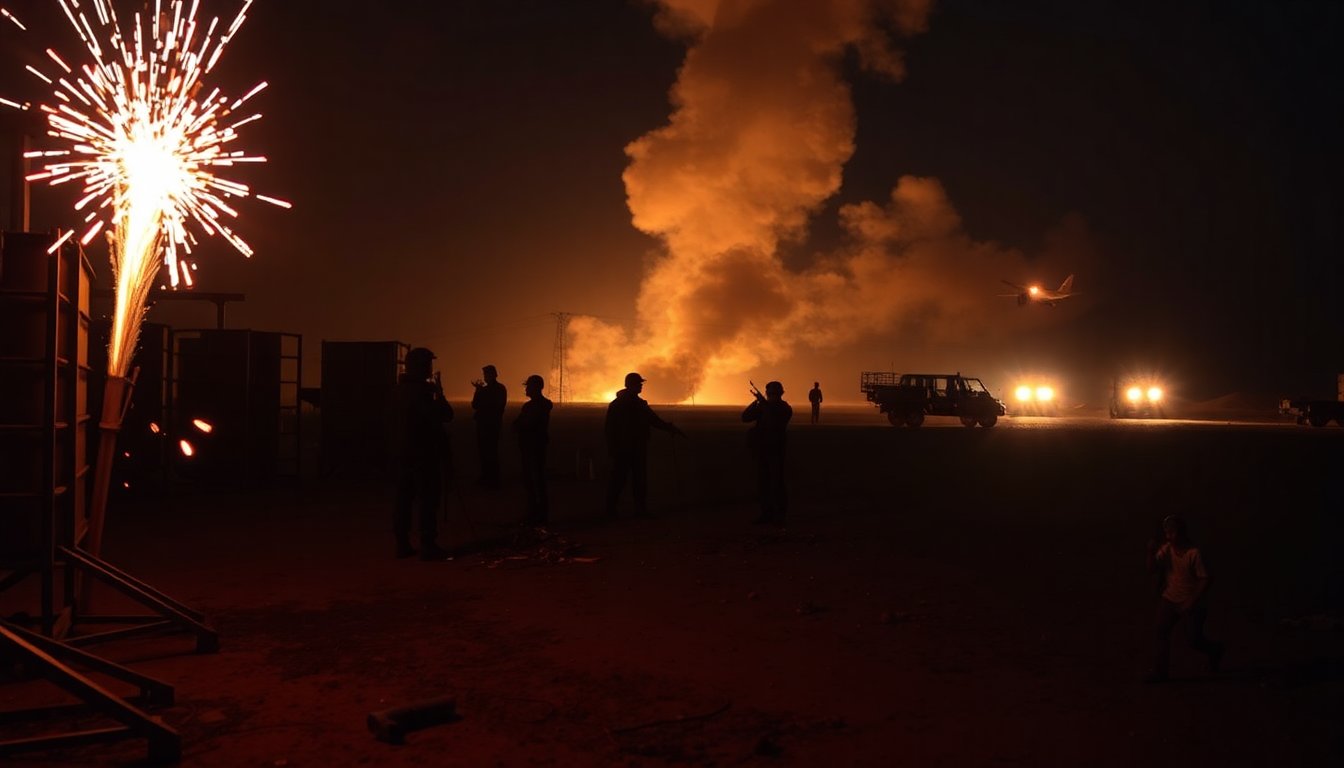
The attack occurred late Wednesday night, characterized by gunfire and explosions illuminating the night sky near Diori Hamani International Airport. Residents described a chaotic scene, with violence echoing throughout the capital. The military responded swiftly, deploying both aerial and ground operations to neutralize the threat.
Details of the assault
According to Niger’s Defence Minister Salifou Modi, the attack lasted about 30 minutes, resulting in injuries to four military personnel and the deaths of 20 assailants. Reports suggest that a French national was among those killed, although this detail remains unverified. Following the incident, eleven individuals were apprehended, indicating a possibly extensive network behind the attack.
General Tiani’s remarks following the incident reflect rising animosity towards France and its allies, whom he accused of attempting to destabilize Niger. “They should be ready to hear us roar,” he stated, indicating a defiant stance against foreign influence. The military government suggests that the attack is part of a broader agenda orchestrated by these nations, although no substantial evidence was provided to support these claims.
International relations and military partnerships
The relationship between Niger and France has deteriorated significantly in recent months, particularly after the military coup that ousted the democratically elected president, Mohamed Bazoum. The current regime has taken steps to sever ties with Western powers, expelling French and American military forces that had previously assisted in counterterrorism efforts.
In this context, General Tiani expressed gratitude towards Russian military personnel stationed at the base, stating that their presence was crucial in thwarting the recent attack. This partnership with Russia represents a significant shift in Niger’s foreign policy, aligning the country more closely with Moscow as it seeks military support against various insurgent threats, including those linked to al-Qaeda and ISIL.
Increased domestic mobilization
As the military government navigates these challenging circumstances, calls for public mobilization have emerged. Supporters of the junta, such as activist Ibrahim Bana, have urged citizens to take to the streets in defense of their nation, increasing tensions within the capital. This rhetoric highlights the precarious balance the regime is attempting to maintain, rallying public support while addressing external threats.
The backdrop of ongoing militant violence complicates the situation further. Reports from organizations like the Armed Conflict Location & Event Data Project (ACLED) indicate that Niger experienced nearly 2,000 fatalities in 2026 due to militant activities. The persistent violence underscores the urgent need for effective governance and security measures amid growing instability.
Strategic importance of the airport
Diori Hamani International Airport serves not only as a transportation hub but also as a strategic military site. It acts as the headquarters for a collaborative force comprising Niger, Burkina Faso, and Mali, aimed at addressing the jihadist threat in the Sahel region. Consequently, the recent attack is not merely a localized incident but a challenge to the regional security framework.
Additionally, the airport has been central to logistical operations, including the transport of a significant uranium shipment that has reportedly been stranded for weeks, raising strategic concerns regarding security and control over natural resources. This situation highlights the complex relationship between military operations and economic interests, particularly in resource-rich regions like Niger.
The attack occurred late Wednesday night, characterized by gunfire and explosions illuminating the night sky near Diori Hamani International Airport. Residents described a chaotic scene, with violence echoing throughout the capital. The military responded swiftly, deploying both aerial and ground operations to neutralize the threat.0