
Table of Contents
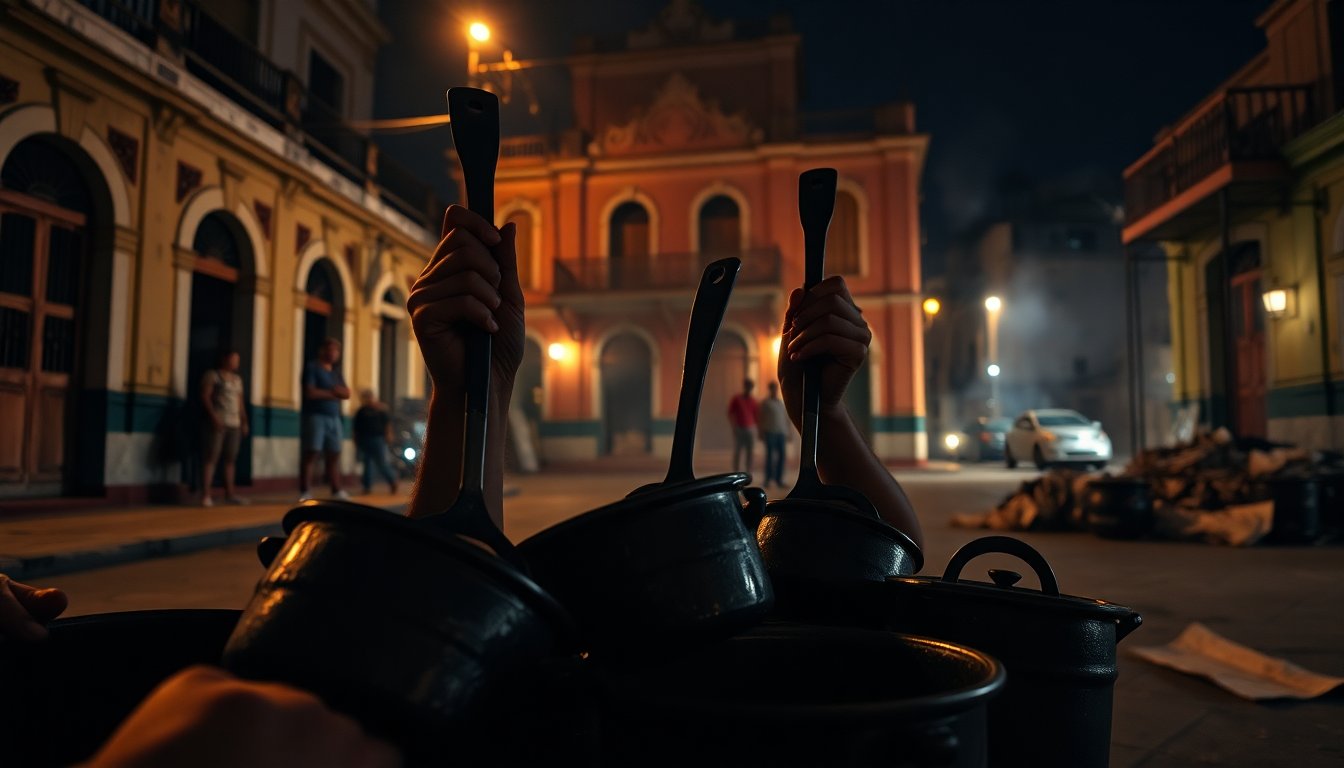
The recent unrest across several Cuban cities has taken on a distinctly nocturnal character, with residents using darkness and intermittent power to amplify their dissent. Under cover of blackouts, crowds have taken to the streets to bang pots and flashlights, a tactic that echoes earlier grassroots noise protests but now carries higher stakes. In one municipality, demonstrators breached the local headquarters of the Communist Party of Cuba (the PCC), removing and burning materials in the street; authorities have reported arrests and an ensuing information blackout.
At the same time, Havana has signaled a different form of activity: officials acknowledge that there have been behind-the-scenes contacts with Washington. State media and independent observers note the visible presence of figures linked to the ruling family during those meetings, while U.S. involvement has been associated — publicly and privately — with prominent Republican voices. Rumors of prisoner releases circulated as the government scripted its public messaging, and the president’s tone appeared less confrontational than in prior years.
Night, blackouts and the rhythm of dissent
Power interruptions have reshaped how people express grievances: the nighttime protests make crowding and surveillance harder, and the pounding of pans becomes both a symbolic and practical method of communication. The use of pots-and-pans protest tactics — where ordinary household objects become amplifiers of discontent — has been paired with flashlights and mobile phones when service allows. These methods rely on irregular service: some neighborhoods experience brief outages while towns like Morón endured multi-day blackouts, creating very different conditions for mobilization and for state response. Reports also describe intermittent internet shutdowns, which slow the flow of images and eyewitness testimony and complicate independent verification of events.
Morón and the storming of a party office
The most dramatic episode took place in the municipality of Morón in Ciego de Ávila province, where demonstrators reportedly entered the local PCC building and set fire to campaign materials and documents in the street. Local outlets and social posts showed scenes of looting and destruction; provincial authorities dismissed the events as acts of vandalism orchestrated from abroad. Amid the chaos, activists and witnesses reported injuries and possible gunshot wounds, though official confirmation has been limited and state footage presented differing images. The incident has given leaders a ready justification to threaten legal action, and independent groups warn that violent excesses during protests often provide the government with broader grounds for mass arrests.
Back channels, political leverage and the tone of power
Parallel to the street turmoil are reports of quiet diplomacy between Cuban officials and U.S. actors. For the first time in this period, Havana’s leadership acknowledged that such contacts exist, and observers noted the presence of a family-linked aide in public settings tied to those talks. The engagement recalls earlier openings under a different U.S. administration, but commentators emphasize differences in the balance of leverage: the island’s economic fragility — worsened by disruptions to energy supplies and a deepening humanitarian strain — constrains the negotiating position of the government. State statements referenced possible detainee releases, yet offers from the regime in past negotiations produced limited political change, leaving many activists skeptical.
What protesters demand and the risks ahead
Demonstrators articulate a mixture of immediate and political demands: restoration of reliable electricity, freedom from repression, and broader civic space — often voiced in chants such as “Freedom” and “Homeland and Life”. At the same time, the government continues to criminalize dissent with public reminders of the order to combat rhetoric used during earlier unrest. Human rights groups have documented arrests and urge restraint, warning that violent episodes during protests can undercut popular support and justify heavier crackdowns. Observers suggest that nonviolent coordination, careful documentation, and international attention may limit arbitrary detentions, while also noting that even quiet diplomatic contacts can be used by the regime to temper its own responses.
In sum, the confrontation now mixes improvised nocturnal tactics with emerging diplomatic threads. The interplay of blackouts, local explosions of anger such as the Morón incident, and off-the-record contact with foreign officials creates a fluid situation in which outcomes remain uncertain. Whether these dynamics lead to substantive political concessions, a renewed cycle of repression, or a fragile détente will depend on how protest tactics, government calculations and international engagement evolve in the coming weeks.