
Table of Contents
The Arctic region has become a focal point of international relations, particularly in the context of U.S. President Donald Trump’s recent assertions regarding Greenland’s significance for national security. In a series of statements, Trump emphasized the necessity of Greenland as a strategic outpost to counter perceived threats from Russia and China. However, these claims have been met with skepticism and outright rejection from Nordic officials.
In an environment where geopolitical interests clash, the narrative surrounding Greenland’s role reflects broader tensions involving military presence and territorial sovereignty. As various stakeholders weigh in, the conversation around this vast island continues to evolve, revealing the complexities of Arctic diplomacy.
Trump’s assertions about Greenland
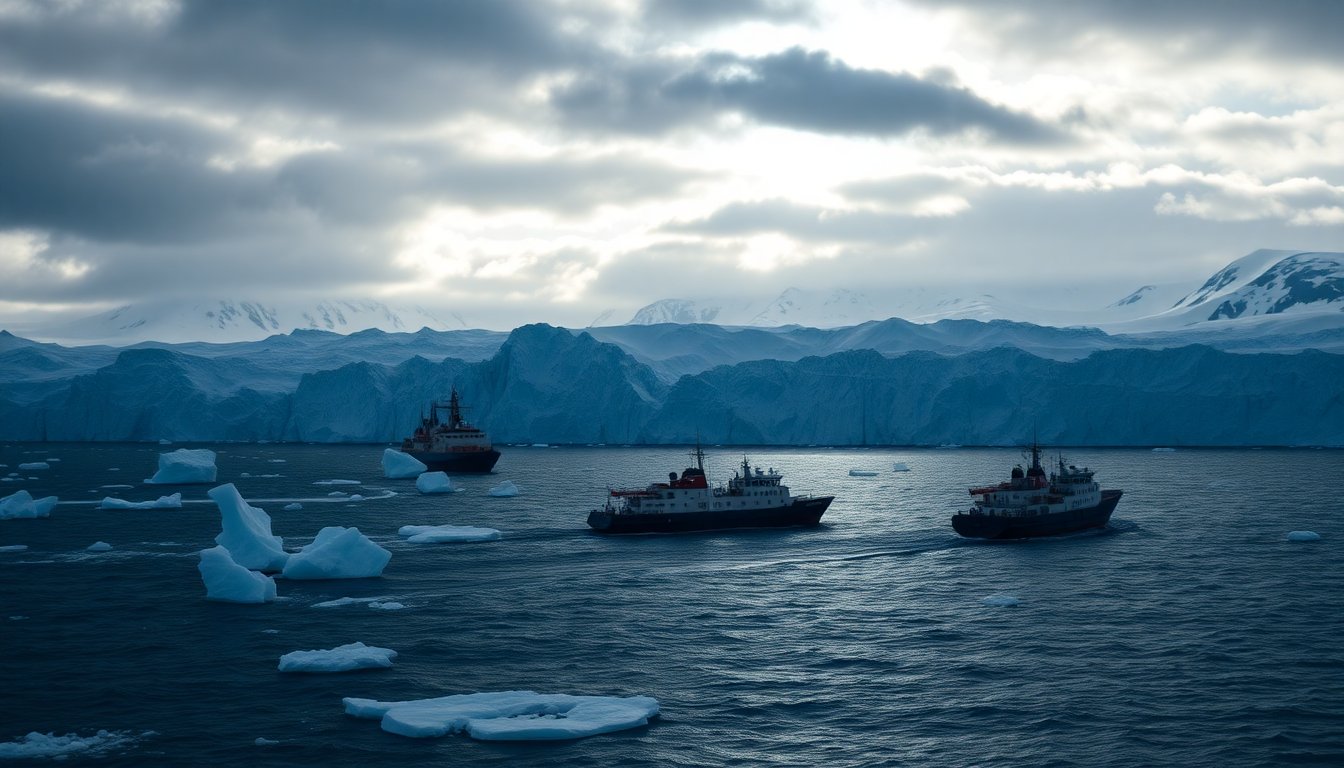
President Trump has made headlines with his claims that Greenland is currently swarming with Russian and Chinese naval vessels. During a flight aboard Air Force One, he stated, “Greenland is covered with Russian and Chinese ships all over the place. We need Greenland from the standpoint of national security.” This alarming statement was intended to frame Greenland as a critical asset in countering threats from adversaries in the Arctic region.
A White House announcement further elaborated on Trump’s perspective, indicating ongoing discussions about potential U.S. strategies for acquiring the territory. The administration has hinted that military options remain on the table, suggesting a willingness to consider various avenues to secure what they view as an essential part of U.S. foreign policy. However, this approach has sparked significant backlash.
Reactions from Nordic leaders
In stark contrast to Trump’s claims, officials from Greenland and Denmark have been vocal in rejecting the notion that the island is up for negotiation. Danish Prime Minister Mette Frederiksen articulated her discontent, asserting, “It makes absolutely no sense to talk about the U.S. needing to take over Greenland.” She emphasized the historical and cultural significance of the territory, which has been a self-governing region within the Danish kingdom since 1979.
Frederiksen’s comments underscore a broader sentiment among Nordic leaders who view Trump’s rhetoric as a threat to their sovereignty. The unified response from leaders such as those from the UK, France, and Germany reinforces the idea that Greenland’s future should be determined solely by its inhabitants and their wishes, not external pressures.
Understanding Greenland’s geopolitical significance
Geographically, Greenland occupies a unique position between the Arctic Ocean and the North Atlantic, making it strategically crucial for military operations and surveillance. With a population of approximately 56,000, primarily Indigenous Inuit, the island is the largest in the world and serves as a NATO territory through its ties to Denmark. The U.S. has maintained a military base on the island since the Cold War, and its location is pivotal for monitoring Russian naval activities in the North Atlantic.
Moreover, the island is rich in natural resources, including rare earth minerals essential for modern technology. Recent assessments have shown that Greenland houses 25 out of 34 minerals classified as critical by the European Commission. This resource wealth adds another layer of complexity to the ongoing discussions about territorial claims and security.
Examining the claims of Russian and Chinese presence
Despite Trump’s assertions of a Russian and Chinese maritime presence in close proximity to Greenland, recent intelligence reports from Nordic diplomats have challenged the validity of these claims. According to sources, vessel tracking data indicates a lack of significant naval activity from either country near the island. This discrepancy raises questions about the motivations behind Trump’s statements and the implications for U.S. foreign policy.
As global warming continues to open up Arctic routes, the competition for resources and shipping lanes has intensified among nations. Both Russia and China have been actively pursuing interests in the region, but whether their activities pose a direct threat to Greenland remains highly debatable.
The future of Greenland’s sovereignty
In an environment where geopolitical interests clash, the narrative surrounding Greenland’s role reflects broader tensions involving military presence and territorial sovereignty. As various stakeholders weigh in, the conversation around this vast island continues to evolve, revealing the complexities of Arctic diplomacy.0
In an environment where geopolitical interests clash, the narrative surrounding Greenland’s role reflects broader tensions involving military presence and territorial sovereignty. As various stakeholders weigh in, the conversation around this vast island continues to evolve, revealing the complexities of Arctic diplomacy.1