
Table of Contents
In a significant display of military capability, North Korea has fired ballistic missiles into waters off its eastern coast. This action follows the United States unveiling a new defense strategy, which may indicate a reduction in military support aimed at countering North Korea’s nuclear ambitions. The situation has drawn considerable attention from regional powers, particularly South Korea and Japan, as they evaluate the implications of these developments.
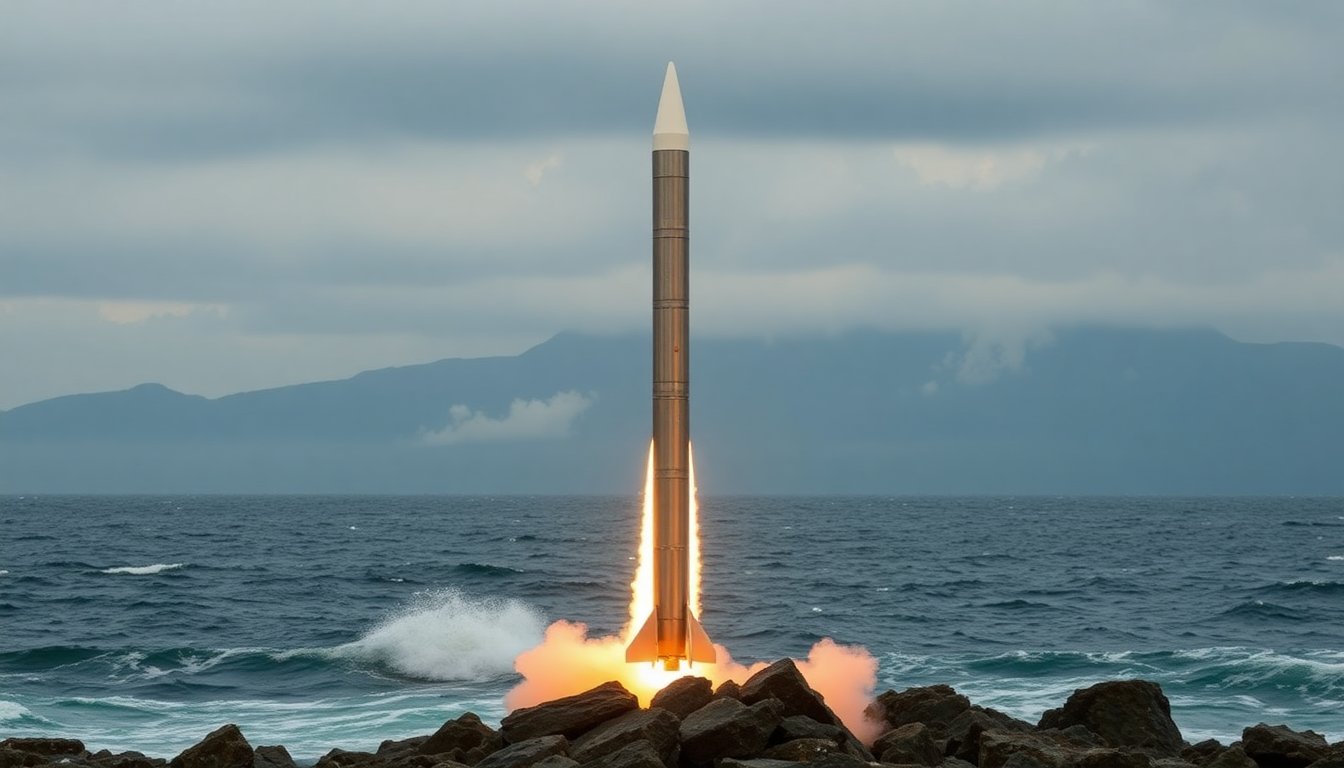
On a recent Tuesday afternoon, multiple ballistic missiles were launched from a site north of Pyongyang, the North Korean capital. According to South Korea’s Joint Chiefs of Staff, the missiles were directed towards areas off the east coast. Reports from Japan’s coastguard confirmed that at least one missile fell into the sea, raising alarms about the shifting military landscape in the region.
Details of the missile launches
The South Korean government and Japan promptly acknowledged the missile launches, estimating that at least two ballistic missiles were involved. These missiles were detected around 3:50 PM local time, landing outside Japan’s exclusive economic zone (EEZ), which extends approximately 200 nautical miles from its coastline. This careful targeting minimizes the risk of direct confrontation while serving as a demonstration of military strength.
Regional military responses
In response to these launches, both Tokyo and Seoul have heightened their military readiness. Japanese Prime Minister Takaichi Sanae has directed increased intelligence operations and enhanced safety protocols for commercial air traffic and shipping due to the rising tensions. Meanwhile, South Korea has intensified its surveillance along maritime borders, ensuring military forces remain on high alert for any further provocations from the North.
This missile test marks the second instance of North Korean military activity within a month. Earlier, on January 4, North Korea successfully launched two hypersonic missiles, which state media described as part of a testing phase for advanced missile technology. Such developments highlight North Korea’s expanding capabilities and underscore the ongoing military rivalry on the Korean Peninsula.
Implications of U.S. defense strategy shift
The timing of these missile tests coincides with a significant shift in U.S. defense policy. The Pentagon’s new doctrine suggests a move towards a “more limited” role for American forces in deterring North Korean aggression. This adjustment implies that South Korea will assume greater responsibility for its own defense, a strategic initiative reflected in a 7.5% increase in South Korea’s defense budget for the year.
North Korea’s military ambitions
Experts suggest that North Korea’s recent missile activity is part of a broader strategy by Kim Jong Un to enhance the country’s military capabilities. As the nation approaches the upcoming Ninth Congress of the Workers’ Party of Korea, expectations are that Kim will unveil a comprehensive military development plan for the next five years. This plan is expected to reflect significant advancements in both conventional and nuclear missile technologies, indicating North Korea’s commitment to strengthening its military position.
As the geopolitical landscape becomes more complex, the interplay between U.S. military posture, North Korean missile tests, and regional security dynamics will require careful monitoring. The delicate balance of power in East Asia hinges on the responses from allied nations as they navigate the challenges posed by North Korea’s aggressive military strategy.