
Table of Contents
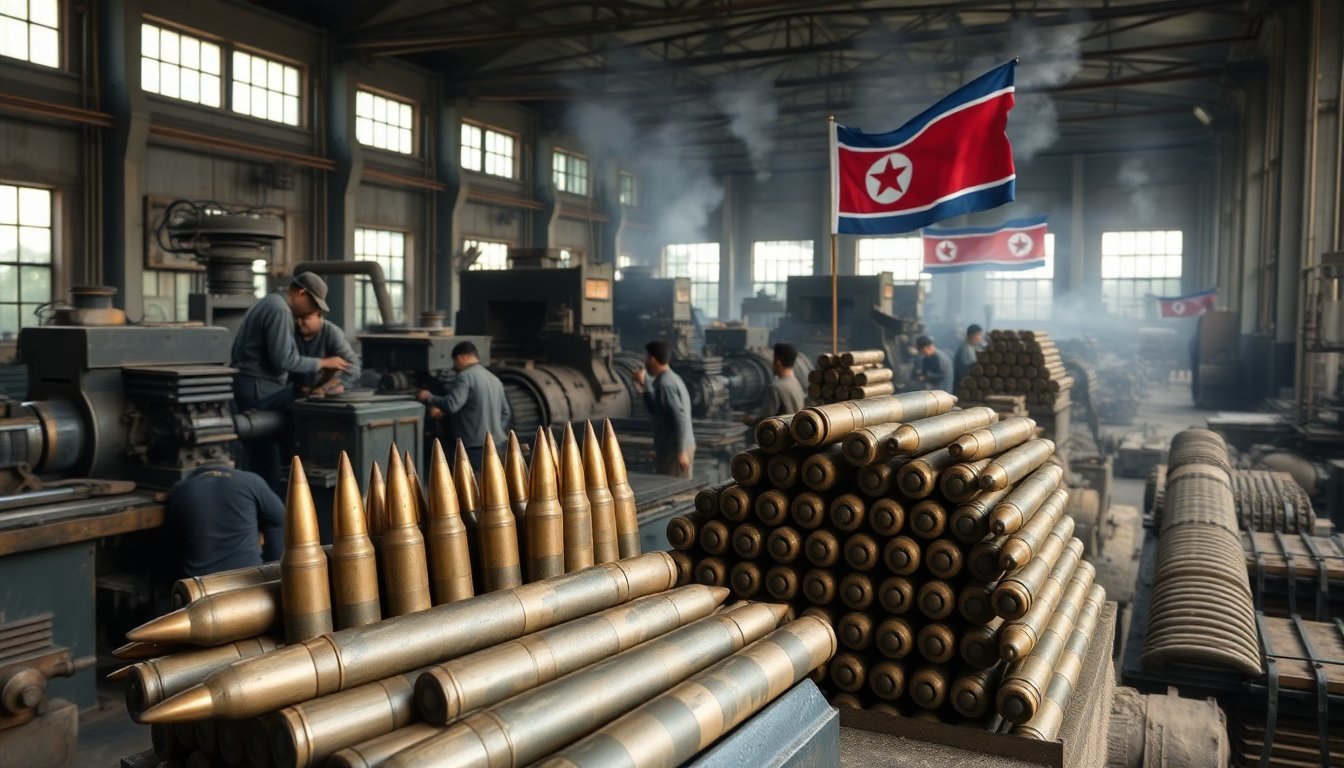
In a significant move signaling North Korea’s military ambitions, Kim Jong Un has directed government officials to increase the output of missiles and artillery shells. This initiative arises from the demands of his armed forces, as reported by the state-operated Korean Central News Agency (KCNA). During a recent inspection of munitions factories, Kim outlined plans for an aggressive production schedule for the coming year.
The drive for increased military production
According to KCNA, Kim emphasized the essential role of the nation’s missile and artillery production capabilities, describing them as crucial for enhancing North Korea’s war deterrence. He instructed officials to not only boost existing production but also to construct new facilities dedicated to manufacturing these weapons. This strategy indicates a clear intent to maintain a competitive edge in military readiness.
Plans for modernization
Kim Jong-un has issued orders for modernization following his recent visit to a shipyard. During this visit, he oversaw the construction of a significant nuclear-powered submarine. This vessel, with a weight of 8,700 tonnes, is engineered to launch surface-to-air missiles. State media released images showing Kim inspecting the submarine, which is currently under development and features an anticorrosion coating. This appearance marks the first public display of the submarine since March, when media coverage focused mainly on its lower sections.
Regional implications of missile development
During a recent inspection of a submarine, Kim Jong-un expressed concerns regarding South Korea’s plans to develop its own nuclear-powered submarines. He characterized this initiative as a destabilizing factor in the region. Kim argued that these advancements pose a direct threat to North Korea’s national security interests. These tensions are compounded by a recent summit in which South Korean President Lee Jae Myung sought support from the United States for South Korea’s nuclear submarine program, leading to discussions about the potential sharing of advanced military technology.
Testing new capabilities
Korean leader Kim Jong-un has been actively overseeing test launches of advanced long-range anti-air missiles over the Sea of Japan. He announced that the Korean Workers Party plans to reveal new modernization and production initiatives at an upcoming congress, scheduled for early next year. Analysts view Kim’s emphasis on missile testing as a strategy to improve precision-strike capabilities. This move aims to apply pressure on both the United States and South Korea, while also positioning North Korea for potential arms exports to allies such as Russia.
Strengthening ties with Russia
The relationship between North Korea and Russia has become increasingly strong, especially after Russia’s military actions in Ukraine. Reports indicate that North Korea has provided military support, including troops and artillery, to assist Russian forces. In exchange, North Korea is likely receiving financial aid, military technology, and vital supplies such as food and energy from Russia. This mutual defense agreement between North Korean leader Kim Jong-un and Russian President Vladimir Putin highlights the changing dynamics of the geopolitical landscape.
Future military technology aspirations
Experts, including Ahn Chan-il, a researcher with North Korean roots, suggest that North Korea aims to enhance its military capabilities. The country is expected to seek advanced military technologies from Russia. These ambitions may encompass nuclear-powered submarines and advanced fighter jets, further strengthening North Korea’s position in global military dynamics.
As North Korea ramps up its arms production, the implications for regional stability and international relations remain significant. Ongoing developments indicate a continuous cycle of military enhancement and geopolitical maneuvering that could alter security dynamics in Northeast Asia.