
Table of Contents
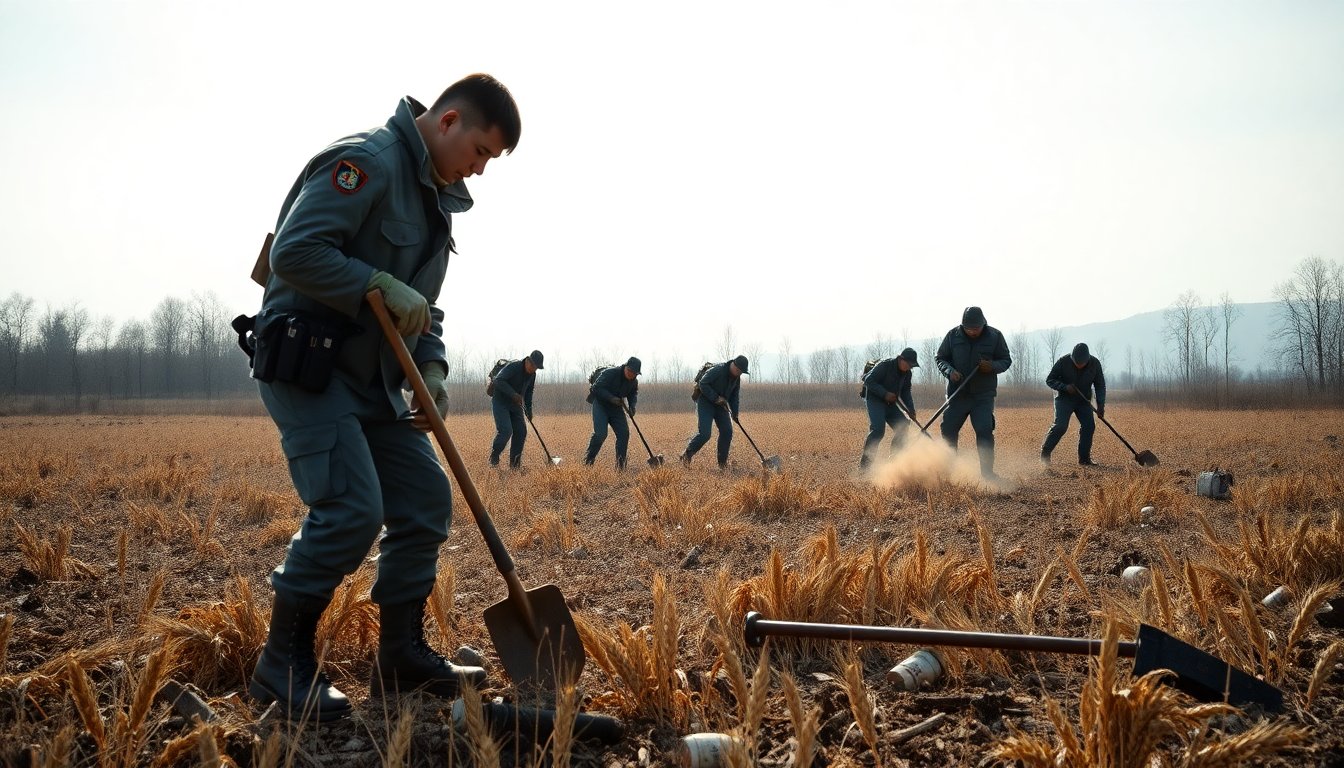
In a rare public address, North Korean leader Kim Jong-un revealed that his country has dispatched soldiers to assist in mine clearance efforts in Russia’s Kursk region. This statement marks a significant acknowledgment of the deadly assignments given to North Korean troops, highlighting their involvement in the ongoing conflict in Ukraine.
Intelligence reports from South Korea and Western nations indicate that hundreds of thousands of North Korean soldiers have been sent to support Russian forces as Moscow continues its military campaign against Ukraine, which has been ongoing for nearly four years. This military collaboration raises questions about the geopolitical implications of such support.
North Korea’s military support for Russia
The deployment of North Korean troops is not merely for logistical purposes but demonstrates a deeper level of involvement in Russia’s military operations. According to analysts, the relationship between North Korea and Russia appears to be mutually beneficial, with North Korea receiving financial assistance and access to advanced military technology in exchange for its support on the battlefield.
Kim’s remarks about the brave efforts of his soldiers underscore the importance of this collaboration. He praised their commitment to the cause, framing their actions as part of a broader struggle against perceived injustices. This rhetoric is not only aimed at bolstering troop morale but also at solidifying his domestic standing by portraying the military as a defender of national pride and sovereignty.
Casualties and challenges
Despite the propaganda of strength, the realities of warfare are grim. Reports from South Korean intelligence suggest that upwards of 600 North Korean soldiers have lost their lives in combat against Ukrainian forces. Additionally, thousands more have sustained injuries, raising concerns about the human cost of this military engagement.
As North Korean troops face the harsh realities of combat, the regime’s narrative must adapt. Kim Jong-un has recently criticized high-ranking officials within his government, claiming that some have displayed ideological failures that could undermine the country’s efforts. He has called for greater loyalty and resolve from his party members to ensure the future success of their military objectives.
Prospects for peace negotiations
Amidst the ongoing conflict, discussions regarding potential peace plans are gaining traction. According to sources, a proposed agreement would see Ukraine recognized as a sovereign state with secured international borders, facilitating its integration into the European Union. This development would come alongside substantial economic investments from the United States and European nations aimed at rebuilding Ukraine’s economy post-conflict.
Ukrainian leaders, including negotiator Rustem Umerov, have submitted responses to the latest draft of the peace plan, indicating a willingness to negotiate but also a determination to protect their territorial integrity. The United States has been clear about its stance, pressing for realistic concessions from Ukrainian leaders to avoid further bloodshed.
Security guarantees and military structure
The proposed agreement includes security guarantees akin to NATO’s Article 5, which would pledge mutual defense in the event of further aggression from Russia. Ukrainian officials are advocating for direct guarantees from the United States, which would need Congressional approval to ensure their long-term viability.
One of the more contentious points in negotiations revolves around the size and structure of the Ukrainian military. Currently, there is a proposal to expand Ukraine’s armed forces from an initial 600,000 to 800,000 personnel, reflecting the reality of a post-war military landscape. However, Ukraine firmly rejects any formal limitations on its military capabilities as demanded by Russia.
The path forward
As discussions continue, the establishment of a demilitarized zone along the front lines remains a critical component of potential peace agreements. Such zones would be closely monitored to prevent further escalation, drawing parallels to the demilitarized zone between North and South Korea.
Negotiators are grappling with the complex issue of territorial exchanges, with Russia seeking control over significant portions of the Donetsk region. While the United States suggests that Ukraine may have to consider concessions to minimize casualties, President Volodymyr Zelensky has expressed his unwillingness to relinquish any territory, emphasizing Ukraine’s right to its land.
In conclusion, the intricate dynamics of the ongoing conflict in Ukraine, coupled with North Korea’s military involvement, highlight the complex interplay of regional and global politics. The path to peace remains fraught with challenges, but the commitment to dialogue and compromise is essential for a resolution.