
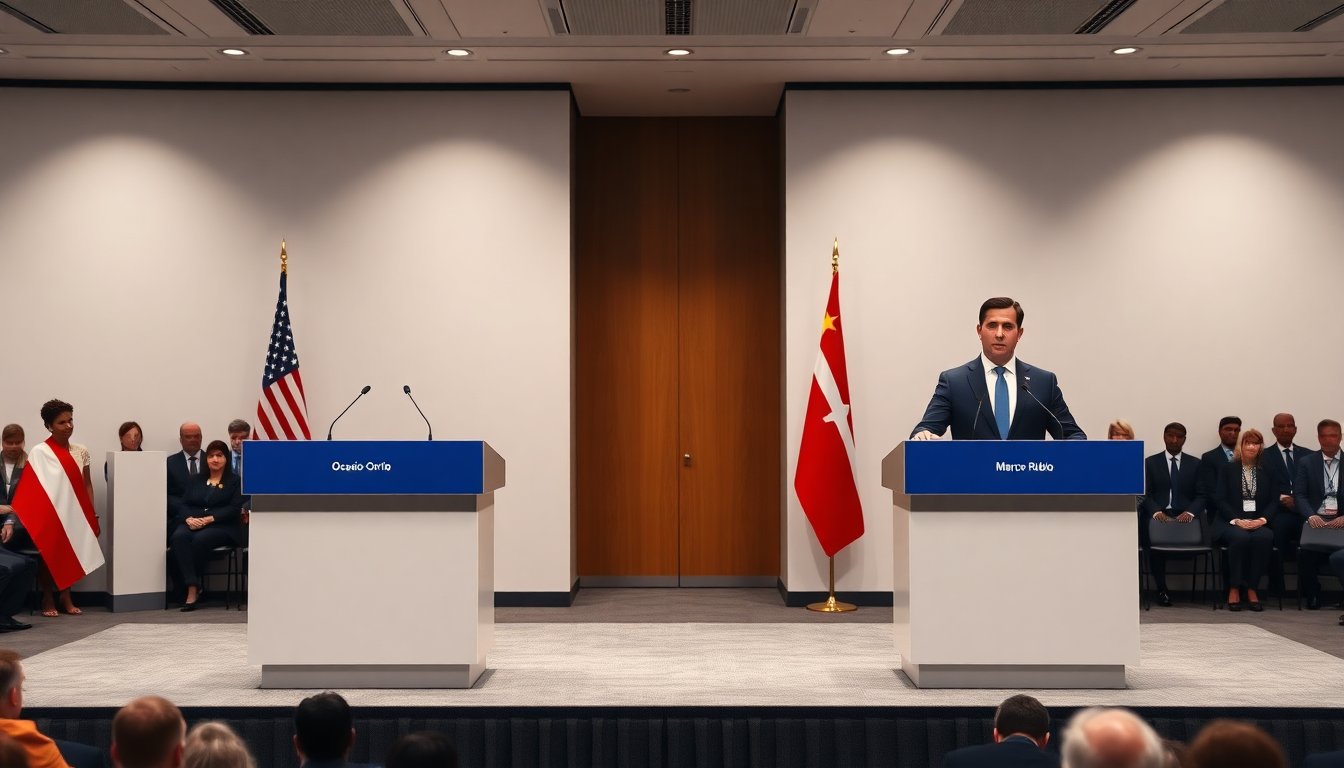
Published 12/02/2026 — At the munich security conference, Representative Alexandria Ocasio-Cortez and Senator Marco Rubio laid out sharply divergent visions for America’s role on the world stage. Both frequently named as potential presidential hopefuls, they addressed an international audience on alliances, trade and how Washington should respond to the wave of populism reshaping politics at home and abroad.
They circled the same set of issues — security partnerships, economic rivalry, and the tug-of-war between collective action and national prerogatives — yet ended up at opposite destinations. Ocasio-Cortez argued for expanding the definition of security to include climate resilience, pandemic preparedness and global inequality, treating these as sources of instability that demand proactive, cooperative responses. Rubio countered with a more traditional playbook: beefed-up deterrence, robust military capabilities, economic pressure on authoritarian rivals and tighter coordination with established allies.
European delegations followed the exchange with a mix of curiosity and unease. Governments that depend on steady U.S. support worry about sudden policy pivots. Those shifts complicate defense planning, trade talks and market forecasts, and they can ripple into domestic politics back home. Munich’s analysts warned that the debate won’t stay academic: it could be a template for campaign messaging as both speakers consider future runs for the White House.
Ocasio-Cortez sketched a systemic approach. She called for new institutions and pooled financing for shared global public goods — from climate adaptation funds to international pandemic insurance — arguing that long-term resilience requires investing outside the narrow box of military hardware. Her pitch reframes national security as a web of interconnected vulnerabilities that cross borders and amplify one another.
Rubio’s remarks emphasized the power of deterrence and the value of the old alliances. For him, NATO and like-minded partners are the best shield against strategic competitors. He stressed sanctions, military aid and enforceable economic rules as the means to uphold a rules-based order and to impose costs on rivals who flout international norms.
Those philosophical differences translate into concrete policy choices. On Ukraine and China, the options on display ranged from broadened multilateral support and shared financial burdens to sharper, more direct military deterrence. On migration and energy, Ocasio-Cortez favored coordinated international solutions; Rubio leaned toward national controls supplemented by alliance-driven responses.
Across Europe, the wider political climate complicates any single approach. A surge of populist movements has nudged mainstream parties toward tougher stances on sovereignty and immigration, while demanding quick economic fixes. That pressure narrows the room for compromise in capitals juggling domestic politics with collective defense obligations.
Trust and predictability emerged as recurring concerns. European officials said they judge not just ideas but the institutions behind them — durable procedures, binding mechanisms and clear timelines that reduce uncertainty. When policy swings become routine, procurement plans, joint exercises and assistance packages grow harder and more expensive to manage.
In practical terms, the debate will shape budgets and bureaucracies. Observers will track whether funding flows to climate and development programs or to direct military aid; the breakdown will signal priorities. The architecture of sanctions, trade rules and industrial cooperation will also reveal which strategy is gaining traction.
What happened in Munich was more than a policy spat. It was a preview of two competing narratives about American leadership: one that seeks to broaden the circle of security to confront transnational risks, and another that insists on strong deterrence and traditional alliances as the best guarantors of order. For allies and voters alike, the key question remains: which approach will offer steadiness, clarity and sustained commitment across electoral cycles?