
Oscilloscope Laboratories has picked up U.S. distribution rights to Virgilio Villoresi’s debut feature, Orfeo — a visually adventurous adaptation of Dino Buzzati’s Poema a fumetti. The film, which premiered out of competition at the Venice Film Festival, blends live action, stop-motion and hand-crafted animation to conjure the eerie, slightly surreal world of Buzzati’s comics.
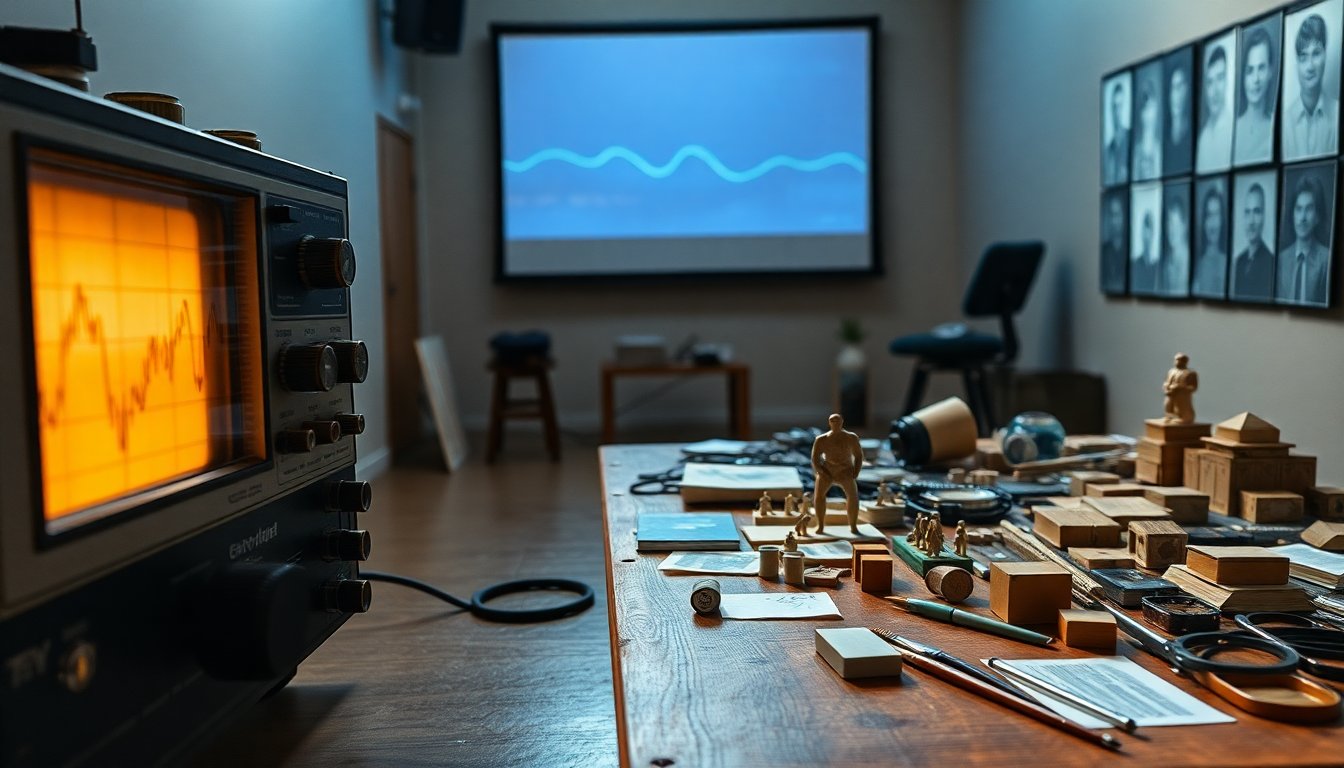
A festival launch and gallery programming Orfeo’s Venice premiere has been reinforced by a series of exhibitions in Milan that trace Buzzati’s creative process alongside the film’s production design. Curators and producers organized multi-room displays that bring together original drawings, manuscripts and production artefacts, as well as reconstructed scenographies, stop-motion rigs and a zootrope that show how static comic panels were turned into motion and atmosphere. That pairing — a high-profile festival screening with museum-context programming — has sharpened both industry and public interest, positioning the film as a cross-disciplinary work that speaks to cinephiles and art audiences alike.
From comic panels to cinematic tableaux Villoresi’s film reframes Buzzati’s fragmented, dreamlike Orpheus retelling as a series of ambiguous vignettes. The story orbits a solitary pianist and the figure Eura — an echo of Eurydice — who lures him into a small door where memory, fantasy and reality bleed together. Visually, the movie mirrors the comic’s paneling: compositions feel like tableaux, rhythm and silence replace exposition, and texture becomes a narrative device. Critics have singled out the tactile quality of the animation and the deliberate restraint in tone as central strengths, arguing that the mixed-media approach preserves the source’s mood while giving it a fresh cinematic logic.
Production, cast and creative choices Produced by Milan’s Fantasmagoria, Orfeo features performances from Luca Vergoni, Giulia Maenza, Aomi Muyock and Vinicio Marchioni. Villoresi’s use of handcrafted techniques — miniature sets, stop-motion inserts and layered animation — has been described as an act of translation rather than literal transcription: the film stages a dialogue with Buzzati’s original experiments in image-and-text rather than attempting a page-for-page remake. That interpretive stance appears to have resonated with festival programmers and specialty distributors seeking work that blends literary pedigree with artisanal filmmaking.
How the deal came together Oscilloscope’s acquisition was led by Aaron Katz, working with True Colours, the Italian sales company representing the title at the European Film Market. Early reactions from festival delegates and potential buyers point to interest among arthouse exhibitors and museum programmers; negotiations for wider international sales are reportedly ongoing. For Oscilloscope, the title is both a curatorial pick and a commercial gamble — a carefully made film likely to play in limited theatrical runs, specialty venues and curated digital windows.
Milan’s exhibition program and Buzzati’s legacy The Milan show, curated by Villoresi and Lorenzo Viganò, makes a persuasive case for Buzzati as both novelist and visual storyteller. Items on display — annotated sketches, photographic references, original comic plates and personal effects — illuminate recurring obsessions in Buzzati’s work: the uncanny, urban detours and the steady, strange presence of the mountain. By juxtaposing archival material with production tools, the exhibition clarifies how source material moved from private sketchbook to public narrative, and it helps viewers read Villoresi’s formal choices as deliberate translations rather than mere eccentricities.
Public and critical response Reaction to the film and the accompanying exhibitions has been engaged if mixed. Critics have praised the archival framing for making complex processes legible to non-specialist audiences and noted that viewers often linger over original paper and ink, drawn to the tactile immediacy of Buzzati’s plates. At the same time, some have observed that the film’s measured pacing demands patience; it favors atmosphere and inference over plot-driven momentum. Those inclined toward slow, sensory cinema have found it rewarding; others may find its restraint testing.
Positioning for U.S. release and future programming Oscilloscope’s U.S. acquisition signals an effort to shepherd Orfeo into North American arthouse circuits, museums and university programs that study cross-media adaptation. The film’s Venice premiere — intentionally placed out of competition — allowed critics and curators to assess its formal ambitions without the distortion of awards pressure, and the Milan exhibitions have given it a tangible cultural context that will help programmers sell it to gallery-goers and students of visual culture.
Sales agents and festival programmers say the film fits current appetite for auteur-driven, craft-forward work built around literary sources. The next milestones to watch are the U.S. release schedule and subsequent museum and academic programming, which will test whether the project sustains its cross-disciplinary appeal beyond the festival and exhibition circuit.
What the film offers Orfeo is less a conventional narrative than a constructed mood: an exercise in texture, silence and mise-en-scène that asks viewers to move through images the way one savors layered flavors. Villoresi’s decision to mix media and foreground handcrafted animation treats Buzzati’s comics as a living conversation partner, not a blueprint to be replicated. For audiences drawn to adaptation that thinks in fragments, textures and tonal shifts, Orfeo promises a distinctive, quietly ecstatic experience.