
Table of Contents
Penny Oleksiak, recognized as one of Canada’s most prominent swimmers, is currently facing a two-year suspension that has placed her career under significant scrutiny. As Canada’s most decorated female Olympian, Oleksiak has excelled in the pool but now confronts challenges related to performance-enhancing drugs. In an interview with CBC Sports, she conveyed her determination to continue competing, with aspirations for the upcoming 2028 Los Angeles Olympics.
At 25 years old, Oleksiak has achieved remarkable success, including multiple medals at the 2016 and 2025 Olympics. However, a suspension imposed by World Aquatics on November 25 has prompted questions about her integrity as an athlete. Despite the situation, she firmly denies any involvement in doping, attributing the suspension to scheduling errors rather than intentional wrongdoing.
Understanding the suspension
The basis for Oleksiak’s suspension stems from what are termed “whereabouts” violations. Such violations occur when an athlete fails to inform authorities of their location during a designated one-hour window intended for drug testing. Oleksiak stated, “It’s never been me to do performance-enhancing drugs or even think about doing performance-enhancing drugs.” While she acknowledges her responsibility for the missed tests, she emphasizes that it was a matter of oversight rather than evasion.
The impact of missed tests
Throughout her career, Oleksiak has undergone numerous drug tests, which she regards as routine. She clarified that, despite missing three tests between and June 2025, she has consistently been tested at competitions and during training. The initial two missed tests were particularly distressing, as confusion surrounded the notifications regarding her whereabouts.
“After I had missed my second test, I hadn’t been given a concrete answer on whether it was a missed test or not until after I had missed my third one,” she explained. This lack of clarity exacerbated her stress, transforming a straightforward process into a complicated ordeal that ultimately led to her suspension.
Life after the suspension
Despite the challenges posed by the suspension, Oleksiak views it as a temporary setback rather than the end of her swimming career. Upon receiving news of the suspension, she reflected, “There was a part of me that was like, should I just call it, you know, is this my sign to just end here and go find something else to do?” However, her competitive spirit has driven her to adapt and evolve.
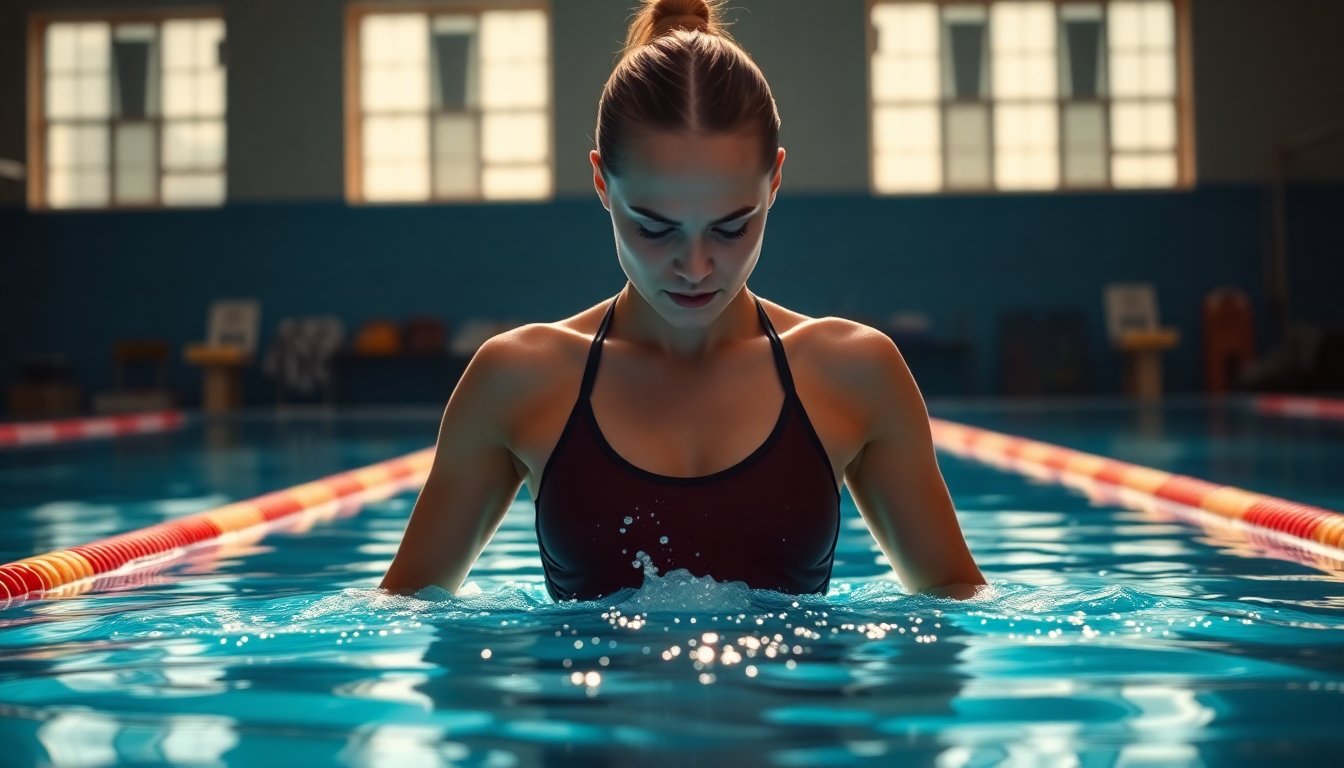
Now, Oleksiak trains alone in public pools in Los Angeles, a significant change from the team environment she previously experienced. This isolation has presented unexpected challenges, as she noted, “I can’t have a coach or train with my teammates. I live with some of them and hang out with them, but now I’m just kind of isolated.” Nevertheless, she remains focused on her goal to improve, asserting, “This feels like another little reset for me.”
A clear vision for the future
As she prepares for the 2028 Olympics, Oleksiak’s resolve remains steadfast. While the suspension has disrupted her competitive path, it has not diminished her passion for swimming. “I’m really, really excited for L.A,” she stated, reflecting on her new training environment. Her time in California aims to build a foundation of skills and strength that will support her return to the Olympic stage.
Ultimately, Oleksiak perceives her journey as one of resilience and determination. She aims to illustrate to Canadians and the global audience that she can reclaim her status as a leading athlete in her sport. The next year will be critical as she continues to train independently, with her sights firmly set on a successful return to competition alongside her teammates in Los Angeles.