
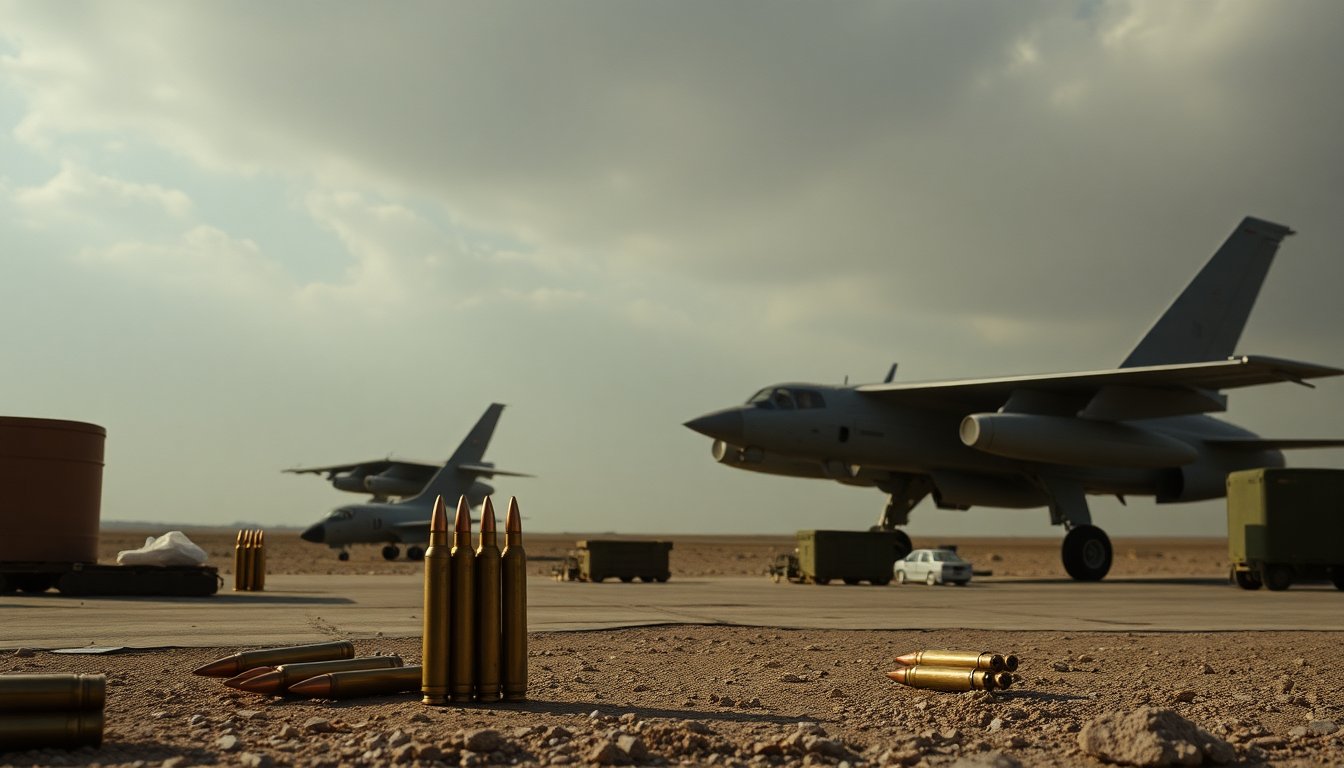
On February 23, 2026, the chairman of the Joint Chiefs of Staff gave President Trump a stark briefing: a large-scale military campaign against Iran is possible, but it would be shaped—and constrained—by real, immediate limits. As planning options multiplied in Washington, senior military staff walked civilian leaders through how shortfalls in munitions, air‑defense interceptors and
What the military said
Military planners emphasized two blunt facts. First, U.S. forces can surge quickly into a theater, but they cannot instantly replace what they expend. Precision-guided munitions and missile interceptors are not off-the-shelf items you can restock overnight; many require specialized components, long lead times and internationally integrated supply chains. Second, sustained, high‑tempo operations would strain fragile logistics lines and accelerate the depletion of inventories that are already earmarked for other contingencies.
Commanders laid out a range of options for civilian leaders—from a narrow, symbolic strike intended to signal resolve, to an extended aerial campaign designed to blunt Iranian capabilities. Each path carries distinct trade‑offs: different demands on inventory, varying operational tempos, and divergent casualty and escalation risks.
Supply chains and operational trade‑offs
Planners underscored how current stocks reflect prior strategies and existing production schedules. Modern interceptors, for instance, contain sophisticated guidance packages and special propellants; manufacturing more takes weeks or months. Export controls, interagency licensing and the complexity of multinational procurement further slow rapid transfers between allies.
Those constraints force managers into difficult choices. Using interceptors aggressively for homeland defense shrinks the pool of precision munitions available for offensive strikes; conversely, prioritizing strike inventories can leave defensive layers thin. The Pentagon has floated mitigations—prepositioning ordnance with regional partners, shifting to lower‑cost effects where feasible, and tightening target priorities—but none offer a simple fix.
Air‑defense gaps are especially worrying for systems such as THAAD and Patriot. Production lines can’t be ramped up immediately to meet the demands of a major ballistic missile exchange. Navy ship‑launched missiles have also been used up in recent Middle East operations, narrowing the options available for a prolonged strike campaign.
Logistics, partners and readiness
A protracted campaign would require nonstop aerial refueling, robust intelligence feeds, and continuous transport and sustainment support. Those demands can erode readiness for other missions, including competition with near‑peer adversaries. Allies’ willingness and legal ability to share the burden matters a great deal; moving munitions or missile‑defense assets between partners entails export licenses, legal clearances and interagency reviews that take time and can slow urgent resupply.
Military leaders warned that partner commitments of personnel and platforms are not unlimited. Replenishing stocks isn’t just a matter of contract dollars—it means ramping production, clearing red tape, stitching together multinational logistics, and doing all of that while maintaining ongoing operations.
Force posture and escalation risks
The United States has concentrated substantial air and naval forces in the region: reports put more than 200 fighter aircraft on station, backed by two carrier strike groups—including the USS Abraham Lincoln and USS Gerald R. Ford—along with forward command‑and‑control, refueling and intelligence platforms. Those assets give planners flexibility and rapid strike options.
But massing forces raises its own dangers. The more platforms and munitions in play, the greater the chance of unanticipated second‑ and third‑order effects. That combination magnifies the need for tightly defined objectives, clear exit criteria and disciplined command to prevent inadvertent escalation.
What the military said
Military planners emphasized two blunt facts. First, U.S. forces can surge quickly into a theater, but they cannot instantly replace what they expend. Precision-guided munitions and missile interceptors are not off-the-shelf items you can restock overnight; many require specialized components, long lead times and internationally integrated supply chains. Second, sustained, high‑tempo operations would strain fragile logistics lines and accelerate the depletion of inventories that are already earmarked for other contingencies.0
What the military said
Military planners emphasized two blunt facts. First, U.S. forces can surge quickly into a theater, but they cannot instantly replace what they expend. Precision-guided munitions and missile interceptors are not off-the-shelf items you can restock overnight; many require specialized components, long lead times and internationally integrated supply chains. Second, sustained, high‑tempo operations would strain fragile logistics lines and accelerate the depletion of inventories that are already earmarked for other contingencies.1
- – Secure clear legal authorities and document authorizations up front. – Harmonize rules of engagement and logistics plans with partner expectations. – Prioritize industrial‑base surge capacity and replenishment of critical stocks. – Focus on realistic objectives, tight targeting priorities and explicit exit criteria to limit escalation. – Explore and formalize contingency arrangements with regional allies—prepositioning, shared basing and streamlined transfer mechanisms—to shorten resupply timelines.
What the military said
Military planners emphasized two blunt facts. First, U.S. forces can surge quickly into a theater, but they cannot instantly replace what they expend. Precision-guided munitions and missile interceptors are not off-the-shelf items you can restock overnight; many require specialized components, long lead times and internationally integrated supply chains. Second, sustained, high‑tempo operations would strain fragile logistics lines and accelerate the depletion of inventories that are already earmarked for other contingencies.2