
Table of Contents
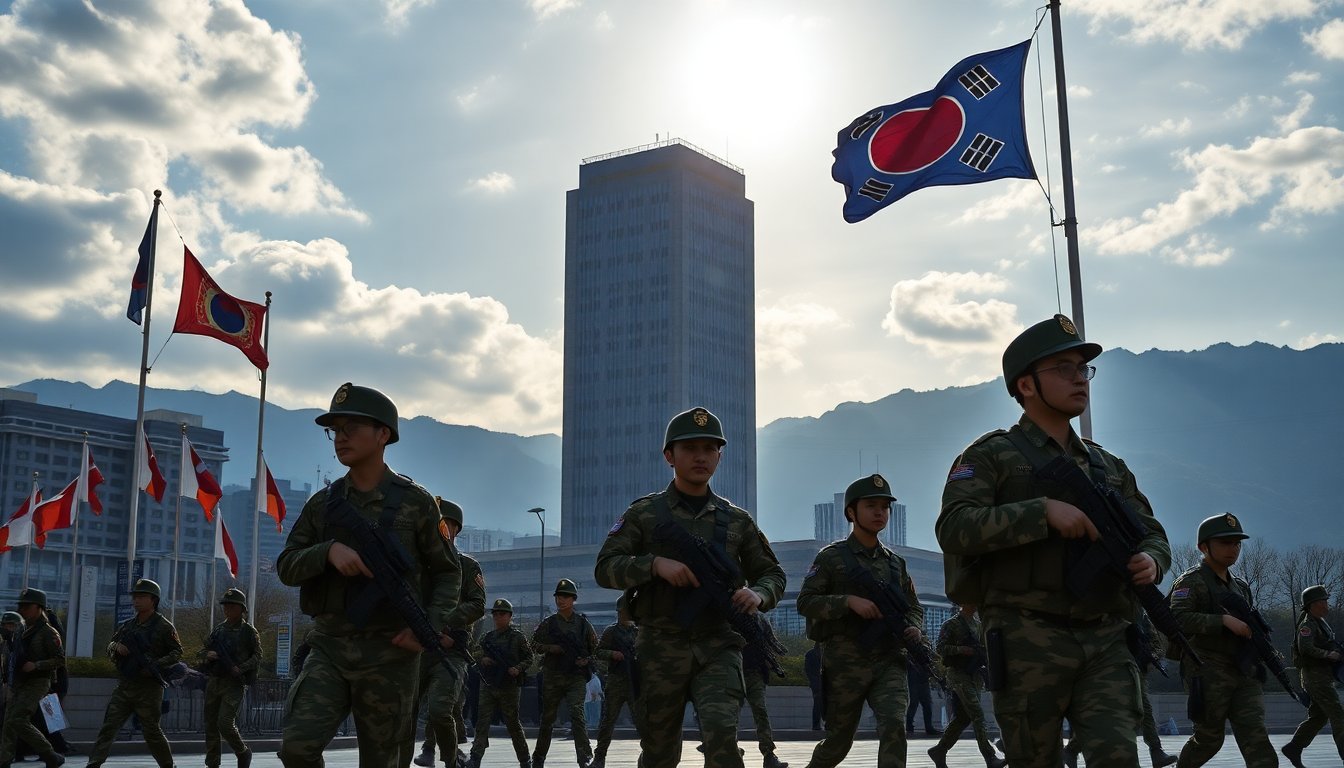
The Pentagon has announced a significant change in its military strategy regarding North Korea. This new approach signals that South Korea will take on aprimary rolein defending against threats from the north. The announcement has drawn attention in Seoul, where national security remains a pressing issue due to North Korea’s military capabilities.
Currently, around 28,500 U.S. troops are stationed in South Korea, reflecting a long-standing commitment to mutual defense. However, with this policy shift, South Korea is expected to enhance its own defense strategy. In line with this new responsibility, the South Korean government has increased its defense budget by 7.5% this year, indicating a proactive stance on national security.
Developments in South Korea’s military capabilities
In line with its evolving defense strategy, South Korea has begun deploying its most formidable conventional missile, theHyunmoo-5, commonly referred to as the “monster missile.” This missile plays a crucial role in enhancing South Korea’s deterrence capabilities against North Korea. With an explosive payload capacity of up to eight tons, the Hyunmoo-5 stands as the most destructive non-nuclear weapon in South Korea’s arsenal.
Strategic implications of the Hyunmoo-5
The introduction of the Hyunmoo-5 missile represents more than just a technical upgrade; it conveys a strategic message to North Korea. The missile is engineered to target critical underground installations, including military command bunkers, thereby bolstering South Korea’s deterrent capability without resorting to nuclear options. Analysts note that while the missile enhances South Korea’s military posture, it also encounters challenges posed by North Korea’s fortified military structures.
Experts caution against overestimating the operational effectiveness of the Hyunmoo-5 missile. Although advanced, it must contend with geological challenges posed by North Korea’s fortified military infrastructure, often buried under granite. Historical precedents indicate that even advanced conventional munitions have struggled to neutralize similar targets in less challenging environments.
Ongoing tensions and political ramifications
The political landscape remains fraught with tension alongside military advancements. South Korea has enacted travel bans on three civilians linked to alleged drone surveillance operations over North Korea. This investigation underscores the delicate balance between military posturing and diplomatic efforts between the two Koreas.
Recent statements from individuals involved in drone flights indicate that their operations were intended to monitor radiation levels at a North Korean uranium facility. This situation has intensified existing tensions, as North Korea has issued threats of retaliation, alleging that South Korea is engaging in espionage. The South Korean government has firmly denied these accusations, asserting that no state-sponsored drone activities took place during the alleged timeframes.
Implications for diplomatic relations
The ongoing controversy surrounding the drones complicates the prospects for resuming diplomatic talks, which have been stalled since. The current South Korean administration advocates for renewed dialogue, yet the escalating accusations may obstruct these efforts. President Lee Jae Myung has stressed the importance of a comprehensive investigation, acknowledging that unnecessary provocations could negatively affect both the economy and
As North Korea approaches itsWorkers’ Party Congress, anticipated to reinforce its antagonistic stance towards South Korea, tensions remain palpable. Analysts suggest that North Korea’s heightened rhetoric may be a strategy to garner domestic support by intensifying anti-South Korea sentiments.
Military developments and future implications
The evolving military strategies and persistent tensions present a multifaceted situation on the Korean Peninsula. The recent deployment of the Hyunmoo-5 missile marks a significant upgrade in South Korea’s defense capabilities. This move reflects a broader trend toward self-reliance in national security. South Korea’s dedication to fortifying its military posture, while emphasizing deterrence without escalating nuclear tensions, is likely to influence the future trajectory of inter-Korean relations.
The Pentagon’s decision to transition defense responsibilities to South Korea marks a significant shift in the military dynamics of the region. This change comes as both nations face an evolving security landscape, where the interplay between deterrence and diplomacy is essential for maintaining stability on the Korean Peninsula. As North Korea continues to assert its influence, the effectiveness of this strategy will be closely monitored by analysts and policymakers alike.