
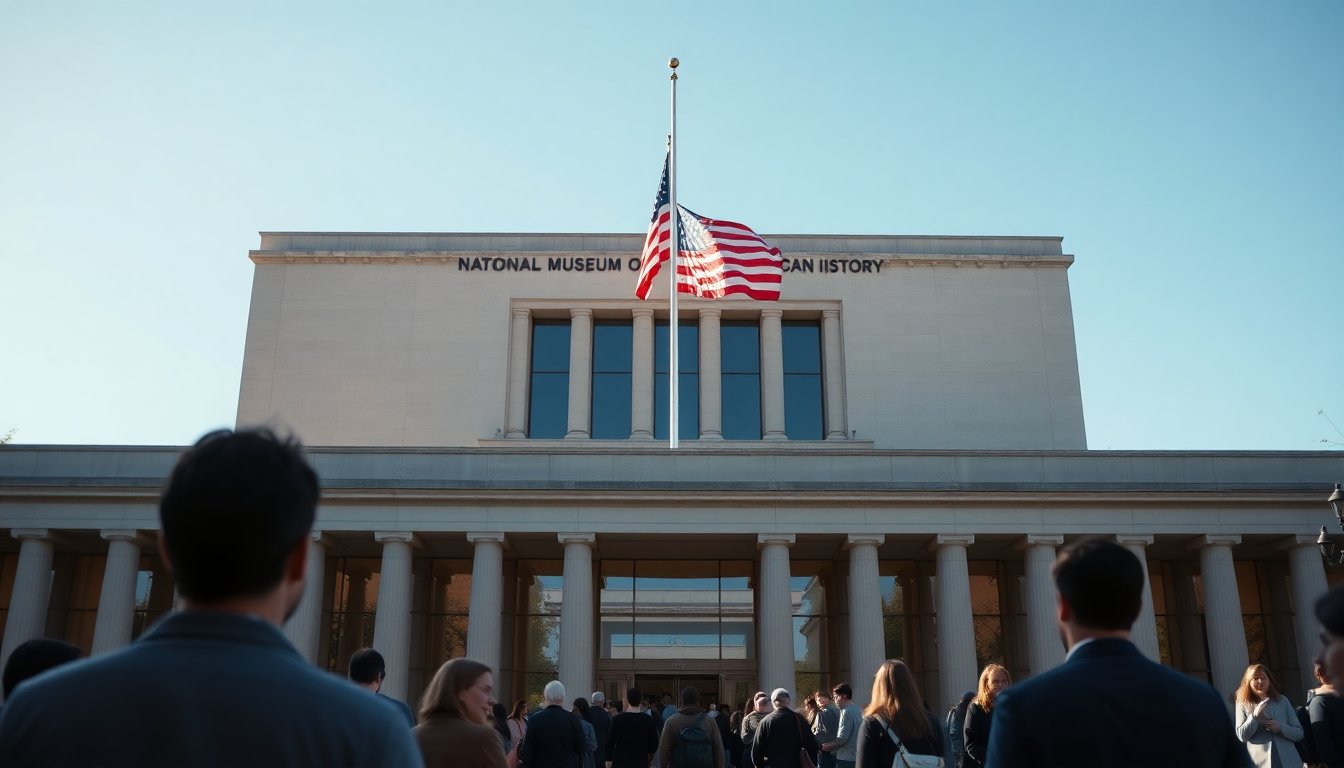
The Smithsonian Institution has long been a cornerstone of American history and culture, safeguarding national treasures and narratives. However, this esteemed institution has faced political pressures throughout its history. Actions by past presidents, including Richard Nixon and Donald Trump, reveal a concerning pattern of interference that questions the independence of cultural institutions.
During Nixon’s presidency, the Smithsonian faced significant challenges as White House officials aimed to influence the narratives presented in its exhibits. This article explores the historical context surrounding these interventions and their enduring impact on the institution.
Nixon’s intervention at the Smithsonian
In the early 1970s, amid growing discontent and scrutiny, Nixon’s administration pushed for a politically charged exhibition that aligned with its agenda. The intent was clear: to shape public perception during a turbulent period in American history. Consequently, officials in the administration directed the Smithsonian to create an exhibition that reinforced the administration’s political stance, reflecting a broader trend of utilizing cultural institutions as vehicles for political messaging.
Controversial voting rights exhibition
Another significant incident occurred when Smithsonian officials were instructed to isolate a voting rights exhibition considered too controversial by the administration. This move, revealed by a curator years later, exemplifies how political forces sought to sanitize the narratives presented by the Smithsonian. By excluding elements of history that did not align with the administration’s viewpoints, Nixon’s intervention establishes a troubling precedent that raises critical questions about the role of museums in promoting an unbiased historical perspective.
The Trump era and renewed pressures
Under the Trump administration, the Smithsonian again found itself at the intersection of politics and cultural representation. In a climate of pronounced political divisiveness, pressure mounted on the institution to conform to specific narratives favored by the administration. This mirrored past attempts to shape historical depiction, raising alarms about the integrity of the Smithsonian’s mission.
Critics contend that the influence exerted during Trump’s presidency aimed to suppress certain narratives and simplify the complexities of American history. This pattern of interference is troubling, as it jeopardizes the fundamental purpose of the Smithsonian as a space for exploration and understanding of the multifaceted stories that shape the nation.
Implications for cultural institutions
The interventions faced by the Smithsonian during the tenures of Nixon and Trump underscore significant implications for cultural institutions nationwide. When external political pressures dictate the narratives portrayed, the integrity of these institutions is jeopardized. The independence of museums is essential for fostering an informed citizenry and promoting a robust democracy. When political agendas take precedence over historical accuracy, the public loses the opportunity to engage with a comprehensive and truthful account of their shared history.
Safeguarding independence
The Smithsonian Institution serves as a pivotal case study in the ongoing struggle between politics and cultural representation. Reflecting on the interventions by Nixon and Trump, it is imperative to advocate for the protection of cultural institutions from political coercion. By ensuring that museums and historical sites maintain their independence, society can preserve the integrity of its narratives and celebrate the complexities of its history without distortion from political agendas.


