
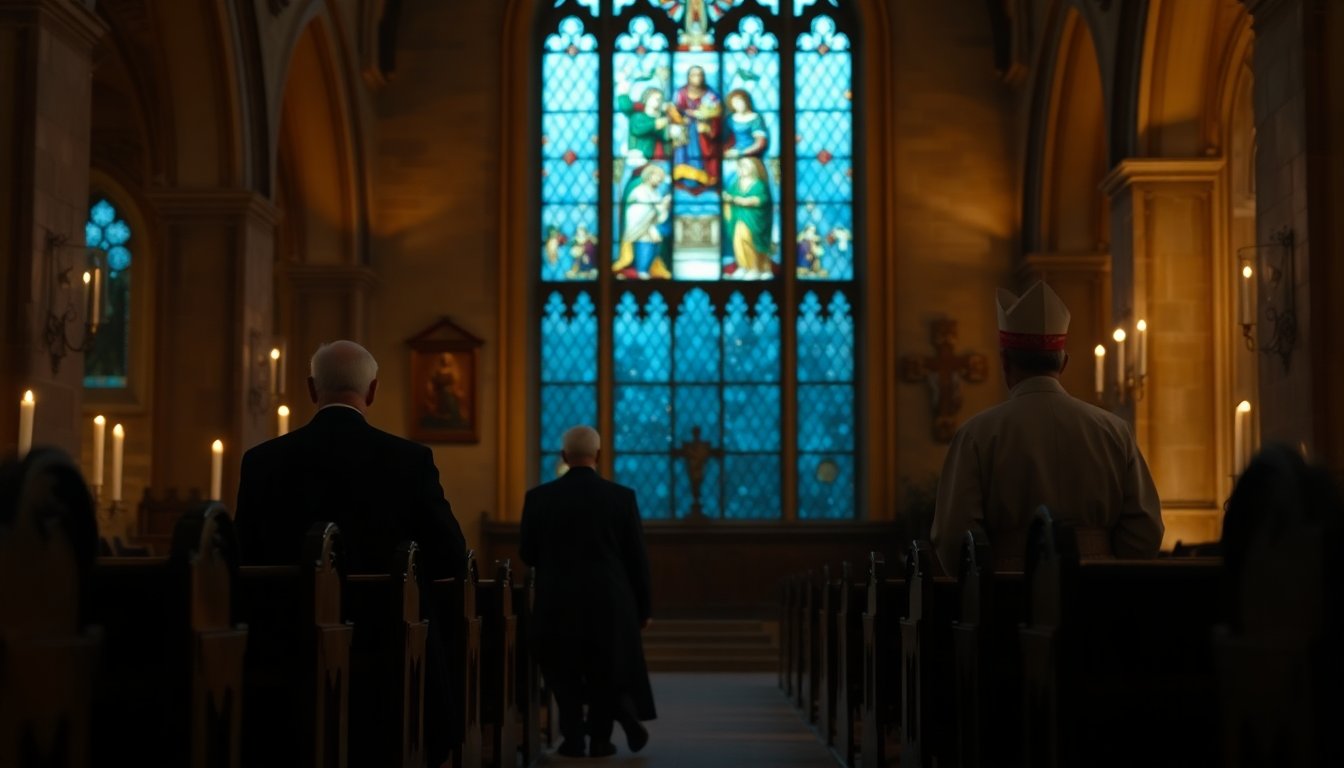
The Vatican welcomed a visit on April 27, 2026, that drew attention across Christian communities: Pope Leo XIV received Sarah Mullally, the first woman to hold the office of archbishop of Canterbury. Their encounter combined a private audience in the pope’s library with a brief, closed moment of prayer in the Urban VIII Chapel. Observers noted the gesture’s symbolic weight: two prominent leaders representing the historic divide between Rome and Canterbury sharing a common, solemn act of devotion while acknowledging the persistent theological differences that separate their churches.
Mullally arrived in Rome on what she described as a four-day pilgrimage, using the visit to walk familiar ecumenical paths — praying at the tombs of St. Peter and St. Paul and meeting Vatican officials — and to set a tone of collaboration. Having been installed as archbishop on March 25, 2026, she chose Rome as her first overseas stop. The meeting with Pope Leo XIV was private and closed to the press, but the Vatican later released still images and video showing the two leaders in prayer together, a visual shorthand for ongoing engagement between the two communions.
What took place during the meeting
Inside the Apostolic Palace, the exchange began with conversation in the pope’s study and concluded with a brief liturgical moment in the chapel. The Vatican said the pope presided over the prayer and both leaders “said the grace together,” while Mullally’s office described it as a shared time of thanksgiving and petition. The encounter reflected a continuation of a practice by recent popes to receive Anglican primates and other non-Catholic hierarchs in private audiences designed to sustain ecumenical dialogue. Even so, Pope Leo XIV made plain that while he intends to pursue rapprochement, he does not plan to alter Catholic teaching that reserves priestly ordination to men.
Points of agreement and the sharp edges of difference
Shared priorities
The conversation and joint prayer emphasized common concerns: the need to respond to conflict, to protect human dignity, and to work for the common good. Mullally used the moment to call for a hopeful witness amid global violence and division, urging both churches to tell a story of human value and mutual care. Pope Leo XIV echoed that sentiment, citing the late Pope Francis’ warning that divisions must not prevent Christians from proclaiming the gospel together. These mutual commitments to peace and outreach continue to anchor the public face of Anglican–Catholic relations.
Unresolved theological issues
Yet beneath the cordiality lie substantive disagreements that have long complicated reunion efforts. The ordination of women — central to Mullally’s own role as archbishop — remains a formal barrier for Rome. Another persistent concern is sacramental theology, especially differing understandings of the Eucharist and whether intercommunion can be reconciled doctrinally. Within the wider Anglican Communion, divisions run deep: conservative bodies, particularly in parts of Africa aligned with Gafcon, have rejected Mullally’s appointment and threatened further rupture, while other provinces welcomed her elevation as a historic breakthrough.
Context and possible consequences
Mullally’s pilgrimage follows a pattern of high-profile ecumenical gestures: Pope Leo XIV greeted King Charles III and Queen Camilla at the Vatican on Oct. 25, and recent years have seen joint public appeals by Catholic and Anglican leaders — notably a shared trip to South Sudan by a former archbishop and pope in 2026. Those precedents highlight how optics and private conversation can advance cooperation even when theology remains unresolved. Mullally herself has plans to visit parts of Africa in July, an arena where her authority as primate is contested, making the Vatican meeting both pastorally significant and politically delicate.
For now, the April 27, 2026 audience stands as a reminder that respectful engagement continues between the two communions. The meeting did not erase the limits set by doctrine, but it reinforced a willingness on both sides to maintain channels of conversation and to pray together in the face of complex global challenges. Observers will watch whether such encounters translate into concrete theological progress or remain primarily symbolic steps in a long, patient dialogue.


