
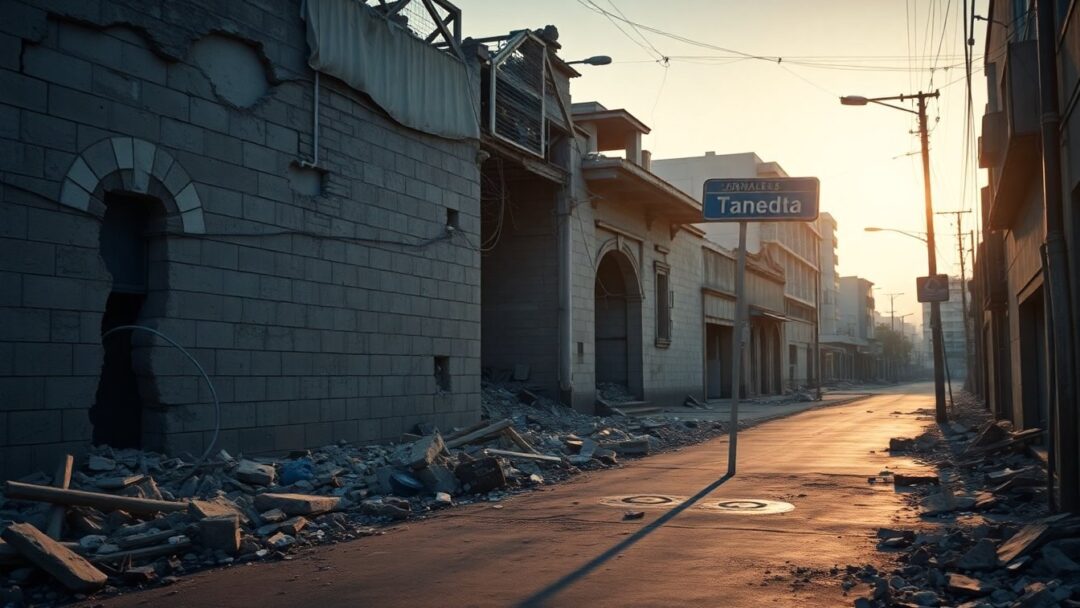
The ground shook violently in Venezuela on Wednesday evening, as two powerful earthquakes struck near the capital, Caracas. The first tremor, measuring 7.2 on the Richter scale, was swiftly followed by an even stronger 7.5 magnitude quake, according to the US Geological Survey (USGS). The shallow depth of these quakes, just 20.3km and 10km below the surface respectively, amplified their destructive force.
The earthquakes struck at 18:04 local time (22:04 GMT) a national holiday in Venezuela, when more people were at home than on a typical weekday. The tremors have left at least 235 people dead and over 1,500 injured, with many more feared trapped under the rubble of collapsed buildings in Caracas and the nearby coastal city of La Guaira.
The human toll and rescue efforts
Rescue teams are working tirelessly to save lives amidst the rubble. Jorge Rodríguez president of Venezuela’s National Assembly, reported that the death toll continues to rise. The interim President Delcy Rodríguez has declared a state of emergency as the nation grapples with the aftermath.
In La Guaira a 10-storey hotel was reduced to rubble, and people are desperately searching for loved ones. Juan Ortiz a medical student from Caracas, shared his harrowing experience with the BBC expressing shock and frustration at the situation. “I’m in shock and confusion, and frustrated that I can’t help,” he said.
The US has pledged $150 million in aid and is sending transport ships and aircraft to support search and rescue teams. Other countries, including the Dominican RepublicEl SalvadorMexico and Qatar have also offered assistance.
The scale of the destruction
The earthquakes have caused extensive damage, with 250 buildings reported as damaged or destroyed, primarily in La Guaira. The Maiquetía International Airport Venezuela’s main international airport, has been closed due to serious damage. Aftershocks continue to ripple through the area, with at least 30 recorded since the initial tremors.
The USGS has warned that high casualties and extensive damage are probable, with a 42% chance of more than 10,000 deaths and a 33% chance of more than 100,000 as a result of the earthquakes. These figures are based on various factors, including the size and depth of the quakes, as well as the population density in the affected areas.
Venezuela lies over the meeting point of two tectonic plates, and the earthquakes were likely caused by the sudden release of friction between them. The second earthquake is the strongest to hit Venezuela since 1900 according to USGS records.
International response and historical context
The disaster has prompted a significant international response. President Donald Trump expressed his condolences and pledged US support, stating that the US “stands ready, willing and able to help!” The Trump administration has been working to reshape relations with Venezuela since the seizure of President Nicolás Maduro in January.
The earthquakes have struck areas that were also severely affected in 1967 when a major earthquake killed 200 people. The Altamira and Los Palos Grandes neighborhoods of Caracas were among the worst hit in both events.
As rescue efforts continue, the international community stands in solidarity with Venezuela, offering aid and support in the face of this devastating natural disaster.


