
Table of Contents
The national spotlight turned to two separate gatherings in early March 2026: a White House meeting on the future of college sports and the 29th George Lindsey UNA Film Festival in Florence, Alabama. Both events prompted debate about reform, community impact and institutional responsibility.
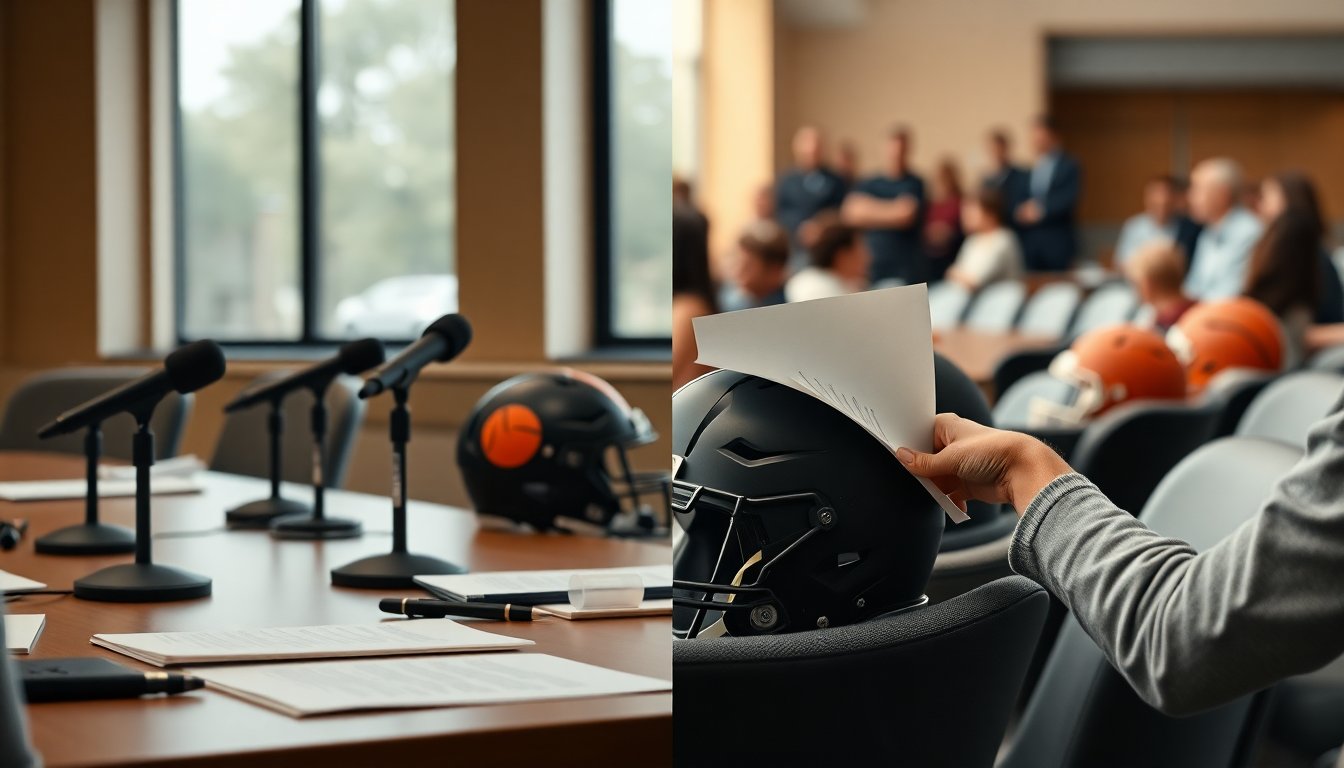
On 09/03/2026, the president convened sports leaders, former athletes and industry figures to address what he described as the chaos of college sports. The session aimed to clarify accountability, athlete welfare and the economics of collegiate athletics.
Meanwhile, on March 5–6, 2026, the University of North Alabama held Alabama’s longest-running film festival. The event brought together filmmakers, students and alumni for screenings and panels on regional and independent cinema.
Washington meeting: a presidential push on college athletics
Washington meeting: presidential pledge to pursue executive order on college athletics
The president pledged to pursue an executive order aimed at addressing systemic problems in collegiate athletics. The announcement came at a Washington meeting that gathered athletic directors, former players and prominent commentators. Attendees outlined concerns about governance, athlete compensation and league fragmentation.
What the administration says it will tackle
Officials framed the move as a response to mounting instability across college sports. They said the order would seek to promote clearer governance structures and more consistent rules on compensation. Observers noted the administration intends to signal urgency while avoiding steps that would exceed legal authority or strip universities of autonomy.
Drafting the measures will require detailed legal review. Administration aides said stakeholders will be consulted to reduce conflicts with existing statutes and court precedents. The practical challenge, they acknowledged, is finding tools that can influence conferences and schools without provoking protracted litigation.
Stakeholder concerns and likely effects
Athletic directors voiced fears that fragmented league arrangements are creating competitive and financial instability. Former players emphasized unequal access to compensation and support services. Commentators raised questions about enforcement and the potential for unintended consequences on smaller programs.
Experts say clearer rules could improve transparency and athlete protections. At the same time, legal scholars warn that an executive order cannot substitute for congressional legislation on issues that implicate antitrust law or state oversight of public institutions.
What comes next
The administration plans to begin interagency consultations and targeted stakeholder outreach. Legal teams will map possible actions and constraints. If the process advances, officials expect to publish specific proposals following review.
For athletes and institutions, the debate will center on whether executive action can deliver meaningful reform without legislative or judicial backing.
Participants at the Washington meeting pressed for clearer rules on athlete compensation, uniform standards across conferences and stronger protections for student welfare. They asked how a federal directive would operate alongside the NCAA, conference regulations and state statutes. Supporters said an executive order could provide short-term cohesion. Critics said lasting reform will require legislation and coordination with universities.
Complexities and legal hurdles
Legal experts warned that federal action must respect constitutional limits and existing case law. An executive order can set priorities and instruct agencies to study issues, but it cannot by itself rewrite contract rights or reverse judicial decisions. The meeting underscored a recurring tension: political momentum for change versus the multilayered legal framework governing college athletics.
As the debate moves from deliberations to policy development, stakeholders expect further legal analysis and intergovernmental discussions to determine what measures are legally feasible and operationally effective.
George Lindsey UNA film festival: a hometown celebration of film
While stakeholders in Washington press for legal clarity on college athletics, another community gathered for a cultural event in Florence, Alabama. The University of North Alabama revived its long-running film festival, returning for its 29th edition on March 5 at the UNA School of the Arts Gallery on Tombigbee Street.
Student focus and community engagement
A hallmark of the festival is its emphasis on emerging talent. On the morning of March 5, 40 students from Deshler High School attended a screening and a hands-on workshop. The session aimed to introduce young attendees to basic filmmaking craft and production roles.
The program that day showcased short films by Alabama artists. In the evening, the schedule featured live music by Bonnie Watson and Justin Arnold and a series of featured screenings in the Mane Room. All events were free and open to the public, reinforcing the festival’s community orientation.
Alumni premieres and local pride
The festival highlighted work by UNA alumni and regional filmmakers. Screenings included premieres from former students and collaborators tied to the university’s arts programs. Organizers presented the lineup as both a celebration of local talent and a platform for professional exposure.
Founded by UNA alumnus George Lindsey, known for his role on The Andy Griffith Show, the festival blends popular culture heritage with contemporary independent filmmaking. Organizers said the event seeks to sustain local creative ecosystems and offer practical networks for emerging directors and writers.
From the perspective of attendees, the festival combined education and entertainment. Students gained introductory experience in film craft, while the broader community accessed free cultural programming and new local work. Event coordinators indicated plans to maintain the festival’s student workshops and community screenings in future editions.
Event coordinators indicated plans to maintain the festival’s student workshops and community screenings in future editions. The festival also highlighted alumni success, reinforcing the local pipeline for creative careers.
Phoebe Jones, a Shoals native and University of North Alabama alumna, co-stars with fellow alumnus Austin Parsons in When the Night Falls. The film premiered at 10:30 p.m. on March 5 in the Mane Room. Jones expressed gratitude for the influence of UNA faculty and peers, underscoring how regional institutions contribute to professional development in the arts.
Screenings on March 6 showcased UNA student films at 10 a.m. and alumni films at noon. The day concluded with an awards program at 6 p.m. These events provided a public platform for emerging filmmakers and an opportunity for alumni to reconnect with the campus community.
Why these events matter
The festival served multiple functions: it celebrated local talent, offered practical exposure for students, and strengthened alumni networks. Short screenings and an awards program create clear milestones for early-career filmmakers. From an educational perspective, such programs translate classroom learning into visible, portfolio-ready work.
Regional festivals also attract industry attention to smaller institutions. The presence of alumni who continue to produce work after graduation signals viable career paths for current students. For the community, the festival expanded cultural offerings and reinforced the university’s role as a creative hub.
Connecting policy and culture
The White House meeting convened federal officials, university leaders and athletic stakeholders to discuss governance and athlete welfare. The administration has signaled interest in a executive order to create national standards for a fragmented college sports system. The move aims to centralize rules on athlete compensation, health protocols and academic accountability.
At the local level, the film festival showed how universities can incubate creative talent and strengthen community ties. Student workshops and alumni showcases provided practical pathways from training to careers. From a development perspective, concentrated forums—whether policy roundtables or cultural festivals—speed consensus building and surface practical solutions for talent pipelines and system reform.
The national proposal and the festival’s local work are complementary. Federal direction could standardize protections and funding streams. Local institutions will remain essential incubators of skills and networks. Observers say coordinated action across levels of governance will determine whether policy changes translate into sustained benefits for athletes and artists alike.
Coordinated action across governance levels will determine whether policy changes translate into sustained benefits for athletes and artists. Sustained collaboration among university administrators, filmmakers, lawmakers and athletic conferences is essential for either structural reform in athletics or for nurturing a pipeline of filmmakers. Both efforts depend on robust networks — policy networks in Washington and creative networks in Florence — that support funding, mentorship and institutional alignment. For further information about the festival, visit lindseyfilmfest.com or contact [email protected].