
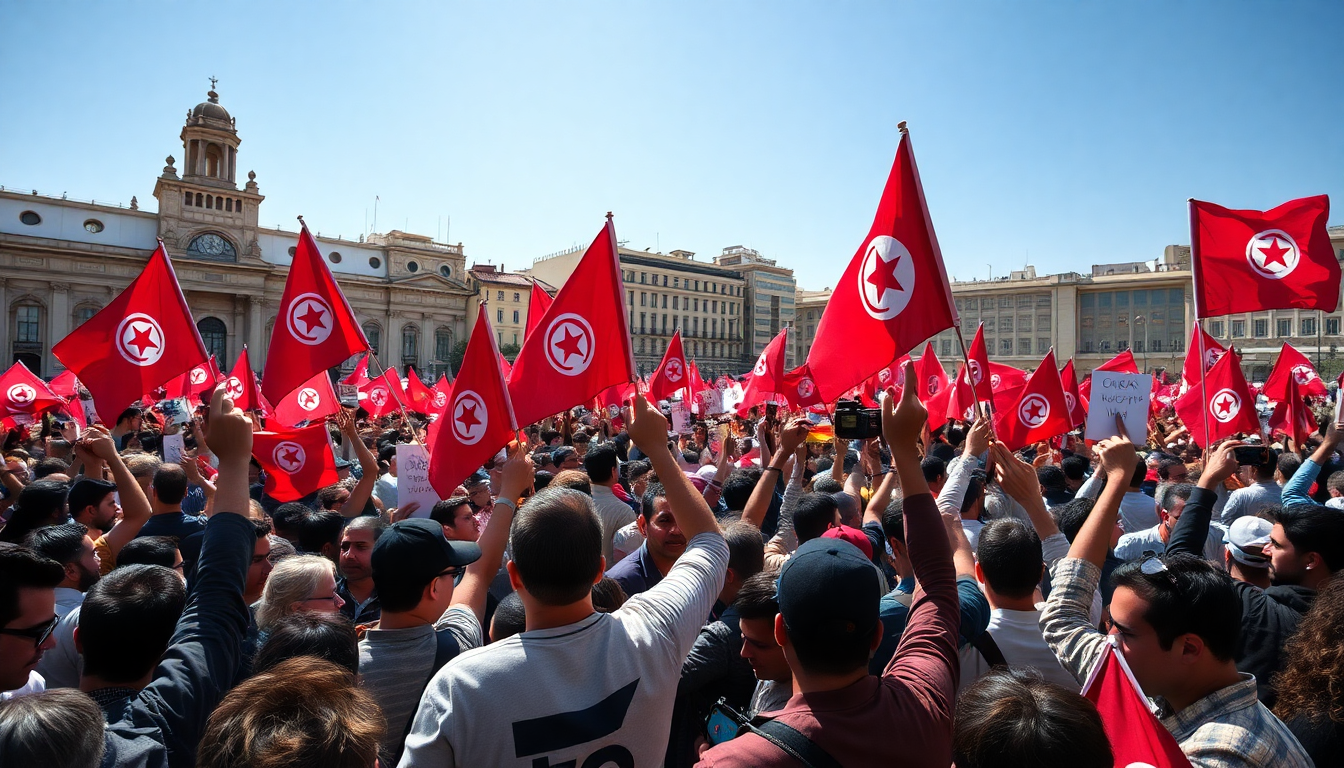
In recent days, Tunisia has become a hotbed of public dissent as hundreds of activists flooded the streets of the capital, Tunis. Their demonstration is more than just a protest; it’s a powerful response to President Kais Saied’s increasingly authoritarian grip on power. Many critics are calling his regime an ‘open-air prison,’ and this protest—marking four years since Saied began consolidating his power—reflects a community deeply worried about the erosion of democratic values in a country once celebrated as the birthplace of the Arab Spring. But what does this mean for the future of democracy in Tunisia?
Context of the Protests
The protestors held up portraits of political prisoners, a poignant symbol of the repression faced by opposition figures in Tunisia. Among those behind bars are Rached Ghannouchi, the leader of the Ennahdha party, and Abir Moussi, head of the Free Constitutional Party. Their situations represent a broader crackdown on dissent that has seen countless politicians, lawyers, and activists sentenced under vague anti-terrorism laws. How did it come to this?
These demonstrations aren’t just spontaneous outbursts of anger; they reflect a growing sentiment among Tunisians who remember the promise of democracy that followed the Arab Spring uprisings. When Saied suspended parliament on July 25, 2021, many felt alarm bells ringing, fearing a return to autocratic rule. Can you blame them?
Initially, some segments of society backed Saied’s actions, viewing them as necessary for stability. However, critics argue that his consolidation of power has undermined the very foundations of the republic. The chants of the protestors, such as ‘The Republic is a large prison,’ resonate with many who believe that Tunisia’s democratic aspirations are slipping away. What will it take to reclaim those ideals?
Voices of Dissent
As the protests unfolded, activists demanded the release of political detainees and pledged their commitment to fight against tyranny. Monia Ibrahim, the wife of an imprisoned politician, expressed a collective yearning to restore democracy and highlighted the dire conditions in Tunisia’s overcrowded prisons, which are filled with Saied’s opponents. Is this the future Tunisians envisioned?
Saib Souab, the son of a critical lawyer imprisoned for his views, echoed this sentiment, stating that even those not incarcerated live in fear of arrest. The atmosphere of intimidation and oppression is palpable, driving many to seek asylum abroad to escape political persecution. What does it say about a country when its citizens fear their own government?
Furthermore, Saied’s decision to dissolve the independent Supreme Judicial Council and dismiss numerous judges is seen as an effort to further entrench his authority. This raises serious concerns about judicial independence in Tunisia. Critics assert that these actions indicate a deliberate strategy to eliminate any checks on his power, thereby solidifying an authoritarian regime. Where does this leave the rule of law?
Reflections on Historical Significance
The protests on July 25 also serve as a poignant reminder of Tunisia’s historical journey. This date marks the anniversary of the country’s declaration as a republic in 1957, a moment that once symbolized hope and progress. However, Saied’s actions have turned this date into a stark representation of the dismantling of democratic institutions in Tunisia. How ironic is that?
Samir Dilou, a former government minister, pointed out the irony of this day, stating that it now symbolizes the erosion of the republic rather than its founding. His words encapsulate the feelings of many who fear that absolute power, as history has shown, often leads to absolute corruption. Is history repeating itself?
As Tunisia navigates this tumultuous phase, the voices calling for democracy and justice grow louder. These protests are not just cries against individual injustices; they resonate as a collective demand for a return to the democratic principles that many Tunisians fought so hard to establish. Will they be heard?


