
Table of Contents
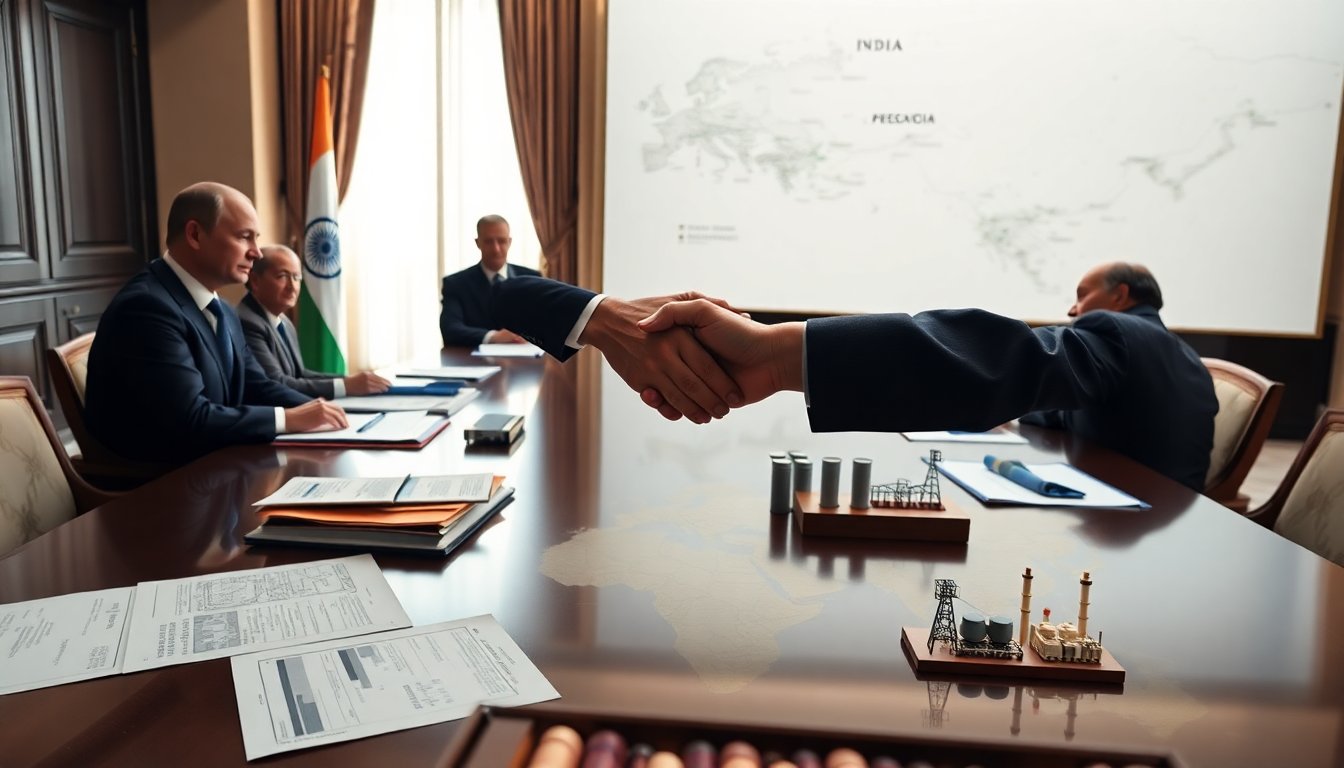
In a world marked by shifting alliances and geopolitical tensions, Russian President Vladimir Putin is set to visit India this week. This state visit aims to strengthen economic, defense, and energy ties between the two nations. As the conflict in Ukraine continues, this meeting poses a significant diplomatic challenge for Indian Prime Minister Narendra Modi, who must balance India’s energy needs against the backdrop of U.S. pressures.
India has consistently purchased discounted Russian oil, a move that has drawn criticism from Washington. The U.S. government contends that these purchases indirectly support Moscow’s military operations in Ukraine. With the stakes high, Modi’s task will be to reassure Russia while not alienating the United States, especially given the recent imposition of additional tariffs on Indian imports by U.S. President Donald Trump.
Diplomatic balancing act amidst ongoing tensions
Putin’s arrival in India represents a crucial moment in international diplomacy. During his visit, Putin and Modi are expected to discuss a range of topics, including bilateral relations, trade agreements, and energy cooperation. The leaders aim to review their past collaborations while exploring new avenues for partnership.
Energy imports and the U.S. response
Despite warnings from Washington regarding the implications of continued oil imports from Russia, India defends its position by emphasizing the critical need to satisfy the energy demands of its vast population of 1.4 billion. Modi’s administration views these Russian imports as essential for maintaining economic stability and energy security.
The U.S. has been vocal about its disapproval, claiming that India’s actions contribute to funding Russia’s military activities. In response, Trump has escalated the situation by imposing a 50% tariff on Indian imports. This has placed additional strain on India’s economic relations with the United States, raising concerns about the potential fallout from these continued oil transactions.
Pursuing mutual interests in defense and trade
In light of these geopolitical challenges, India and Russia are looking to enhance their cooperation in various sectors, particularly in defense and trade. The two nations are expected to release a series of agreements that focus on economic collaboration, trade facilitation, and advancements in healthcare and maritime exchanges.
Expanding defense collaboration
One of the key areas of focus during the upcoming summit will be defense. India is likely to push for expedited delivery of the S-400 surface-to-air missile systems, which have faced delays due to supply chain issues caused by the ongoing conflict in Ukraine. This military equipment is of utmost importance to India, especially following recent tensions with neighboring Pakistan.
Moreover, India is exploring the possibility of acquiring additional S-400 units or even upgraded variants to bolster its defense capabilities. Indian officials are keen to strengthen these ties further, as Russia remains the country’s largest supplier of military hardware despite India’s efforts to diversify its procurement sources.
This cooperation extends beyond just military supplies; India is also pursuing a robust partnership in the civil nuclear sector, including investments in Russia’s Far East and localized manufacturing of equipment. The Kudankulam nuclear power plant, developed with Russian assistance, serves as a focal point for this collaboration, with discussions ongoing about potential joint projects in third countries.
While Modi continues to navigate these complex diplomatic waters, he has refrained from explicitly condemning Russia’s actions in Ukraine. Instead, he has emphasized the importance of a peaceful resolution to the conflict, a stance that reflects India’s traditional policy of non-alignment and its desire to maintain good relations with both Moscow and Washington.
Looking ahead: Opportunities and challenges
India has consistently purchased discounted Russian oil, a move that has drawn criticism from Washington. The U.S. government contends that these purchases indirectly support Moscow’s military operations in Ukraine. With the stakes high, Modi’s task will be to reassure Russia while not alienating the United States, especially given the recent imposition of additional tariffs on Indian imports by U.S. President Donald Trump.0
India has consistently purchased discounted Russian oil, a move that has drawn criticism from Washington. The U.S. government contends that these purchases indirectly support Moscow’s military operations in Ukraine. With the stakes high, Modi’s task will be to reassure Russia while not alienating the United States, especially given the recent imposition of additional tariffs on Indian imports by U.S. President Donald Trump.1