
Table of Contents
The facts
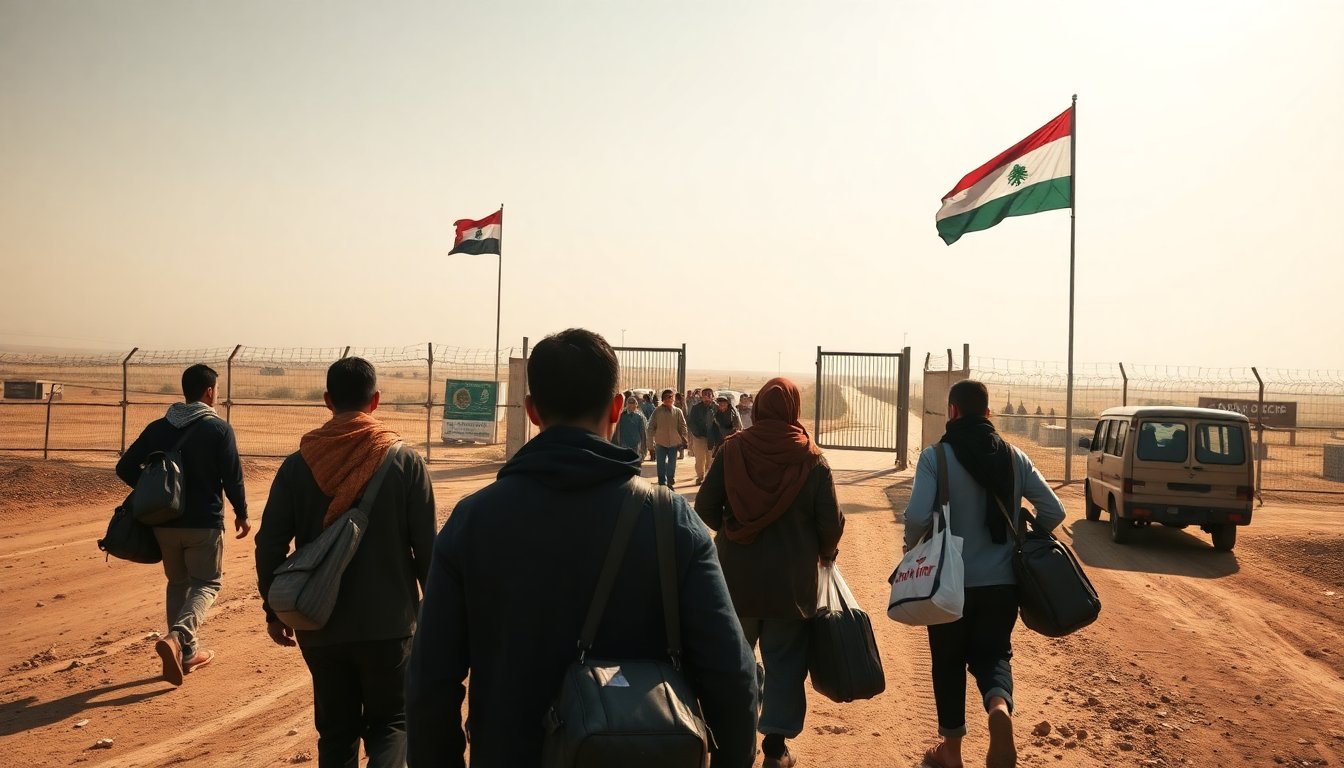
The long-awaited reopening of the Rafah border crossing between Egypt and Gaza has occurred, providing a crucial passage for Palestinians after nearly two years of stringent restrictions. This development is part of ongoing efforts to implement the ceasefire agreement established between Israel and Hamas, which has garnered significant international attention. The reopening allows for limited movement, representing a significant milestone in the peace process that many hope will lead to broader humanitarian assistance.
The facts
On February 1, 2026, the Rafah crossing opened its gates, albeit with strict limitations on the number of travelers. Reports indicate that only 50 Palestinians are permitted to cross each day in both directions. This figure is expected to gradually increase if operations prove successful. This cautious approach reflects the complex security situation and the need for careful vetting of individuals wanting to enter or exit Gaza.
The consequences
The limited access at Rafah is a significant development in the ongoing humanitarian crisis. It allows for some movement, which many hope will pave the way for increased humanitarian assistance. However, the restrictions underscore the persistent challenges faced by Palestinians in accessing essential resources and support.
The facts
Health officials in Gaza report that many individuals face urgent humanitarian needs. Approximately 20,000 Palestinians require immediate medical assistance and hope to utilize the Rafah crossing. The Egyptian health ministry has prepared 150 hospitals to accommodate these patients, demonstrating significant logistical efforts to manage the influx of individuals seeking care. Under the current agreement, patients may be accompanied by two relatives, which aims to support their recovery journey.
The facts
The Rafah crossing has long served as a critical artery for Gazans, facilitating movement before recent conflicts escalated. Following its capture by Israeli forces in, access became severely restricted. Officials cited concerns over arms smuggling by Hamas as the reason for these measures. The crossing was briefly opened during a temporary ceasefire in early 2026 for medical evacuations, but has since remained largely closed.
What happened
Israeli Prime Minister Benjamin Netanyahu stated that the decision to reopen Rafah stemmed from recent developments in negotiations, particularly regarding the retrieval of hostages held in Gaza. The reopening serves both humanitarian purposes and strategic interests for Israel and Egypt, aimed at enhancing stability in the region.
The future of the ceasefire agreement
The reopening of Rafah is viewed as a pivotal development in advancing the second phase of the ceasefire agreement facilitated by the United States. This phase introduces complex elements, such as creating a new governing body for Gaza, disarming Hamas, and deploying an international security force to maintain order. Successful execution of these initiatives is vital for establishing a lasting peace in the region.
The facts
Israel and Egypt will implement comprehensive checks for individuals crossing the Rafah border in both directions. European Union border patrol agents will assist, alongside a limited Palestinian presence, to enhance transparency and security. This initiative highlights the critical role of international collaboration in addressing the humanitarian crises affecting Gaza’s population.
The consequences
The Rafah crossing could evolve into a beacon of hope, facilitating family reunifications and access to essential care. An increase in traffic through Rafah may signify a new phase in the ongoing quest for peace and stability in the region.