
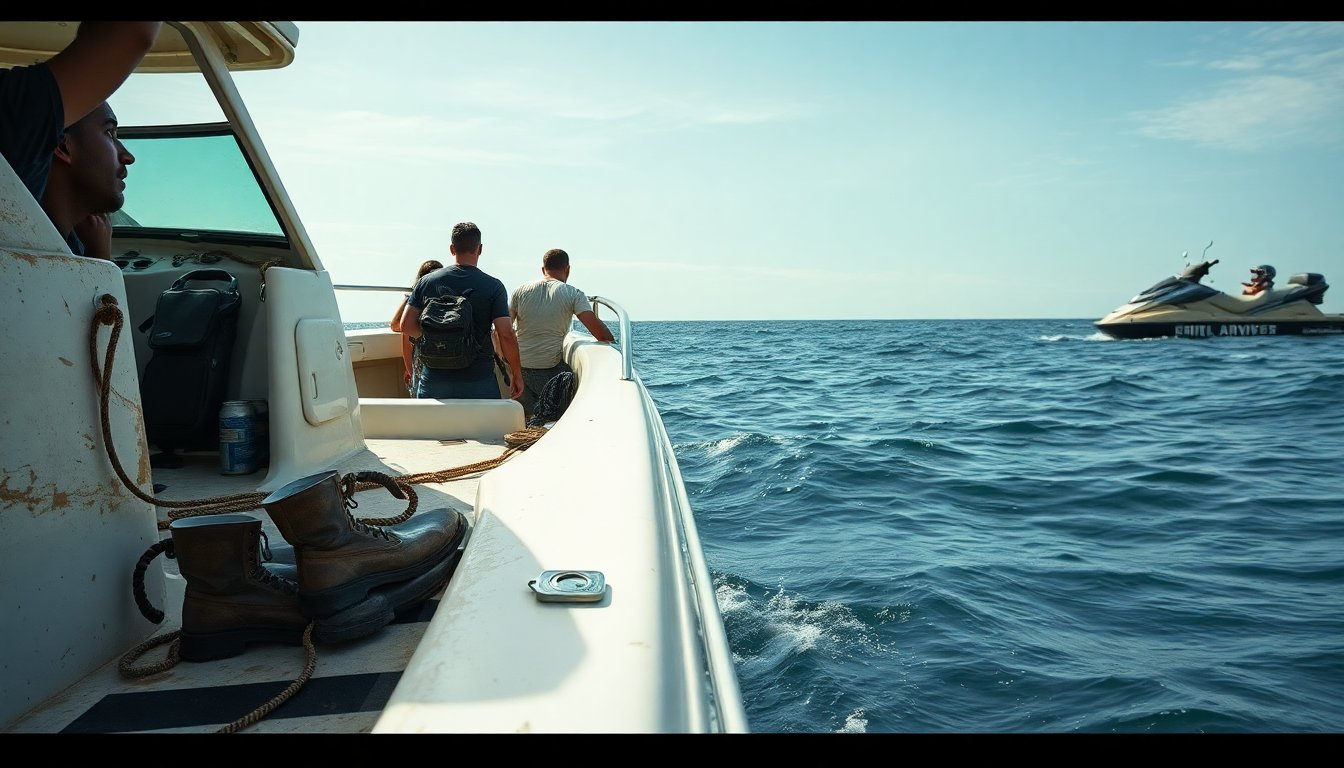
A small, armed group attempting to force political change in Cuba by sea was stopped in the Straits of Florida after a brief but decisive maritime engagement. What began as a hastily organized dash on a speedboat to provoke an uprising ended when Cuban security forces intercepted the craft and took its occupants into custody in coastal waters.
Who was on the boat
Officials and witnesses describe the passengers as an improvised mix of activists and fighters rather than a disciplined military unit. Backers had apparently hoped a dramatic landing would spark wider unrest against Cuba’s government. Instead, the plan collapsed once patrol vessels and surveillance assets detected and intercepted the craft.
How the operation unfolded
According to accounts, the group departed from a point in international waters under cover of night, relying on speed and secrecy to reach shore. Cuban authorities, however, had coordinated maritime surveillance and interdiction measures. Patrol boats closed in, halted the vessel and detained those aboard before any landing could take place. There were no reports of a significant firefight ashore.
Planning, logistics and capability gaps
The operation appears to have been tailored for stealth and quick transit rather than a sustained fight. Participants had limited training and used civilian hardware, not military platforms. Organizers counted on darkness, surprise and rapid movement — a profile that offers little protection against constant monitoring and coordinated interdiction. In practice, chokepoints like the Straits of Florida are well covered by coastal patrols and intelligence tools that can pick up even small, fast craft.
Legal and diplomatic implications
Interceptions at sea carry complicated legal and diplomatic consequences. Maritime jurisdiction, the rights of the flag state versus the coastal state, and the rules governing use of force and detention all come into play. Authorities may pursue criminal charges, freeze assets, and seek cooperation from foreign governments if evidence points to overseas support or logistical links. Such steps often trigger diplomatic inquiries and can strain relations even when no formal sanctions follow.
Compliance and business risk
Companies and intermediaries involved in logistics, communications or financial services tied to irregular maritime activity face real exposure. Banks, payment platforms and telecom providers can expect requests for transaction records or metadata; failure to cooperate with lawful inquiries risks fines, license reviews or reputational damage. Practical mitigations include enhanced due diligence on maritime partners, stronger transaction screening, clearer content and payment policies, and use of RegTech to flag suspicious activity.
Messaging, perceptions and political context
The group marketed the mission as an attempt to ignite a popular uprising. Their communications mixed dramatic imagery with calls for mass mobilization, aiming for viral traction on digital platforms. Analysts note, however, that online visibility rarely substitutes for an organized, domestic base capable of sustaining political pressure. Observers called the action more symbolic than strategically decisive. Both sides are already framing the event to suit familiar narratives: Cuban officials point to vigilance against foreign-backed subversion, while supporters present the detainees as courageous dissidents.
Security response and regional fallout
Expect tighter coastal security and closer regional coordination in the near term. Defence and law-enforcement agencies are likely to increase patrols, improve intelligence sharing, and clarify procedures for boarding and evidence handling. For states, clearer memoranda of understanding with neighbors would reduce legal friction if similar incidents recur. Analysts also warn of copycat risks: small, dramatic raids could multiply if underlying grievances are not addressed.
What this means for prosecutions and policy
Detainees taken into custody in Cuban waters will likely face domestic prosecutions. If evidence links the operation to foreign soil or external sponsors, diplomatic channels and formal requests for cooperation will follow. For governments and courts, preserving the integrity of evidence chains and respecting due process will be crucial; any procedural missteps could undermine prosecutions and inflame tensions. As investigations proceed, observers will be watching how Cuba handles prosecutions and how other states respond—both as indicators of evolving regional security practices and as a test of legal and diplomatic norms at sea.