
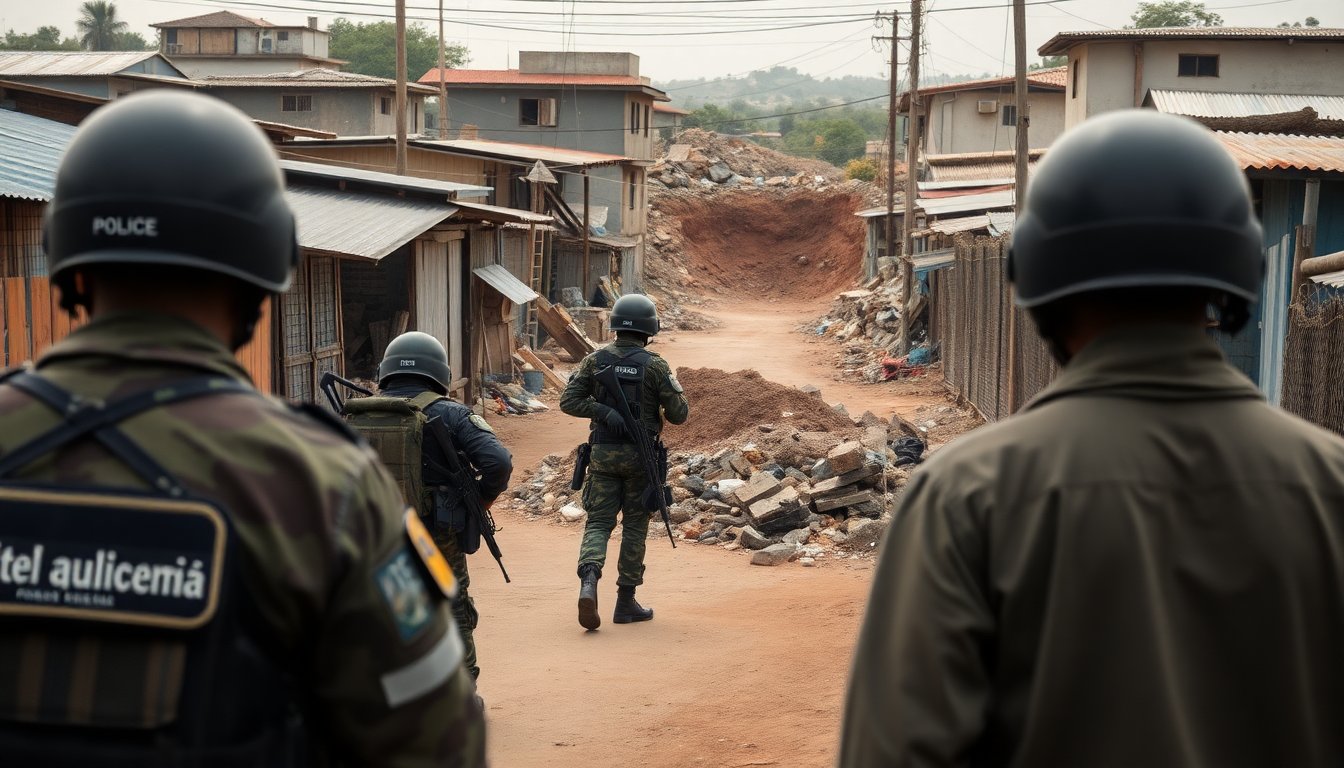
President Cyril Ramaphosa told Parliament he will deploy the South African National Defence Force to violent, crime-ravaged areas as part of a tougher campaign against organised gangs and illegal mining. The troops will support police in targeted operations while security chiefs draw up deployment plans for the Western Cape and Gauteng — provinces that have borne the brunt of organised criminal networks. Ramaphosa described this as a necessary step to protect state institutions, revive investor confidence and stop communities from being hollowed out by violence.
The SANDF will not act as a parallel law-enforcement agency. Military involvement, the president said, will be narrow in scope: confined to specific tasks and locations, and conducted under police command with detailed operational plans and legal oversight. The aim is to strengthen fragile policing efforts in the worst hotspots, not to militarise public life.
Officials argue the shift is driven by stark realities on the ground. In many townships heavily affected by gang rule, small but heavily armed networks use intimidation and violence to control turf. Investigations stall and arrests become dangerous when local policing is outgunned or under-resourced. Authorities point to gaps in intelligence, persistent understaffing and crumbling infrastructure as reasons illegal mining and gang activity have flourished.
The human cost is severe. In the most affected areas, officials estimate dozens of deaths linked to armed crime and gang conflicts every week. Illegal firearms remain widespread despite strict laws, while syndicates tied to drugs and illicit mineral extraction are increasingly embedded in communities — financing operations, recruiting labour and silencing opponents.
Illegal gold mining, in particular, is causing deep economic damage. Government figures suggest more than $3 billion in gold was siphoned into illicit channels in 2026 alone. Those losses not only reduce tax revenue and destroy formal mining jobs, but also weaken local economies that depend on lawful extraction and scare away much-needed investment.
The so-called zama zamas — people who risk their lives working abandoned shafts and informal sites — capture the human face of the problem. These miners gamble for livelihoods, but their work brings collapsed shafts, toxic runoff, polluted water and fatal accidents that also imperil nearby residents. Emergency services are stretched, and the cost of rehabilitating damaged sites drains municipal budgets.
Where criminal syndicates gain financial footholds, coercion soon follows. Groups that benefit from illegal mining often bankroll weapons, recruit through intimidation and co-opt or threaten local officials. Corrupt middlemen and opaque supply chains make tracking illicit minerals difficult, and small, scattered shafts are hard to police effectively.
The government’s package extends beyond deploying soldiers. Officials announced plans to recruit 5,500 additional police officers, bolster intelligence-gathering and hold municipal leaders accountable for failures in basic services such as water supply — problems that help criminal networks take root. Analysts say success will require coordinated action across law enforcement, the mining industry and local government, along with economic measures that revive lawful livelihoods for people who now see few alternatives.
Bringing the SANDF into these operations is controversial and delicate work. If the deployments are carefully bounded, legally supervised and paired with police reinforcements, intelligence upgrades and social interventions, they could disrupt entrenched networks and create breathing room for longer-term reforms. Without those complementary steps, military action risks being a short-term fix that fails to address the deeper causes of organised crime.