
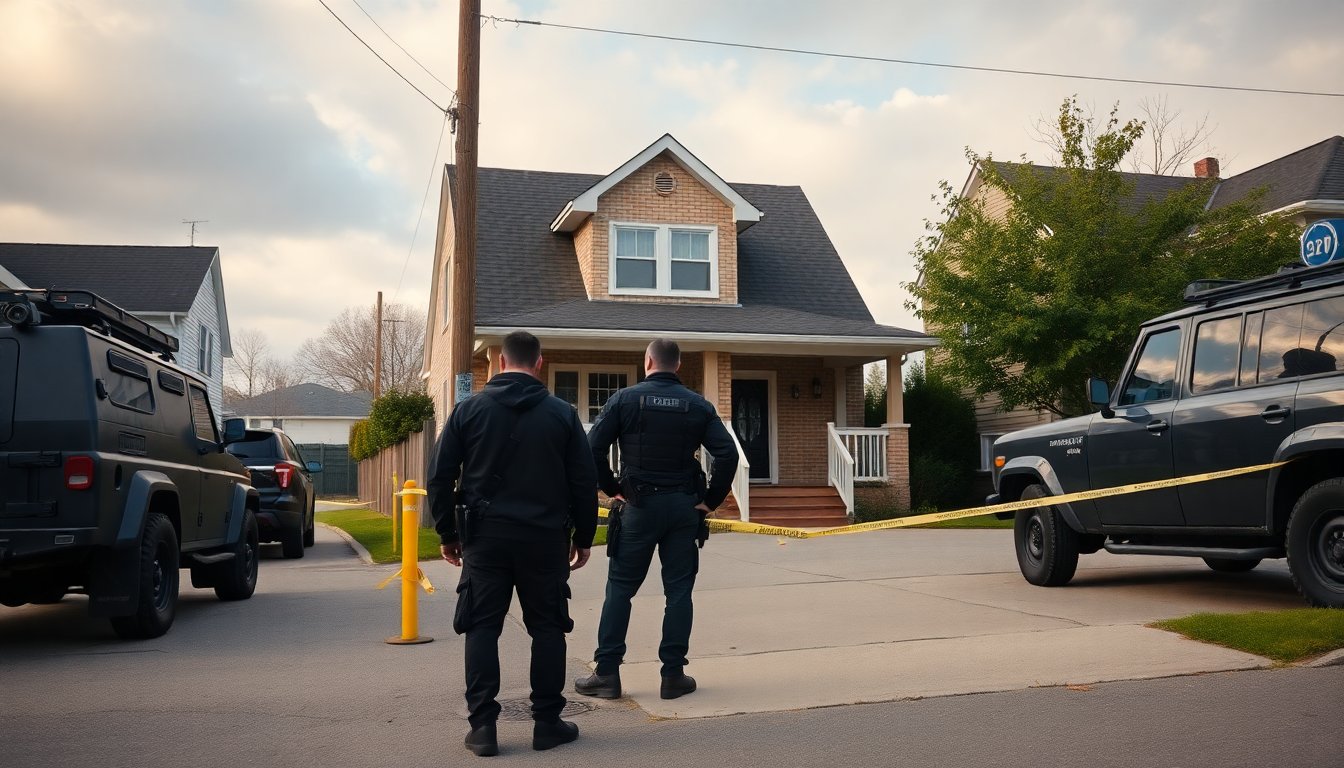
Federal agents and Pima County SWAT executed a search warrant last week at a Tucson-area home as part of the investigation into the disappearance of 84-year-old Nancy Guthrie. The operation, prompted by a tip, involved FBI personnel and resulted in several people being detained and a vehicle taken from the scene for forensic testing. The house is about two miles from where Guthrie was last reported.
Three people were held at the residence; a fourth was stopped and detained after a traffic stop in a Culver’s parking lot. Officers searched a gray Range Rover on site and had it towed for further examination. Investigators also recovered a glove near Guthrie’s home on Feb. 11, 2026, and surveillance footage from Feb. 1 shows a masked individual in the area.
Retired FBI supervisory agent Mariano Comotto described the activity as the kind of work that springs from “actionable leads,” highlighting how crucial fast, careful evidence processing will be going forward. Retired agent Jason Pack called the Feb. 13 operation a “significant escalation,” saying the pattern of activity suggested investigators were pursuing specific leads rather than conducting a broad sweep.
What investigators did next resembled intensive, old-fashioned detective work fused with modern forensics: door-to-door canvassing, re-interviews of witnesses, and systematic review of neighborhood camera footage — including private doorbell videos — to piece together timelines and check alibis. Teams concentrated on establishing “patterns of life” for persons of interest, seeking independent corroboration before any charging decisions are made.
Forensics quickly became the bottleneck and the priority. Authorities said they found DNA at the property that does not match Guthrie or her known close contacts, increasing the urgency of lab analysis. To protect the scene, agents covered the towed Range Rover and took steps to log and bag items immediately for transport. Typical high-priority tests include touch DNA, latent prints, and trace-fiber and biological analyses — all of which require painstaking chain-of-custody documentation and controlled transport.
Investigators have laid out clear, practical steps already in motion:
– Log, photograph and bag recovered items at the scene.
– Expedite transfer to a certified forensic lab with temperature control.
– Segregate material for rapid DNA profiling and fingerprint analysis.
– Preserve samples for confirmatory testing and independent review.
– Record every handler of evidence to maintain an unbroken chain of custody.
A logistical debate surfaced over where to send time-sensitive material. Pima County Sheriff Chris Nanos defended the department’s use of a contracted private lab in Florida, saying the FBI agreed the contract was appropriate. Pack urged consideration of alternatives — such as using FBI aircraft to ferry evidence directly to the FBI lab in Quantico — to avoid delays tied to commercial shipping. As Pack put it, when an elderly person who needs medication is missing, “every hour matters.”
The public has been heavily engaged. Authorities say more than 13,000 tips have been submitted; analysts are triaging them by reliability and corroborating evidence. Officials have released a suspect description that matches previously seen video: a man roughly 5’9″–5’10” with an average build wearing a black 25-liter pack. Neighbors have set up a growing makeshift memorial outside Guthrie’s home, and residents recall seeing a gray truck in the area around the time of her disappearance.
Investigators are asking the public to submit only firsthand observations and to preserve any relevant footage with original timestamps. Their priorities remain straightforward: verify tips with independent, time-stamped evidence, speed up forensic testing without sacrificing procedure, and keep careful documentation so results are repeatable and defensible in court.
At this stage, the next milestones are clear: secure and complete preliminary lab screens, validate any non-matching DNA profiles, and follow leads that withstand cross-checking with surveillance and witness accounts. Officials say they will hold off on public judgments until laboratory results are confirmed and corroborated by independent sources. Meanwhile, canvassing and evidence processing continue as detectives race to convert the recent activity into concrete answers.