
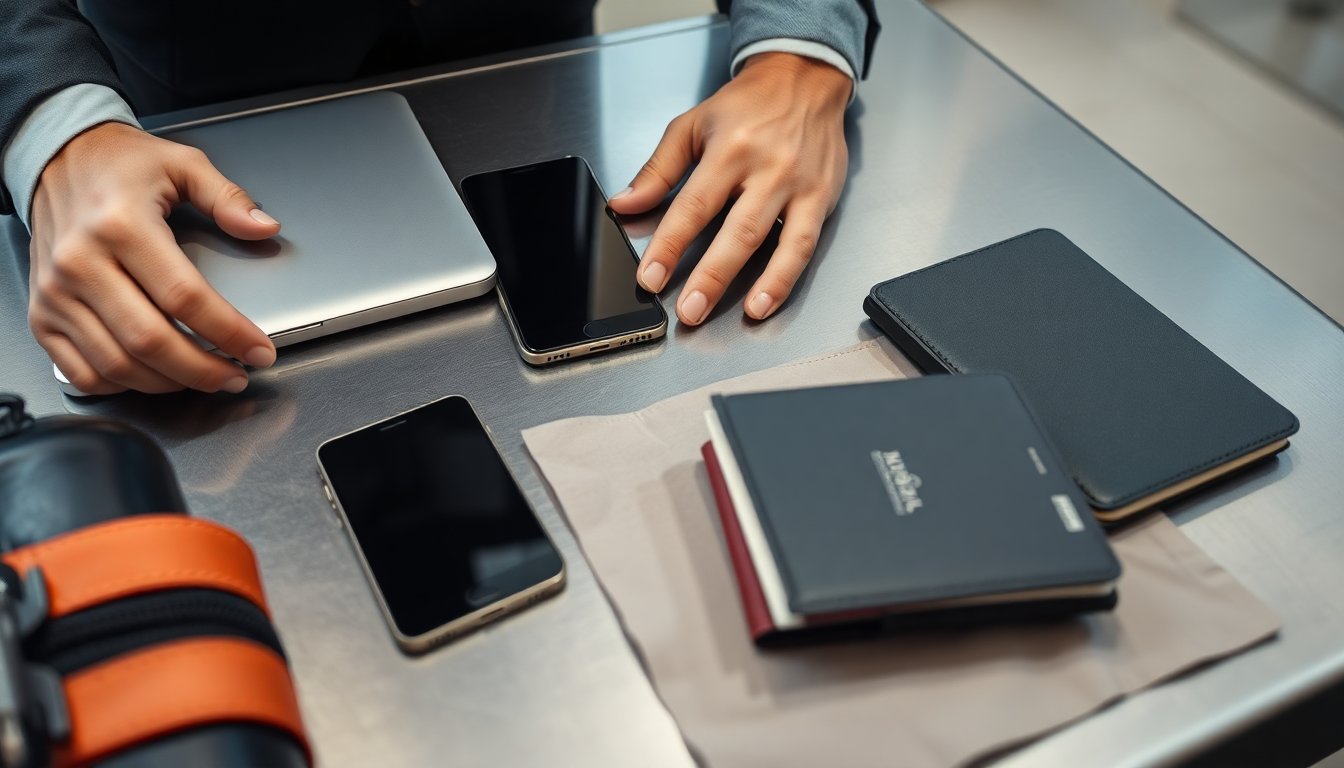
U.S. Customs and Border Protection has stepped up electronic-device inspections at U.S. ports of entry in 2026 after publishing a revised directive that clarifies which hardware and data officers may examine. The policy change—and the agency’s numbers—have sparked renewed debate about privacy, legal limits at the border, and how travelers should prepare.
What changed and how many devices were searched
– CBP says it examined 55,318 electronic devices in 2026, up from 47,047 the previous year and 41,767 the year before that. – Those inspections break down into roughly 50,922 basic manual checks and 4,396 advanced, forensic-style examinations that copy or deeply analyze device contents. – Searches of U.S. citizens’ devices rose notably, from 8,657 to 13,590 in 2026. CBP has not published a geographic breakdown of where these searches occurred.
The January directive: broader scope, clearer rules
In January, CBP circulated an updated device-search directive that both expands the list of searchable equipment and spells out retention and sharing rules. New items explicitly named include flash drives, SIM cards, GPS units, unmanned aircraft systems (drones), vehicle infotainment systems, and smart watches. The guidance also attempts to define when officers may seize, retain, or transfer data — and when higher-level approval is required.
Why critics are alarmed
Civil liberties groups, foreign governments and many legal advocates worry the changes widen the net of what can be taken during border encounters. The Electronic Frontier Foundation and the American Civil Liberties Union recently filed an amicus brief in the Third Circuit arguing courts should require a warrant for device searches—because modern phones and laptops contain vast personal information. Lower courts are split: the Ninth Circuit has required reasonable suspicion for forensic searches and limited searches to discovering “digital contraband,” while other circuits have imposed fewer constraints. Riley v. California is frequently cited by advocates who say devices deserve stronger Fourth Amendment protection than suitcases or paper documents.
How U.S. practice compares with Canada
A quick cross-border comparison highlights different approaches. Canada’s border agency reported 1,108 device searches in 2026 and points to higher approval thresholds, mandatory officer training and more detailed recordkeeping. By CBP’s count, its searches represented about 0.011% of roughly 420.5 million U.S. arrivals in 2026; Canada’s searches were roughly 0.0012% of about 93.7 million travelers entering Canada. The disparity has prompted questions about oversight and whether U.S. protocols should adopt stronger guardrails.
What this means for travelers
– Expect more frequent device encounters. Privacy experts warn the trend may continue as agencies deploy more advanced extraction tools. – Refusing to provide a device could delay or block entry—consequences vary by situation. – Practical steps travelers often take: sign out of accounts, remove or encrypt particularly sensitive files, switch devices to airplane mode (though that doesn’t prevent forensic copying), and carry a clean device or a limited “travel phone” if you want to minimize exposure.
Legal landscape and what to watch
The issue is likely headed back to the courts. With split rulings among federal circuits and high-profile briefs from civil liberties groups, appellate decisions could reshape how far border search authority extends. Meanwhile, clearer agency rules may help curb abuses in some cases—but they can also broaden the range of items officers feel empowered to examine. Travelers and advocates are watching for further guidance, judicial rulings, or policy tweaks that might tighten or loosen current practices.