
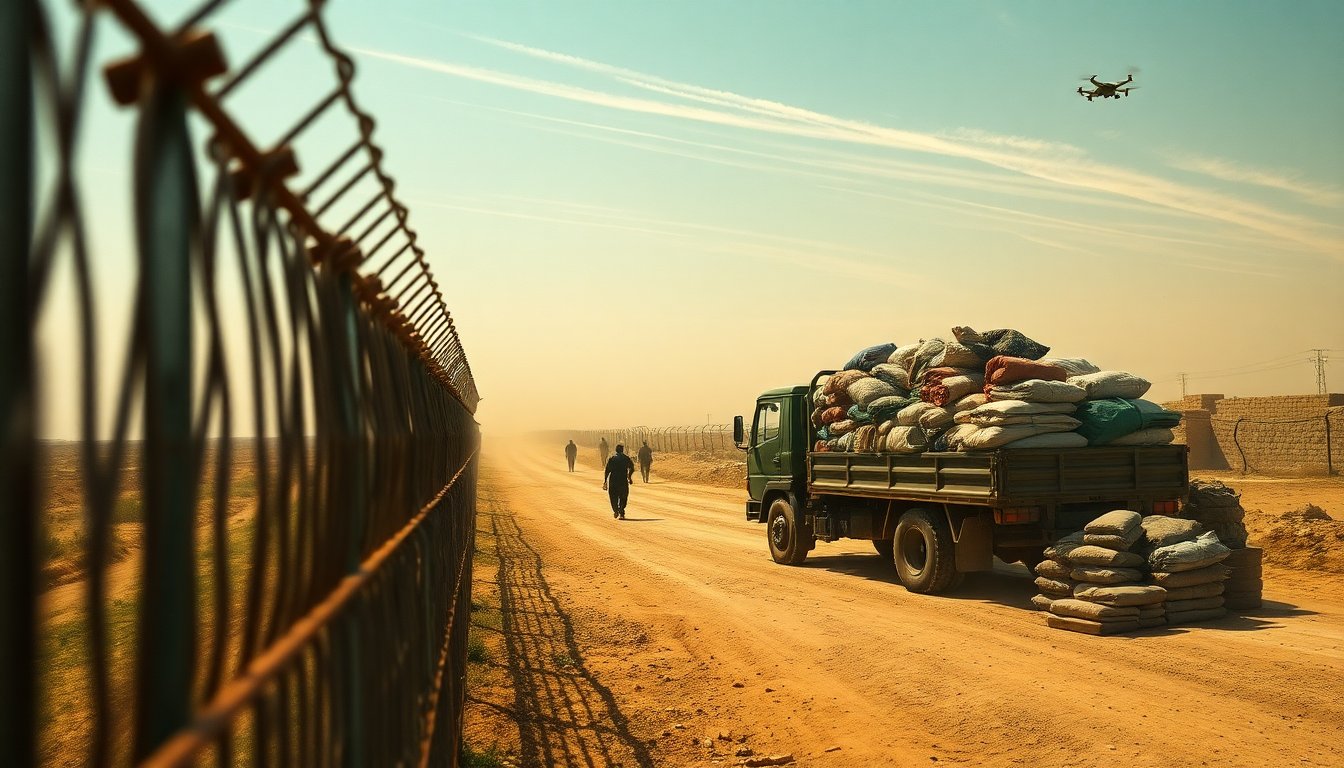
A coordinated strike by the United States and Israel that killed Iran’s supreme leader has set off a wave of instability across the Middle East. Airspace closures, sudden population movements and drones now patrolling new frontlines are only the most visible effects. Underneath those scenes, military, humanitarian and political consequences are still unfolding — and the region is adjusting to a shock that could reshape security dynamics for months to come.
What happened and why it matters
The attack was executed with speed and precision, but its fallout is anything but tidy. Key infrastructure in several countries was damaged, fresh combat zones have opened along borders, and capitals scrambled to respond both politically and militarily. This single, high-profile strike has already cascaded into a broader crisis: people displaced from their homes, essential services disrupted, and the risk of additional incidents rising with every miscalculation.
Immediate military and humanitarian impacts
Airports closed, residents sought shelter, and reports of both civilian and combatant casualties accumulated. Drone strikes and cross-border exchanges have become more frequent, raising the prospect that a misplaced missile or an autonomous move by a proxy group could widen the confrontation. Civil authorities are setting up shelters and mapping evacuation routes while militaries shift forces and reinforce air defenses. Humanitarian corridors, already fragile in parts of the region, face new stress as aid delivery routes and logistics are rerouted or delayed.
Legal, compliance and operational consequences
Any attack that affects civilians or civilian infrastructure triggers legal obligations under international law — investigations, potential reparations and rigorous scrutiny of targeting decisions. Governments, aid agencies and private firms operating in the region must reassess security plans, supply chains and data protections. Practical measures include activating contingency arrangements for staff relocation, rerouting logistics, reallocating assets, and hardening information-security practices. Financial institutions will need tighter counterparty checks; insurers, traders and compliance teams must run fresh scenario analyses against an altered risk landscape.
Cross-border incidents and escalation risks
The campaign has already produced multiple cross-border incidents. Armed drones and strikes beyond the original target zone have increased the chance of unintended escalation. Expect intensified intelligence sharing among allies, stricter rules of engagement, and urgent diplomacy aimed at containing tensions. Yet diplomacy is fragile: a single operational error, misinterpreted radar return or unauthorized proxy attack could broaden the conflict quickly.
How Iran is managing leadership continuity
Tehran moved fast to preserve command and control. Emergency constitutional provisions were activated and a temporary council is performing the supreme leader’s duties, drawing in the president, the judiciary chief and a Guardian Council appointee picked by the Expediency Council. The 88-member Assembly of Experts — clerics elected by the public but vetted by the Guardian Council — will convene to select a permanent successor.
Those interim mechanisms are intended to avoid a leadership vacuum and keep decision-making coherent. Iran’s institutions have redundant communications, distributed command nodes and predesignated deputies to maintain control across political, military and paramilitary bodies, aiming to reduce the chances of fragmentation or rogue escalations by allied militias.
Political dynamics: the jockeying beneath the surface
Behind the public face of succession, a contest is shaping up among pragmatic conservatives, hardliners and powerful military figures, notably within the Islamic Revolutionary Guard Corps (IRGC). The Guardian Council’s vetting narrows who can realistically contend, so an open, competitive transition is unlikely. Expect cautious official rhetoric and a short-term conservative tilt as elites maneuver for influence while the Assembly of Experts deliberates.
What states, companies and aid groups should do now
Intelligence services will monitor multiple command nodes rather than single personalities. Businesses and NGOs should promptly revisit contingency plans: update sanctions matrices, stress-test supply chains, map exposure to Iran-linked actors, and firm up escalation protocols with legal and compliance teams. Financial institutions need enhanced due diligence; insurers and commodity traders ought to model disruptive scenarios and ensure liquidity and claims procedures are robust.
Longer-term regional and international consequences
A contested succession could reverberate through Iraq, Syria, Lebanon and Yemen, altering the posture of Iran-aligned militias and increasing border friction and asymmetric operations. Stabilization is likely to become harder. On the international stage, uncertainty will shape nuclear diplomacy, sanctions policy and energy markets. Major buyers and diplomatic partners such as China and Russia will weigh whether to tighten or loosen ties with Tehran — a calculus with direct implications for global energy flows and geopolitical alignments. Immediate priorities are averting further escalation, protecting civilians and maintaining critical services. What follows — in Tehran’s succession, regional militia behavior and how external powers respond — will determine whether this episode settles into a tense stalemate or spirals into broader conflict.